
Record a few seconds of the call, listen back to make sure the recording is usable, and review BirdScope’s suggested species alongside what you heard and where you heard it.
How sound identification works
Bird calls carry patterns in rhythm, pitch, repetition, and phrasing. The place, season, and time of day add context, but a recording gives you something concrete to compare.
BirdScope’s sound workflow is useful when a bird is high in the canopy, behind leaves, or already out of sight. It gives you a starting point for learning the voice of a species.
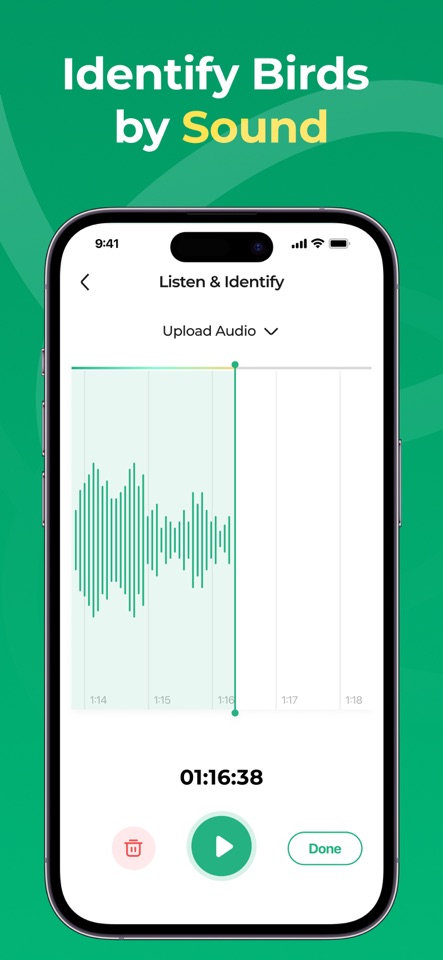
Tips for recording a bird call
- Move away from traffic, fans, conversations, and other steady noise when possible.
- Record before walking closer. A quiet approach protects the moment and often gives cleaner audio.
- Capture a complete phrase instead of stopping after the first note.
- Keep your phone steady and avoid rubbing the microphone.
- Record the surrounding context: time, weather, habitat, and whether you saw the bird.
How to check a sound match
Listen to the original recording again and compare the suggested bird’s call, habitat, and behavior. Bird sound identification can be difficult when several species sing in the same place, or when wind and distance alter the recording.
If you later see the bird, take a photo too. Combining a call with visible markings is often more useful than relying on either clue alone.