
The Ruby-throated Hummingbird (*Archilochus colubris*) is a small, vibrant bird known for its remarkable flying abilities and jewel-like appearance. It plays a crucial role as a pollinator for various flowering plants across its range. This species is the only breeding hummingbird regularly found east of the Mississippi River in North America, making it a familiar and beloved sight in gardens and woodlands. While not currently considered globally threatened, its dependence on specific habitats and nectar sources makes it vulnerable to environmental changes.
Photos of Ruby-throated Hummingbird
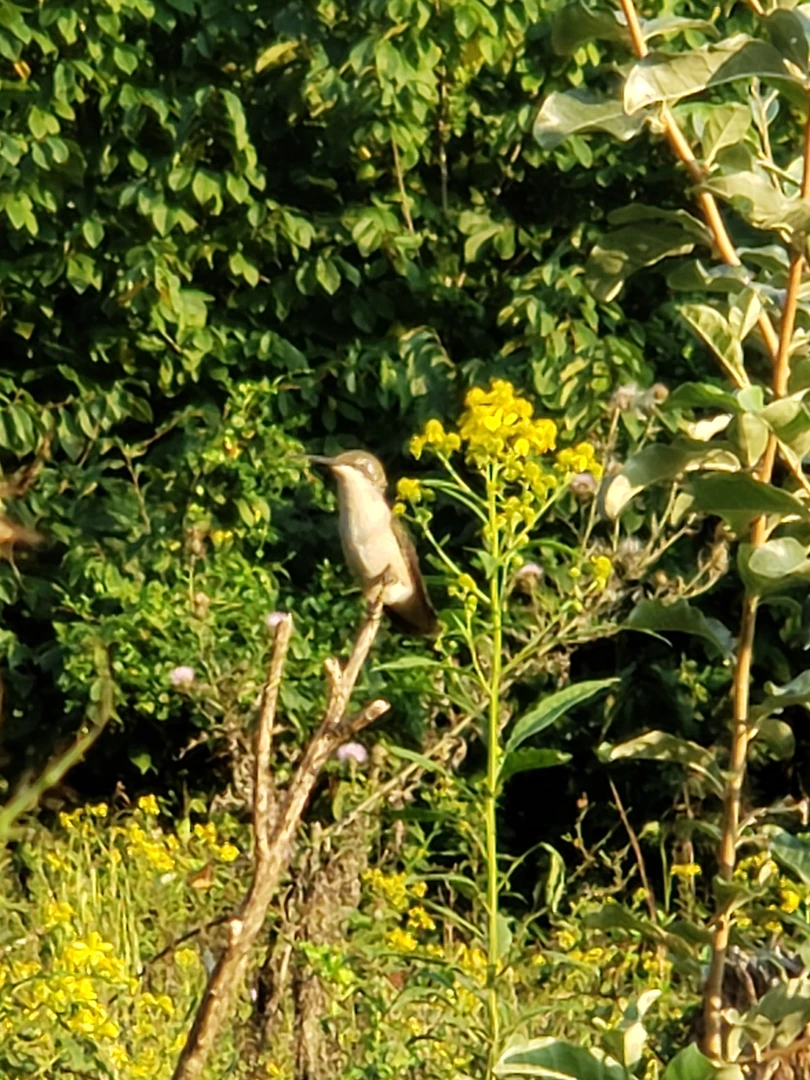
Compare plumage, posture, and field context across this image set.
Ruby-throated Hummingbird sounds
Listen to a small selection of reference recordings.
About the Ruby-throated Hummingbird
The Ruby-throated Hummingbird (*Archilochus colubris*) is a small, vibrant bird known for its remarkable flying abilities and jewel-like appearance. It plays a crucial role as a pollinator for various flowering plants across its range. This species is the only breeding hummingbird regularly found east of the Mississippi River in North America, making it a familiar and beloved sight in gardens and woodlands. While not currently considered globally threatened, its dependence on specific habitats and nectar sources makes it vulnerable to environmental changes.
Scientific classification
Phylum: Chordata
Clazz: Aves
Order: Apodiformes
Family: Trochilidae
Genus: Archilochus
Species: Archilochus colubris
Habitat and distribution
Adaptations: Their long, slender bills and specialized tongues are adapted for extracting nectar from tubular flowers. Their high metabolic rate requires frequent feeding, and they can enter a state of torpor (a short-term hibernation-like state) to conserve energy during cool nights.
Variations: No recognized subspecies.
Distribution: Breeds across eastern and central North America, from southern Canada to the Gulf Coast. Winters primarily in Central America, from Mexico to Panama, and occasionally in the Caribbean.
Habitat Types: Deciduous and mixed forests, Woodlands, Orchards, Gardens, Parks
Climate Zones: Temperate, Subtropical, Tropical (during winter)
Diet and feeding
Primary foods: Nectar from flowers, Small insects, Spiders, Tree sap (occasionally)
Foraging behavior: Hovers in front of flowers while feeding, using its long bill and tongue to extract nectar. Also gleans insects from leaves and catches them in mid-air.
Seasonal diet variations: Diet shifts slightly depending on the availability of nectar and insects. Insects become more important during breeding season to provide protein for growing chicks.
Specializations: Brush-tipped tongue with grooves to efficiently collect nectar. High metabolic rate requires frequent feeding.
Reproduction and lifecycle
Breeding season: Generally from March to July, with variations depending on latitude.
Regional variations: Breeding starts earlier in the southern parts of their range.
Courtship rituals: Males perform elaborate courtship displays, including pendulum-like flight arcs and dive displays, often accompanied by vocalizations.
Nest Type: Tiny cup-shaped nest built on a downward-sloping branch.
Nesting Materials: Plant down, Spider silk, Lichen
Parental care: Females solely incubate the eggs and care for the young. Incubation lasts 12-14 days. Chicks are fed regurgitated nectar and insects.
Fledging period: 18-22 days until first flight.
Clutch Size: Typically 2 eggs (rarely 1 or 3).
Physical characteristics
Sex-Based Plumage Differences: Females are slightly larger than males.
Length: 7-9 cm
Wingspan: 8-11 cm
Weight: 2-6 g
Lifespan: Average lifespan in the wild is 3-5 years, with a maximum recorded lifespan of 9 years.
Breeding Plumage: Males have a brilliant iridescent ruby-red throat (gorget) during breeding season, which can appear black in poor light. Females lack the red gorget and have a whitish throat.
Seasonal Feather Changes: Little seasonal variation beyond the intensity of the male's gorget.
Notable features: Iridescent green back, Long, needle-like bill, Rapid wingbeats (up to 53 beats per second)
Interesting facts
They can fly backward.: Hummingbirds are the only birds that can fly backward, a maneuver used for navigating around flowers and escaping threats.
Their heart rate can reach over 1,200 beats per minute during flight.: This incredibly high heart rate is necessary to support their high metabolic rate and rapid wingbeats.
They can remember individual flowers and feeding locations.: This spatial memory helps them efficiently find food sources.
They consume about half its body weight in sugar daily.: This substantial intake provides fuel for its high metabolism and energy-intensive flight.
Frequently asked questions
What can I do to attract Ruby-throated Hummingbirds to my yard?
Plant native flowering plants, especially those with red or orange tubular flowers. Provide a hummingbird feeder with a sugar-water solution (1 part white sugar to 4 parts water, no red dye). Avoid using pesticides.
How can I tell a male from a female Ruby-throated Hummingbird?
Only adult males have the ruby-red throat (gorget). Females and immature males have a white throat.
Do hummingbird feeders prevent them from migrating?
No, providing feeders does not prevent hummingbirds from migrating. They are triggered to migrate by changes in day length, not food availability.
Where do they go in winter
Ruby-throated Hummingbirds migrate south, primarily to Central America, stretching from Mexico to Panama. A small number also spend the winter in the Caribbean.
Compare the image, sound, habitat, and physical characteristics together when reviewing a sighting.