
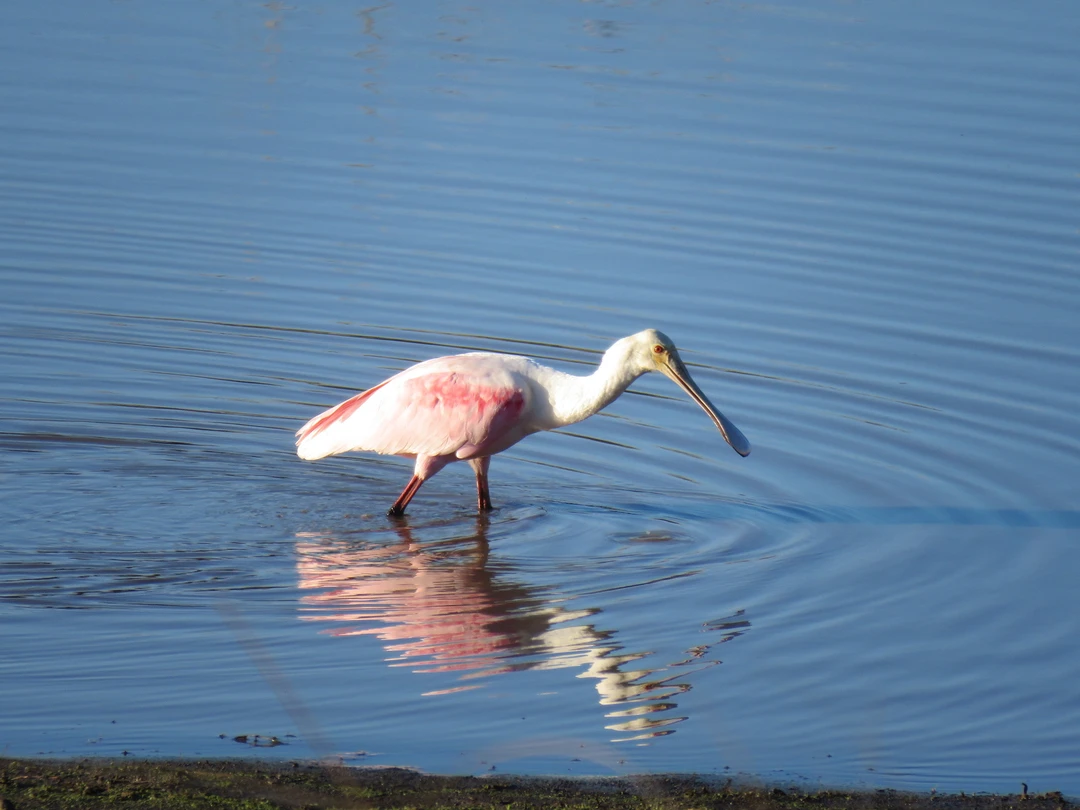
The Roseate Spoonbill (Platalea ajaja) is a strikingly beautiful wading bird, easily recognized by its vibrant pink plumage and distinctive spoon-shaped bill. It plays a crucial role in its wetland ecosystems, primarily by regulating populations of small aquatic organisms. While not widely celebrated in popular culture, its unique appearance and behavior make it a favorite among birdwatchers and a symbol of healthy coastal habitats. It is the only spoonbill species found in the Americas.
Photos of Roseate Spoonbill
Compare plumage, posture, and field context across this image set.
Roseate Spoonbill sounds
Listen to a small selection of reference recordings.
About the Roseate Spoonbill
The Roseate Spoonbill (Platalea ajaja) is a strikingly beautiful wading bird, easily recognized by its vibrant pink plumage and distinctive spoon-shaped bill. It plays a crucial role in its wetland ecosystems, primarily by regulating populations of small aquatic organisms. While not widely celebrated in popular culture, its unique appearance and behavior make it a favorite among birdwatchers and a symbol of healthy coastal habitats. It is the only spoonbill species found in the Americas.
Scientific classification
Phylum: Chordata
Clazz: Aves
Order: Pelecaniformes
Family: Threskiornithidae
Genus: Platalea
Species: Platalea ajaja
Habitat and distribution
Adaptations: Their specialized spoon-shaped bill is highly sensitive to touch, allowing them to efficiently detect and capture prey in murky waters. Their long legs are adapted for wading in shallow water.
Variations: No recognized subspecies, although there may be slight variations in size and plumage intensity across their range.
Distribution: Found primarily in coastal regions of the southeastern United States (Florida, Louisiana, Texas), the Caribbean, Central America, and South America, extending as far south as Argentina and Chile. They are generally non-migratory, but some populations may move locally in response to water levels and food availability.
Habitat Types: Coastal marshes, Mangrove swamps, Estuaries, Lagoons, Mudflats
Climate Zones: Tropical, Subtropical, Temperate (warm temperate)
Diet and feeding
Primary foods: Small fish, Crustaceans (shrimp, crabs), Aquatic insects, Mollusks, Occasionally plant material
Foraging behavior: They feed by sweeping their partially open bill from side to side in shallow water, using tactile receptors to detect prey. They often feed in groups.
Seasonal diet variations: Diet may vary slightly depending on prey availability in different seasons or locations, but generally remains consistent.
Specializations: The spoon-shaped bill, with its sensitive nerve endings, is a highly specialized adaptation for tactile feeding in murky waters.
Reproduction and lifecycle
Breeding season: Varies geographically; in Florida, typically November to February; in Texas, March to May.
Regional variations: Breeding season is influenced by local rainfall patterns and water levels.
Courtship rituals: Includes bill-clattering, mutual preening, and exchanging nesting material.
Nest Type: Platform nest built in trees or shrubs, often in colonies with other wading birds.
Nesting Materials: Sticks, Twigs, Leaves, Sometimes lined with grass
Parental care: Both parents share incubation duties (approximately 22-24 days) and feeding of the chicks.
Fledging period: Approximately 5-6 weeks until chicks leave the nest, but they may remain dependent on parents for several more weeks.
Clutch Size: Typically 2-4 eggs
Physical characteristics
Sex-Based Plumage Differences: Males are slightly larger
Length: 71-86 cm
Wingspan: 120-133 cm
Weight: 1200-1800 g
Lifespan: Up to 15 years in the wild, potentially longer in captivity (records are limited).
Breeding Plumage: Breeding adults have brighter pink plumage, with deeper red patches on the wings and chest. Non-breeding adults are paler pink. Juveniles are whitish with pale pink tinges.
Seasonal Feather Changes: The intensity of the pink coloration fades outside of the breeding season.
Notable features: Spatulate (spoon-shaped) bill, Bright pink plumage (in adults), Long, reddish legs, Bare, greenish facial skin
Interesting facts
The pink color of the Roseate Spoonbill comes from its diet.: They consume carotenoid pigments found in crustaceans, which are then deposited in their feathers.
Young spoonbills have straight bills.: The spoon shape develops gradually as they mature.
Roseate Spoonbills were once hunted for their feathers.: In the late 19th and early 20th centuries, their populations declined significantly due to the plume trade.
Frequently asked questions
What is the difference between a Roseate Spoonbill and a flamingo?
While both are pink, flamingos have much longer legs and necks, and filter-feed with their heads upside down. Spoonbills have the distinctive spoon-shaped bill.
Where can I see Roseate Spoonbills?
Look for them in coastal wetlands in the southeastern United States, the Caribbean, and parts of Central and South America.
Are Roseate Spoonbills endangered?
They are currently classified as 'Least Concern' by the IUCN, but they face ongoing threats from habitat loss and degradation. Consult a professional for medical or expert advice.
Compare the image, sound, habitat, and physical characteristics together when reviewing a sighting.