
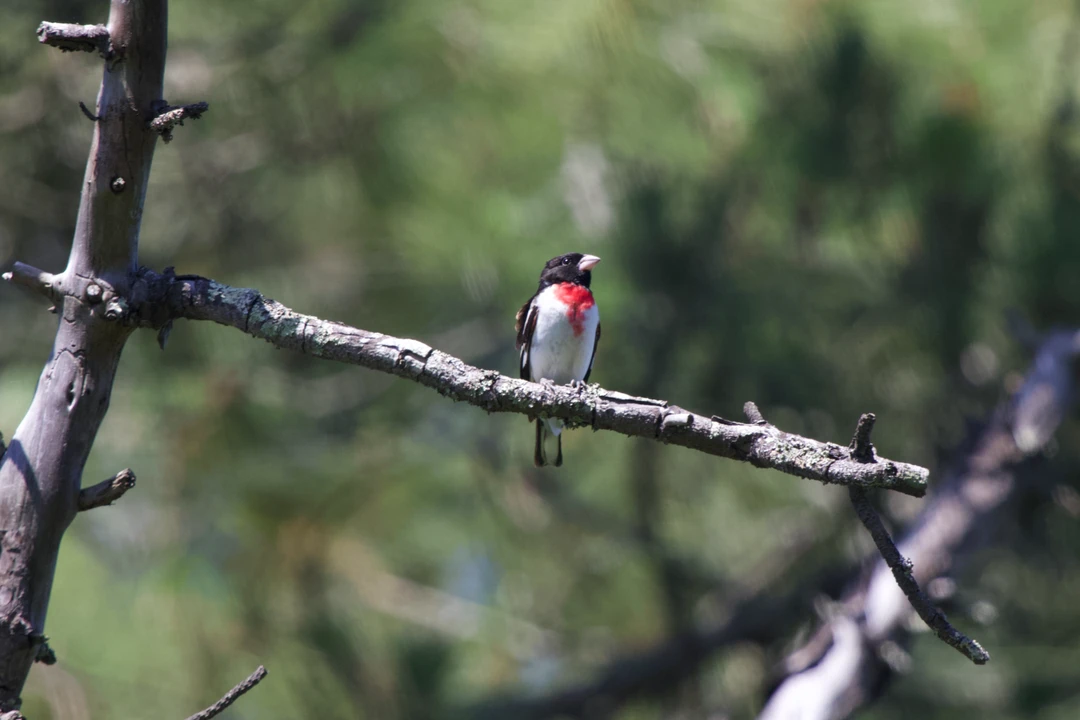
The Rose-breasted Grosbeak (Pheucticus ludovicianus) is a striking songbird known for its vibrant plumage and melodious song. Males display a distinctive black and white pattern with a bright red patch on their breast, while females have a more subdued brown and streaked appearance. This species plays an important ecological role as a seed disperser and insectivore. It is a familiar sight in eastern North American forests during the breeding season and holds a special place in the hearts of birdwatchers for its beauty and song.
Photos of Rose-breasted Grosbeak
Compare plumage, posture, and field context across this image set.
Rose-breasted Grosbeak sounds
Listen to a small selection of reference recordings.
About the Rose-breasted Grosbeak
The Rose-breasted Grosbeak (Pheucticus ludovicianus) is a striking songbird known for its vibrant plumage and melodious song. Males display a distinctive black and white pattern with a bright red patch on their breast, while females have a more subdued brown and streaked appearance. This species plays an important ecological role as a seed disperser and insectivore. It is a familiar sight in eastern North American forests during the breeding season and holds a special place in the hearts of birdwatchers for its beauty and song.
Scientific classification
Phylum: Chordata
Clazz: Aves
Order: Passeriformes
Family: Cardinalidae
Genus: Pheucticus
Species: Pheucticus ludovicianus
Habitat and distribution
Adaptations: Their strong, conical beak is well-adapted for cracking seeds and crushing insects. Their migratory behavior allows them to exploit seasonally abundant food resources.
Variations: No widely recognized subspecies.
Distribution: Breeds across eastern and central North America, from southern Canada to the central United States. Migrates to Central and northern South America for the winter, including Mexico, Panama, Colombia, and Venezuela. Rare vagrant to western Europe.
Habitat Types: Deciduous forests, Mixed woodlands, Forest edges, Parks, Gardens
Climate Zones: Temperate, Subtropical
Diet and feeding
Primary foods: Insects, Seeds, Fruits, Berries
Foraging behavior: Forages in trees and shrubs, gleaning insects from leaves and branches. Also feeds on the ground, hopping to find seeds and fallen fruit. Will visit bird feeders, especially for sunflower seeds.
Seasonal diet variations: Diet shifts with availability. Insects are more prevalent in the breeding season, while seeds and fruits are more important in the fall and winter.
Specializations: The strong beak allows it to crack open hard seeds that other birds may not be able to access.
Reproduction and lifecycle
Breeding season: May-July
Regional variations: Slightly earlier in the southern part of their range.
Courtship rituals: Males sing from exposed perches to attract females. Courtship displays include wing fluttering and bowing.
Nest Type: Cup-shaped nest built in trees or shrubs.
Nesting Materials: Twigs, Weeds, Grass, Rootlets, Animal hair
Parental care: Both parents incubate the eggs (12-14 days) and feed the chicks. The female does most of the brooding.
Fledging period: 9-13 days after hatching.
Clutch Size: 3-5 eggs
Physical characteristics
Sex-Based Plumage Differences: Minimal
Length: 18-22 cm
Wingspan: 29-33 cm
Weight: 39-49 g
Lifespan: Up to 9 years in the wild; up to 24 years in captivity.
Breeding Plumage: Breeding males have black head, back, and wings with white wing patches and a bright red triangle on the breast. Females and non-breeding males are brown and streaked, with a white eyebrow stripe. Non-breeding males may retain some red on the breast, but it is less intense.
Seasonal Feather Changes: Males molt into a more subdued plumage after breeding, resembling females but often with some red remaining.
Notable features: Large, conical beak, Red 'V' on the breast of breeding males, White wing bars
Interesting facts
Both male and female Rose-breasted Grosbeaks sing.: This is unusual among songbirds, where males are typically the primary singers.
They can hybridize with Black-headed Grosbeaks where their ranges overlap.: This creates offspring with intermediate plumage characteristics.
They are known to eat toxic monarch butterflies.: They seem to be unaffected by the toxins, possibly by discarding the wings and other parts with the highest concentration of toxins.
Frequently asked questions
What do I do if I find a baby Rose-breasted Grosbeak?
If the bird appears injured or truly orphaned, contact a local wildlife rehabilitator. It's best to leave fledglings alone unless they are in immediate danger, as the parents are likely nearby.
How can I attract Rose-breasted Grosbeaks to my yard?
Provide a source of fresh water and offer sunflower seeds in a bird feeder. Planting native trees and shrubs that provide food and shelter can also attract them.
Where do Rose-breasted Grosbeaks go in the winter?
They migrate to Central and northern South America, including countries like Mexico, Panama, Colombia, and Venezuela.
Compare the image, sound, habitat, and physical characteristics together when reviewing a sighting.