
The Red-winged Blackbird (Agelaius phoeniceus) is a highly recognizable and widespread passerine bird native to North and Central America. Known for the male's striking black plumage with vibrant red and yellow shoulder patches (epaulets), it plays a significant role in its ecosystem as both a seed disperser and an insect predator. While not holding specific cultural significance in many areas, its conspicuous presence and distinctive calls make it a familiar symbol of wetlands and open fields. It is one of the most abundant landbirds in North America.
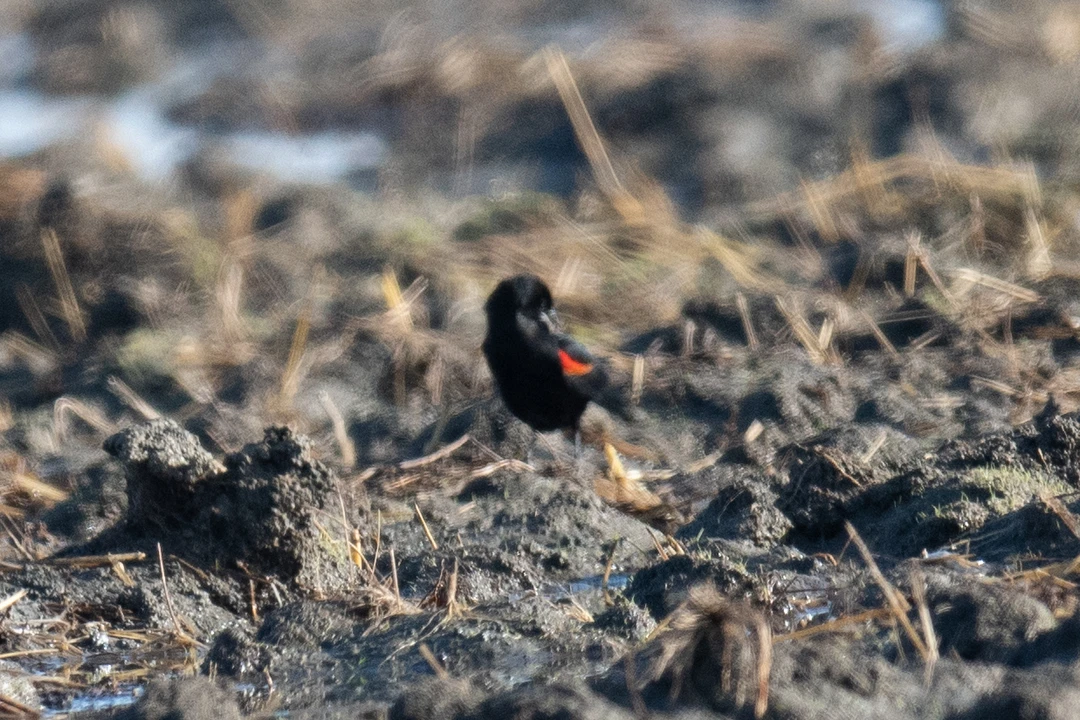
Photos of Red-winged Blackbird
Compare plumage, posture, and field context across this image set.
Red-winged Blackbird sounds
Listen to a small selection of reference recordings.
About the Red-winged Blackbird
The Red-winged Blackbird (Agelaius phoeniceus) is a highly recognizable and widespread passerine bird native to North and Central America. Known for the male's striking black plumage with vibrant red and yellow shoulder patches (epaulets), it plays a significant role in its ecosystem as both a seed disperser and an insect predator. While not holding specific cultural significance in many areas, its conspicuous presence and distinctive calls make it a familiar symbol of wetlands and open fields. It is one of the most abundant landbirds in North America.
Also known as: Redwing Blackbird, Red-shouldered Blackbird.
Scientific classification
Phylum: Chordata
Clazz: Aves
Order: Passeriformes
Family: Icteridae
Genus: Agelaius
Species: Agelaius phoeniceus
Habitat and distribution
Adaptations: Red-winged Blackbirds are highly adaptable to various wetland and open habitats. Their broad diet allows them to thrive in different environments. Their strong legs and feet are well-suited for perching on reeds and cattails, common vegetation in their preferred habitats.
Variations: Numerous subspecies (up to 25) are recognized, differing primarily in size and the coloration of the females. Some island populations, like those in California, show subtle variations in the male's epaulet color.
Distribution: The Red-winged Blackbird breeds across most of North America, from Alaska and Canada south to Mexico and parts of Central America. Northern populations are migratory, wintering in the southern United States and south along both coasts. Some populations in the southern part of their range are resident year-round. They have an altitudinal range from sea level to over 2,500 meters.
Habitat Types: Marshes, Wetlands, Fields, Agricultural areas, Roadsides
Climate Zones: Temperate, Subtropical, Tropical
Diet and feeding
Primary foods: Insects, Seeds, Grains, Spiders
Foraging behavior: Red-winged Blackbirds forage on the ground, in vegetation, and sometimes by hawking insects in the air. They often glean insects from plants and probe the ground for seeds. During the breeding season, they are primarily insectivorous, feeding their young a protein-rich diet.
Seasonal diet variations: Their diet shifts seasonally. Insects are the primary food source during the breeding season, while seeds and grains become more important in the fall and winter.
Specializations: Their strong, conical bill is well-suited for both cracking seeds and capturing insects. They are opportunistic feeders, adapting their diet to available resources.
Reproduction and lifecycle
Breeding season: Breeding season typically occurs from late spring to mid-summer (April-July), varying slightly with latitude.
Regional variations: Southern populations may start breeding earlier than northern populations.
Courtship rituals: Males display their epaulets and sing a distinctive "conk-la-ree" song to attract females and defend their territories. They often engage in aerial chases and displays.
Nest Type: Cup-shaped nest, usually built in dense vegetation like cattails or reeds, close to or over water.
Nesting Materials: Cattails, Reeds, Grasses, Mud, Plant fibers
Parental care: The female primarily incubates the eggs, although the male may occasionally assist. Both parents feed the chicks. Males are often polygynous, defending territories with multiple nesting females.
Fledging period: Approximately 10-14 days until fledging.
Clutch Size: Typically 3-5 eggs.
Physical characteristics
Sex-Based Plumage Differences: Males are generally larger than females.
Length: 17-23 cm
Wingspan: 28-40 cm
Weight: 32-77 g
Lifespan: The average lifespan in the wild is about 2 years, although some individuals have been recorded living over 15 years.
Breeding Plumage: Breeding males are glossy black with bright red shoulder patches (epaulets) bordered by yellow. Non-breeding males have duller plumage, with the red often partially concealed. Females are streaked brown and buff, resembling large sparrows.
Seasonal Feather Changes: The most significant seasonal variation is the dulling of the male's plumage in the non-breeding season. The intensity of the red and yellow epaulets can also vary.
Notable features: Bright red and yellow epaulets on males (breeding plumage), Strong, pointed bill, Streaked brown plumage in females
Interesting facts
Males can have up to 15 different females nesting within their territory.: This polygynous mating system is driven by the male's ability to defend high-quality nesting habitat.
Red-winged Blackbirds are one of the most studied bird species in North America.: Their abundance and ease of observation make them ideal subjects for research on behavior, ecology, and evolution.
They sometimes form mixed-species flocks with other blackbirds and grackles.: These large flocks can cause significant damage to agricultural crops, particularly grains.
Frequently asked questions
What do Red-winged Blackbirds eat?
They eat a variety of insects, seeds, and grains. Their diet changes seasonally, with insects being more important during the breeding season.
Where do Red-winged Blackbirds build their nests?
They build cup-shaped nests in dense vegetation, usually near or over water, such as in marshes and wetlands.
Are Red-winged Blackbirds aggressive?
Males are highly territorial during the breeding season and will aggressively defend their nesting areas from other birds.
Why do male Red-winged Blackbirds have red patches?
The red epaulets are used for display, both to attract females and to signal dominance to other males.
Compare the image, sound, habitat, and physical characteristics together when reviewing a sighting.