
The Red-tailed Hawk (Buteo jamaicensis) is one of the most widespread and recognizable raptors in North America. Known for their keen eyesight and broad, rounded wings, these birds of prey play a crucial role in controlling rodent populations. They are adaptable, found in diverse habitats, and are often seen soaring high above open fields or perched on telephone poles. While not culturally significant in the same way as some eagles, the Red-tailed Hawk is a symbol of strength and resilience, frequently featured in artwork and literature.
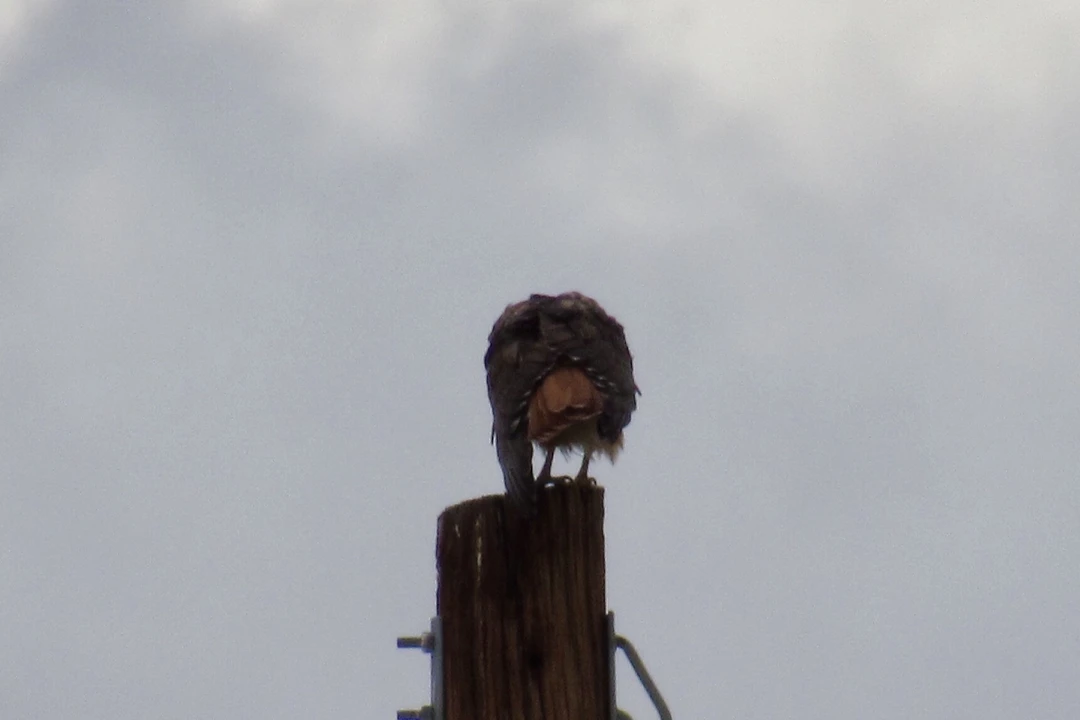
Photos of Red-tailed Hawk
Compare plumage, posture, and field context across this image set.
Red-tailed Hawk sounds
Listen to a small selection of reference recordings.
About the Red-tailed Hawk
The Red-tailed Hawk (Buteo jamaicensis) is one of the most widespread and recognizable raptors in North America. Known for their keen eyesight and broad, rounded wings, these birds of prey play a crucial role in controlling rodent populations. They are adaptable, found in diverse habitats, and are often seen soaring high above open fields or perched on telephone poles. While not culturally significant in the same way as some eagles, the Red-tailed Hawk is a symbol of strength and resilience, frequently featured in artwork and literature.
Also known as: Red-tailed Buzzard, Redtail, Hen Hawk, Chicken Hawk, Mouse Hawk.
Scientific classification
Phylum: Chordata
Clazz: Aves
Order: Accipitriformes
Family: Accipitridae
Genus: Buteo
Species: Buteo jamaicensis
Habitat and distribution
Adaptations: Their broad wings and soaring flight are well-suited for open habitats, allowing them to conserve energy while hunting. Their exceptional eyesight allows them to spot prey from great distances.
Variations: There are several recognized subspecies, differing slightly in size and plumage. For example, the 'Harlan's Hawk' (B. j. harlani) is a darker variant found in Alaska and northwestern Canada.
Distribution: Red-tailed Hawks are found throughout North America, ranging from Alaska and Canada down to Panama and the West Indies. They exhibit some migratory behavior, with northern populations moving south for the winter. Their altitudinal range extends from sea level to high mountain slopes.
Habitat Types: Open woodlands, Grasslands, Deserts, Farmlands, Urban areas
Climate Zones: Temperate, Tropical, Subarctic
Diet and feeding
Primary foods: Small mammals (rodents, rabbits), Birds, Reptiles, Amphibians, Invertebrates
Foraging behavior: Red-tailed Hawks primarily hunt from a high perch or while soaring. They use their keen eyesight to spot prey, then swoop down to capture it with their talons.
Seasonal diet variations: Diet may vary depending on prey availability. For example, they may consume more birds during migration periods or more insects during summer months.
Specializations: Their sharp talons and powerful beak are adapted for capturing and consuming a variety of prey.
Reproduction and lifecycle
Breeding season: Generally begins in late winter or early spring, varying slightly by region.
Regional variations: Breeding may start earlier in southern regions and later in northern regions.
Courtship rituals: Courtship involves aerial displays, including dives, swoops, and talon presentations. Pairs may also engage in vocalizations.
Nest Type: Large stick nest, usually built in a tall tree or on a cliff ledge.
Nesting Materials: Sticks, Twigs, Bark, Leaves
Parental care: Both parents share incubation duties, which last for about 28-35 days. Both parents also feed the chicks. *Consult a professional for medical or expert advice.*
Fledging period: Chicks typically fledge (leave the nest) at around 42-46 days old.
Clutch Size: Typically 1-5 eggs.
Physical characteristics
Sex-Based Plumage Differences: Females are typically larger than males.
Length: 45-65 cm
Wingspan: 110-145 cm
Weight: 690-1460 g
Lifespan: In the wild, they can live up to 20 years or more, with some individuals reaching 30 years in captivity.
Breeding Plumage: Adult plumage is relatively consistent year-round, though it may appear slightly more worn in non-breeding season.
Seasonal Feather Changes: Minimal seasonal variation in adults.
Notable features: Reddish-brown tail (in adults), Dark brown back and upper wings, Pale underparts with a dark belly band, Strong, hooked beak, Powerful talons
Interesting facts
Red-tailed Hawks have exceptional vision.: Their eyesight is estimated to be eight times better than that of humans, allowing them to spot prey from great distances.
They can reach speeds of up to 120 mph during a dive.: This incredible speed is used when hunting prey.
The call of the Red-tailed Hawk is often used in movies as the sound of an eagle.: This is because its scream is more powerful and dramatic than the actual call of the Bald Eagle.
Frequently asked questions
What is the biggest threat to Red-tailed Hawks?
Historically, shooting was a major threat, but now habitat loss and secondary poisoning from rodenticides are significant concerns.
How can I tell a male Red-tailed Hawk from a female?
It's difficult to distinguish them visually, but females are generally larger than males.
Do Red-tailed Hawks mate for life?
They are generally monogamous and may maintain pair bonds for several years, but if one partner dies, the other will seek a new mate.
Compare the image, sound, habitat, and physical characteristics together when reviewing a sighting.