
The Red Junglefowl (*Gallus gallus*) is a tropical bird in the pheasant family, Phasianidae. It holds significant historical and biological importance as the primary ancestor of the domestic chicken. This species plays a crucial role in its ecosystem, contributing to seed dispersal and serving as prey for various predators. While the domestic chicken is ubiquitous, the pure wild Red Junglefowl faces increasing threats, primarily due to hybridization with feral chickens and habitat loss. Culturally, the Red Junglefowl is a symbol of the wild, representing the untamed origins of one of humanity's most important domesticated animals.
Photos of Red Junglefowl
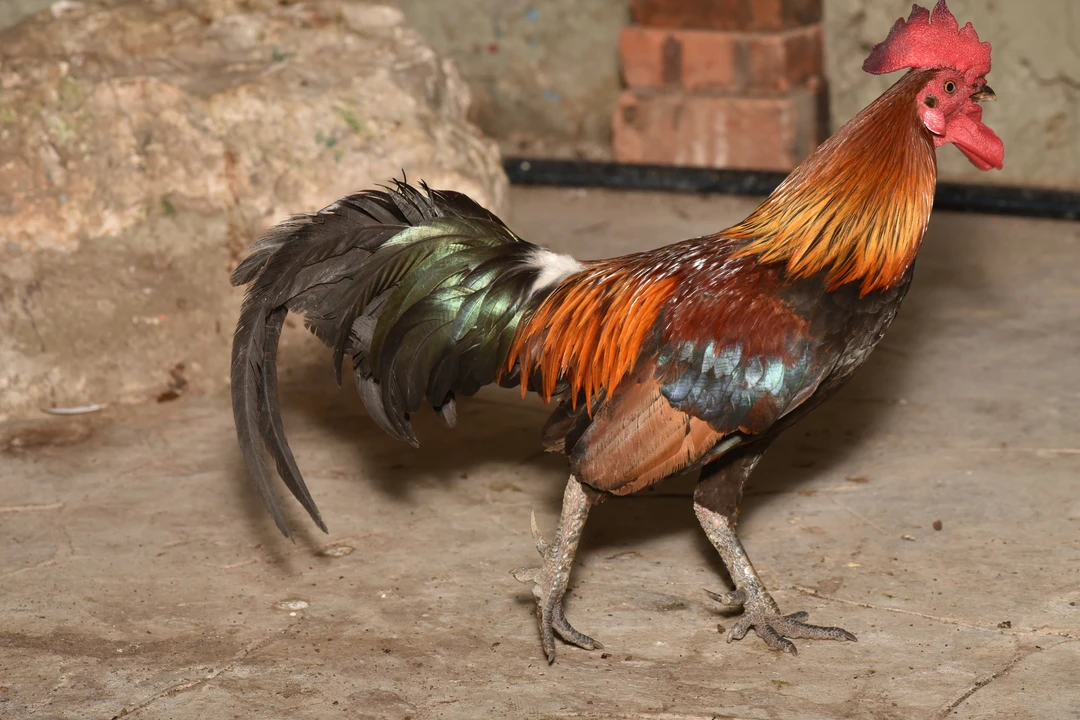
Compare plumage, posture, and field context across this image set.
Red Junglefowl sounds
Listen to a small selection of reference recordings.
About the Red Junglefowl
The Red Junglefowl (*Gallus gallus*) is a tropical bird in the pheasant family, Phasianidae. It holds significant historical and biological importance as the primary ancestor of the domestic chicken. This species plays a crucial role in its ecosystem, contributing to seed dispersal and serving as prey for various predators. While the domestic chicken is ubiquitous, the pure wild Red Junglefowl faces increasing threats, primarily due to hybridization with feral chickens and habitat loss. Culturally, the Red Junglefowl is a symbol of the wild, representing the untamed origins of one of humanity's most important domesticated animals.
Scientific classification
Phylum: Chordata
Clazz: Aves
Order: Galliformes
Family: Phasianidae
Genus: Gallus
Species: Gallus gallus
Habitat and distribution
Adaptations: Red Junglefowl are well-adapted to dense undergrowth, using their strong legs and feet for scratching and foraging on the forest floor. Their relatively short, rounded wings allow for quick bursts of flight to escape predators or reach roosting sites in trees. They have a cryptic plumage that assists with camouflage.
Variations: Five subspecies are generally recognized: *G. g. gallus* (Indochina), *G. g. spadiceus* (Myanmar, Thailand, and Malaysia), *G. g. jabouillei* (Vietnam), *G. g. murghi* (India and Bangladesh), and *G. g. bankiva* (Java). These subspecies differ slightly in plumage coloration and distribution.
Distribution: The Red Junglefowl's native range spans across a large portion of South and Southeast Asia, including countries like India, Bangladesh, Myanmar, Thailand, Vietnam, Laos, Cambodia, Malaysia, Indonesia, Singapore, and southern China. There are introduced populations in other parts of the world, often hybridized with domestic chickens. They have a varied altitudinal range, from lowlands to elevations of up to 2000 meters.
Habitat Types: Tropical and subtropical dry broadleaf forests, Secondary forests, Bamboo groves, Shrublands, Forest edges, Agricultural areas with nearby cover
Climate Zones: Tropical, Subtropical
Diet and feeding
Primary foods: Seeds, Fruits, Insects, Small invertebrates, Grains, Leaves, Bamboo shoots
Foraging behavior: Red Junglefowl are primarily ground foragers, scratching at the leaf litter and soil with their feet to uncover food. They typically forage in small groups, often near the cover of dense vegetation. They are opportunistic feeders, taking advantage of available food sources.
Seasonal diet variations: Diet varies depending on the availability of food. During the wet season, insects and fruits may be more abundant, while seeds and grains may form a larger part of the diet during the dry season.
Specializations: Their strong legs and feet are adapted for scratching and digging. Their beak is well-suited for picking up seeds and insects.
Reproduction and lifecycle
Breeding season: Breeding season varies depending on location and rainfall patterns, but generally occurs during the drier months. In some regions, they may breed year-round.
Regional variations: In India, breeding often occurs from March to May, while in Southeast Asia, it may extend from January to July.
Courtship rituals: Males perform elaborate courtship displays, including wing-whirring, tail-fanning, and offering food to females. They also engage in 'tidbitting,' where they pick up and drop food items to attract females.
Nest Type: A simple scrape on the ground, usually hidden under dense vegetation or at the base of a tree.
Nesting Materials: Leaves, Grass, Twigs, Feathers
Parental care: The female incubates the eggs for 18-21 days. Chicks are precocial, meaning they are relatively mobile and able to feed themselves shortly after hatching. The female provides care and protection for the chicks, but the male does not typically participate in parental care.
Fledging period: Chicks can fly short distances within a week, and are fully fledged within 4-5 weeks.
Clutch Size: Typically 4-6 eggs, but can range from 2-12.
Physical characteristics
Sex-Based Plumage Differences: Males are significantly larger than females.
Length: 40-75 cm
Wingspan: 65-75 cm
Weight: 500-1050 g
Lifespan: In the wild, Red Junglefowl typically live for 3-5 years, although some individuals may live longer. In captivity, they can live for up to 10 years, or rarely even longer.
Breeding Plumage: Males have brighter, more elaborate plumage during the breeding season, including long, iridescent tail feathers and prominent red wattles and combs. Non-breeding males may have duller colors.
Seasonal Feather Changes: Males undergo a post-breeding molt, temporarily losing their long tail feathers and developing a duller 'eclipse' plumage.
Notable features: Red comb and wattles (more prominent in males), Long, arched tail feathers (in males), Sharp spurs on legs (used for fighting, primarily in males), Dark legs and feet
Interesting facts
Red Junglefowl are the primary ancestors of all domestic chicken breeds.: Domestication is believed to have occurred thousands of years ago in Southeast Asia.
They can fly strongly, but prefer to run and escape into dense vegetation.: Their flight is typically short and used for escaping predators or reaching roosting sites.
Males have sharp spurs on their legs that they use in fights for dominance and territory.: These spurs can inflict serious injury.
Red Junglefowl roost in trees at night for protection from predators.: They typically choose trees with dense foliage for cover.
Frequently asked questions
What is the difference between Red Junglefowl and domestic chickens?
Pure Red Junglefowl are generally smaller and more slender than most domestic chicken breeds. They also have distinct plumage differences, particularly in males, and exhibit more wild behaviors.
Are Red Junglefowl endangered?
The species as a whole is listed as Least Concern by the IUCN. However, genetically pure populations are declining due to hybridization with domestic chickens and habitat loss. This means that *true* wild Red Junglefowl are becoming increasingly rare.
Can Red Junglefowl interbreed with domestic chickens?
Yes, they can readily interbreed, and this is a major threat to the genetic integrity of wild Red Junglefowl populations.
Where can I see Red Junglefowl?
You can find Red Junglefowl within their natural range across South and Southeast Asia. They are often found in forested areas, but can also be seen in areas with mixed agriculture and vegetation. Observing pure Red Junglefowl can be challenging due to their shy nature and the prevalence of hybrids.
Compare the image, sound, habitat, and physical characteristics together when reviewing a sighting.