
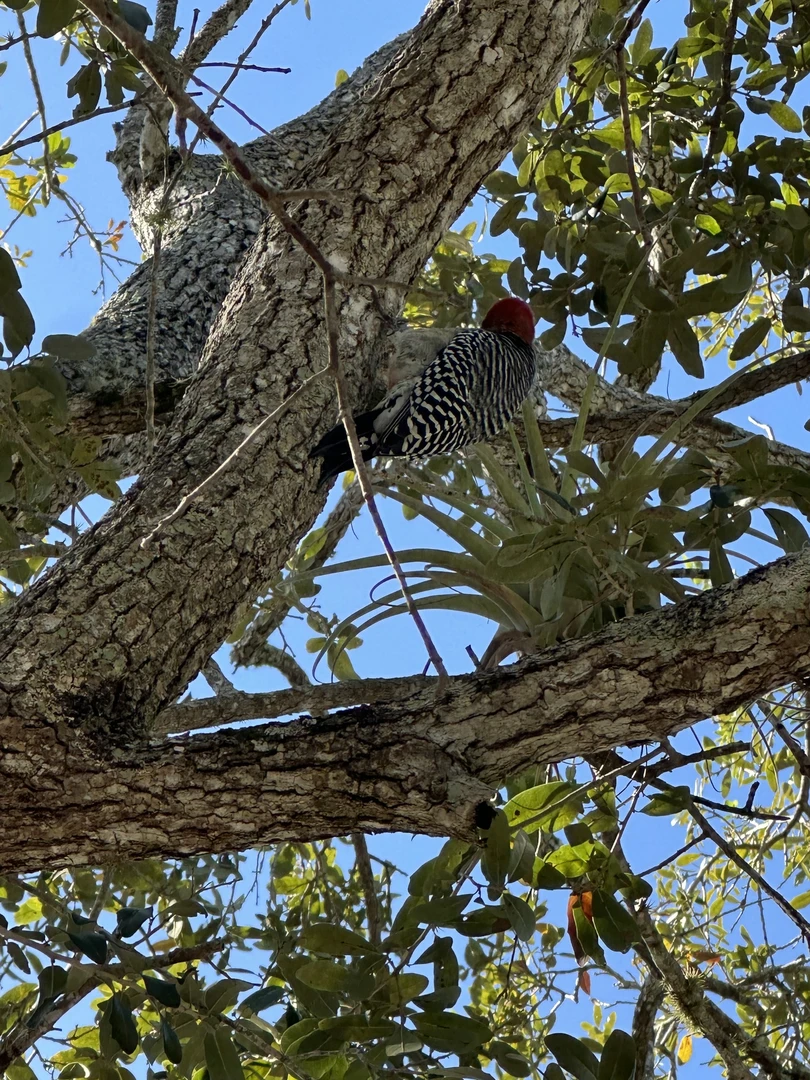
The Red-bellied Woodpecker (Melanerpes carolinus) is a medium-sized woodpecker common in the eastern United States. Despite its name, the red on its belly is often faint and difficult to see. It is more easily identified by the vibrant red cap and nape on males, and the black-and-white barred back present in both sexes. This species plays a vital role in forest ecosystems by controlling insect populations and creating cavities that are later used by other species for nesting. It is a familiar sight at backyard feeders, adding a splash of color and lively activity.
Photos of Red-bellied Woodpecker
Compare plumage, posture, and field context across this image set.
Red-bellied Woodpecker sounds
Listen to a small selection of reference recordings.
About the Red-bellied Woodpecker
The Red-bellied Woodpecker (Melanerpes carolinus) is a medium-sized woodpecker common in the eastern United States. Despite its name, the red on its belly is often faint and difficult to see. It is more easily identified by the vibrant red cap and nape on males, and the black-and-white barred back present in both sexes. This species plays a vital role in forest ecosystems by controlling insect populations and creating cavities that are later used by other species for nesting. It is a familiar sight at backyard feeders, adding a splash of color and lively activity.
Also known as: Zebra Woodpecker.
Scientific classification
Phylum: Chordata
Clazz: Aves
Order: Piciformes
Family: Picidae
Genus: Melanerpes
Species: Melanerpes carolinus
Habitat and distribution
Adaptations: Red-bellied Woodpeckers have strong, chisel-like bills for excavating wood and extracting insects. They possess zygodactyl feet (two toes pointing forward and two backward) for a secure grip on tree bark. A long, barbed tongue helps them extract insects from crevices.
Variations: Several subspecies have been described, differing slightly in size and plumage intensity, but these are not always consistently recognized.
Distribution: The Red-bellied Woodpecker is primarily found in the eastern United States, ranging from southeastern Canada (southern Ontario) south to Florida and west to the central Great Plains. It does not typically undertake long-distance migrations, though some northern populations may move slightly south in winter.
Habitat Types: Deciduous forests, Mixed woodlands, Pine forests, Suburban areas with mature trees, Parks
Climate Zones: Temperate, Subtropical
Diet and feeding
Primary foods: Insects, Arthropods, Fruits, Nuts, Seeds
Foraging behavior: Red-bellied Woodpeckers are versatile foragers. They glean insects from tree bark, probe crevices, and excavate wood to find larvae. They also readily consume fruits, nuts, and seeds, often visiting bird feeders. They are known to cache food, storing nuts and seeds in tree crevices for later consumption.
Seasonal diet variations: Their diet shifts with the seasons. Insects are more prominent in the warmer months, while fruits, nuts, and seeds become more important in the fall and winter.
Specializations: Their strong bill and long, barbed tongue are specializations for extracting insects from wood. Their ability to cling to vertical surfaces allows them to access food sources unavailable to many other birds.
Reproduction and lifecycle
Breeding season: Breeding season typically occurs from late winter to early summer, varying somewhat by region.
Regional variations: Breeding may start earlier in the southern parts of their range.
Courtship rituals: Courtship involves drumming, calling, and chasing. Males may tap on resonant surfaces to attract females and establish territories. Mutual tapping and head-bobbing displays are also common.
Nest Type: Cavity nests, typically excavated in dead trees or dead limbs of live trees.
Nesting Materials: Wood chips (from excavation)
Parental care: Both parents share incubation duties, which last about 12-14 days. Both parents also feed the nestlings, which fledge after approximately 24-27 days. The young may remain with the parents for several weeks after fledging.
Fledging period: 24-27 days
Clutch Size: Typically 4-5 eggs.
Physical characteristics
Sex-Based Plumage Differences: Males are slightly larger
Length: 22-26 cm
Wingspan: 38-46 cm
Weight: 56-91 g
Lifespan: Up to 12 years in the wild has been recorded, but the average lifespan is likely shorter.
Breeding Plumage: Plumage remains relatively consistent throughout the year.
Seasonal Feather Changes: No significant seasonal changes
Notable features: Black-and-white barred back, Red cap and nape (males), Red nape only (females), Long, chisel-like bill
Interesting facts
They can stick their tongue out nearly 2 inches past the end of their beak.: This helps them reach insects deep within tree crevices.
The red on their belly is often faint and difficult to see.: The name 'Red-bellied' can be misleading; the red head markings are much more prominent.
They often store food in tree crevices.: This caching behavior helps them survive during periods of food scarcity.
Red-bellied Woodpecker brains are protected from damage by special adaptations.: These include a spongy bone structure in the skull and a hyoid bone that wraps around the brain, acting as a shock absorber.
Frequently asked questions
What do Red-bellied Woodpeckers eat?
They eat a variety of insects, fruits, nuts, and seeds. They are common visitors to bird feeders, where they enjoy suet, peanuts, and sunflower seeds.
Where do Red-bellied Woodpeckers nest?
They nest in cavities that they excavate in dead trees or dead limbs of live trees.
Are Red-bellied Woodpeckers aggressive?
They can be territorial, especially during the breeding season, and may chase away other woodpeckers or birds from their nesting or feeding areas.
How can I attract Red-bellied Woodpeckers to my yard?
Provide a source of food, such as suet feeders, peanut feeders, or sunflower seed feeders. Leaving dead trees or snags standing (if safe to do so) can also provide nesting habitat. A bird bath can provide a water source. *Consult an expert for safety advice.*
Compare the image, sound, habitat, and physical characteristics together when reviewing a sighting.