
The Purple Finch (Haemorhous purpureus) is a charming and vibrant bird native to North America. Despite its name, the male's plumage is more of a raspberry-red than a true purple. These finches play a significant ecological role as seed dispersers, contributing to the health of forest ecosystems. While not holding any specific, widely recognized cultural significance, they are a beloved sight for birdwatchers and are often featured in nature guides and artwork, symbolizing the beauty of North American woodlands.
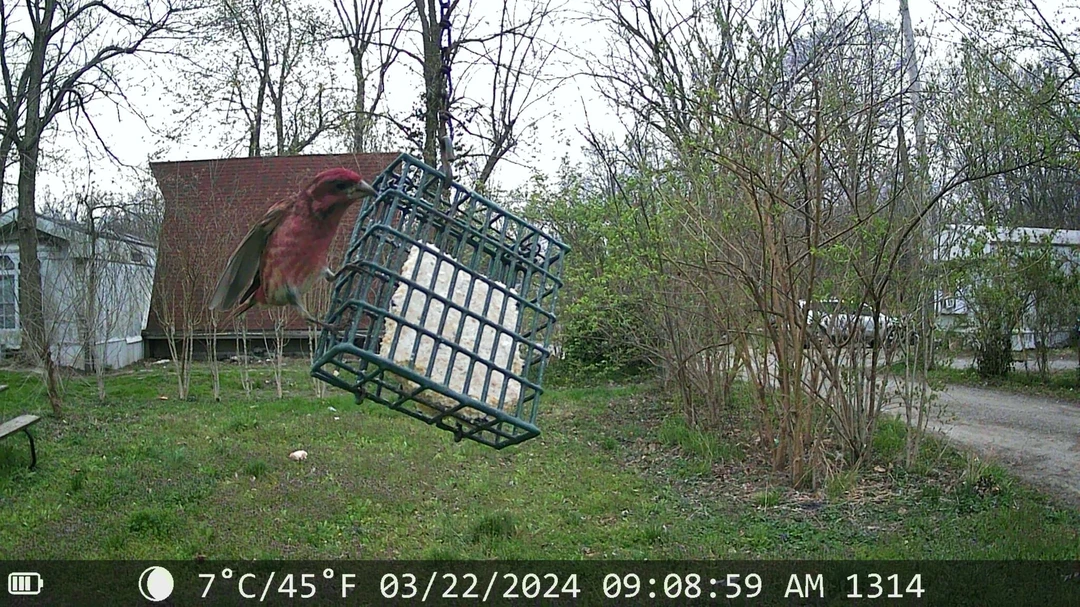
Photos of Purple Finch
Compare plumage, posture, and field context across this image set.
Purple Finch sounds
Listen to a small selection of reference recordings.
About the Purple Finch
The Purple Finch (Haemorhous purpureus) is a charming and vibrant bird native to North America. Despite its name, the male's plumage is more of a raspberry-red than a true purple. These finches play a significant ecological role as seed dispersers, contributing to the health of forest ecosystems. While not holding any specific, widely recognized cultural significance, they are a beloved sight for birdwatchers and are often featured in nature guides and artwork, symbolizing the beauty of North American woodlands.
Scientific classification
Phylum: Chordata
Clazz: Aves
Order: Passeriformes
Family: Fringillidae
Genus: Haemorhous
Species: Haemorhous purpureus
Habitat and distribution
Adaptations: Purple Finches possess strong, conical beaks adapted for cracking seeds. Their relatively compact body shape and dense plumage provide insulation in colder climates. Their ability to utilize a variety of habitats, including human-altered landscapes, demonstrates their adaptability.
Variations: Two main subspecies are generally recognized: *H. p. purpureus* (eastern) and *H. p. californicus* (western). The western subspecies tends to be slightly darker and browner, with subtle differences in song.
Distribution: Purple Finches are found across North America. Their breeding range extends across Canada and the northeastern United States, as well as down the Pacific coast. During winter, they migrate southwards, with some populations reaching the southern United States and occasionally into northern Mexico. They exhibit a moderate altitudinal range, typically found from sea level to moderate mountain elevations.
Habitat Types: Coniferous forests, Mixed woodlands, Parks, Suburban gardens
Climate Zones: Temperate, Boreal
Diet and feeding
Primary foods: Seeds, Berries, Insects, Buds
Foraging behavior: Purple Finches forage in trees and shrubs, often gleaning seeds and insects from branches. They also feed on the ground, hopping and scratching for seeds. They are frequent visitors to bird feeders, especially those offering sunflower seeds.
Seasonal diet variations: Diet varies seasonally. Insects are more prevalent in the diet during the breeding season, providing protein for growing chicks. Seeds and berries make up the majority of the diet in winter.
Specializations: Their strong, conical beak is perfectly adapted for cracking seeds. They also have a relatively agile body, allowing them to maneuver through branches while foraging.
Reproduction and lifecycle
Breeding season: Breeding season typically occurs from late spring to mid-summer (April-August), varying slightly with latitude.
Regional variations: Birds in southern regions may begin breeding earlier than those in northern areas.
Courtship rituals: Males perform courtship displays that include singing from a high perch, fluttering their wings, and offering food to the female.
Nest Type: Cup-shaped nest, usually placed in a conifer tree.
Nesting Materials: Twigs, Grass, Rootlets, Animal hair
Parental care: The female incubates the eggs for about 13 days. Both parents feed the chicks, which fledge (leave the nest) after approximately 13-16 days.
Fledging period: 13-16 days
Clutch Size: Typically 4-5 eggs.
Physical characteristics
Sex-Based Plumage Differences: Minimal
Length: 12-16 cm
Wingspan: 20-25 cm
Weight: 20-32 g
Lifespan: Average lifespan in the wild is 2-5 years, but some individuals can live longer (up to 8 years or more).
Breeding Plumage: Adult males in breeding plumage have a bright raspberry-red head, breast, and rump. Females and immature males are brown and streaky, lacking the red coloration. Non-breeding males may show a duller red.
Seasonal Feather Changes: Plumage is brightest during the breeding season. After molting in late summer, colors may be slightly duller.
Notable features: Conical beak, Notched tail, Streaked flanks (especially in females and immatures)
Interesting facts
The "Purple" Finch isn't actually purple.: The male's coloration is more accurately described as raspberry-red or rose-red.
They can be confused with House Finches.: House Finches are a closely related species, and distinguishing between them, especially females, can be challenging.
Purple Finches are known for their beautiful songs.: The male's song is a complex and melodious warble, often used to attract mates and defend territory.
They are adept at extracting seeds from cones.: Their strong beaks and agile movements allow them to efficiently access seeds within conifer cones.
Frequently asked questions
How can I attract Purple Finches to my yard?
Provide a bird feeder with black oil sunflower seeds, offer a source of fresh water, and plant native trees and shrubs that provide food and shelter.
What is the difference between a male and female Purple Finch?
Males have a bright raspberry-red head, breast, and rump, while females are brown and streaky.
Where do Purple Finches migrate?
Many populations migrate south for the winter, moving from Canada and the northern US to the southern US and sometimes into Mexico. Some populations are resident year-round.
Are Purple Finches endangered?
No. Purple Finches are listed as Least Concern by the IUCN.
Compare the image, sound, habitat, and physical characteristics together when reviewing a sighting.