
The Peregrine Falcon (Falco peregrinus) is a cosmopolitan bird of prey renowned for its incredible speed, making it the fastest animal on Earth. Reaching speeds over 320 km/h (200 mph) during its hunting stoop, this raptor is a symbol of power and agility. Peregrines play a crucial ecological role as apex predators, controlling populations of smaller birds. Historically, they have been prized in falconry and hold cultural significance in various societies, often representing freedom and nobility.
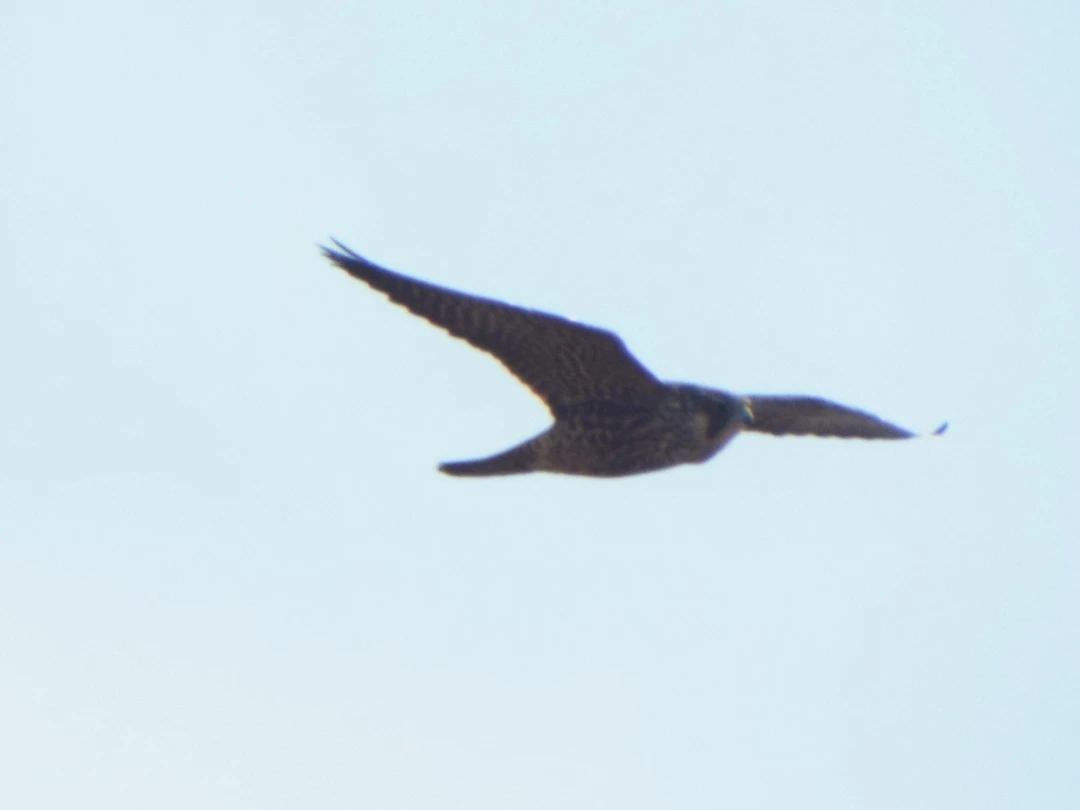
Photos of Peregrine Falcon
Compare plumage, posture, and field context across this image set.
Peregrine Falcon sounds
Listen to a small selection of reference recordings.
About the Peregrine Falcon
The Peregrine Falcon (Falco peregrinus) is a cosmopolitan bird of prey renowned for its incredible speed, making it the fastest animal on Earth. Reaching speeds over 320 km/h (200 mph) during its hunting stoop, this raptor is a symbol of power and agility. Peregrines play a crucial ecological role as apex predators, controlling populations of smaller birds. Historically, they have been prized in falconry and hold cultural significance in various societies, often representing freedom and nobility.
Also known as: Peregrine, Duck Hawk, Great-footed Hawk, Rock Falcon, Wandering Falcon.
Scientific classification
Phylum: Chordata
Clazz: Aves
Order: Falconiformes
Family: Falconidae
Genus: Falco
Species: Falco peregrinus
Habitat and distribution
Adaptations: Peregrine Falcons are adapted to a wide range of habitats, demonstrating behavioral flexibility. Their exceptional eyesight allows them to spot prey from great distances. In urban environments, they have adapted to nesting on tall buildings, which mimic their natural cliff habitat.
Variations: Numerous subspecies of Peregrine Falcon exist, differing in size, coloration, and migratory behavior. Examples include the Arctic Peregrine (F. p. tundrius) and the Peale's Falcon (F. p. pealei) of the Pacific Northwest.
Distribution: Peregrine Falcons have one of the widest natural distributions of any bird. They are found on every continent except Antarctica, and inhabit a vast range of latitudes, from Arctic tundra to tropical rainforests. They are also found on many oceanic islands. Some populations are migratory, traveling vast distances between breeding and wintering grounds.
Habitat Types: Cliffs, Mountains, Coastal areas, Urban environments (skyscrapers, bridges), Open country, Wetlands
Climate Zones: Arctic, Temperate, Tropical, Subtropical
Diet and feeding
Primary foods: Birds (pigeons, doves, waterfowl, songbirds), Occasionally bats
Foraging behavior: Peregrines primarily hunt by high-speed dives, or 'stoops,' striking prey in mid-air with clenched feet. They also hunt by pursuing prey in level flight or by capturing prey on the ground.
Seasonal diet variations: Diet can vary seasonally depending on prey availability. Migratory populations may target different prey species along their migration routes.
Specializations: Their exceptional speed and agility in flight, combined with keen eyesight, are key specializations for hunting. The narial tubercles are also a key adaptation.
Reproduction and lifecycle
Breeding season: Varies by region; generally spring in temperate zones.
Regional variations: Breeding can occur year-round in some tropical areas. Northern populations have a shorter breeding season due to climatic constraints.
Courtship rituals: Courtship involves aerial displays, including high-speed chases, dives, and vocalizations. The male often presents the female with prey.
Nest Type: Simple scrape on a cliff ledge, building ledge, or other elevated structure. They do not build elaborate nests.
Nesting Materials: No nest material typically used; eggs are laid directly on the substrate.
Parental care: Both parents incubate the eggs (though the female does the majority) and care for the young. The male primarily hunts and provides food, while the female broods and feeds the chicks.
Fledging period: Approximately 35-42 days until fledging (first flight).
Clutch Size: Typically 2-5 eggs.
Physical characteristics
Sex-Based Plumage Differences: Females are typically larger than males.
Length: 34-58 cm
Wingspan: 74-120 cm
Weight: 330-1500 g
Lifespan: Up to 15 years in the wild, potentially longer in captivity.
Breeding Plumage: Adult plumage is generally consistent year-round.
Seasonal Feather Changes: Minimal seasonal variation in adult plumage.
Notable features: Sharp, hooked beak for tearing prey., Powerful talons for grasping and killing prey., Dark 'malar stripe' or 'moustache' below the eye., Long, pointed wings for high-speed flight., Narial tubercles inside the nostrils to help withstand high speed air pressure during dives.
Interesting facts
The Peregrine Falcon is the fastest animal on Earth.: It can reach speeds over 320 km/h (200 mph) during its hunting stoop.
Peregrines have adapted to living in urban environments.: They nest on skyscrapers and bridges, which provide suitable nesting sites similar to cliffs.
Peregrine populations crashed in the mid-20th century due to pesticide use.: The pesticide DDT caused eggshell thinning, leading to reproductive failure.
They have a third eyelid, called a nictitating membrane.: It helps to protect and moisten the eye, especially during high-speed dives.
Frequently asked questions
What do Peregrine Falcons eat?
They primarily eat other birds, which they catch in mid-air.
Where do Peregrine Falcons live?
They are found on every continent except Antarctica, in a wide variety of habitats, including cliffs, mountains, and urban areas.
How fast can a Peregrine Falcon fly?
They can reach speeds over 320 km/h (200 mph) during their hunting dives.
Are Peregrine Falcons endangered?
They are currently listed as Least Concern by the IUCN, having recovered from near extinction in the mid-20th century.
Compare the image, sound, habitat, and physical characteristics together when reviewing a sighting.