
The Northern Flicker (Colaptes auratus) is a medium-sized woodpecker native to North America, known for its distinctive appearance and behavior. Unlike most woodpeckers, flickers often forage on the ground, searching for ants and beetles. They play a crucial role in controlling insect populations and are known for their undulating flight pattern and loud, ringing calls. The species holds cultural significance in some Indigenous communities, often associated with certain ceremonial practices and beliefs.
Photos of Northern Flicker
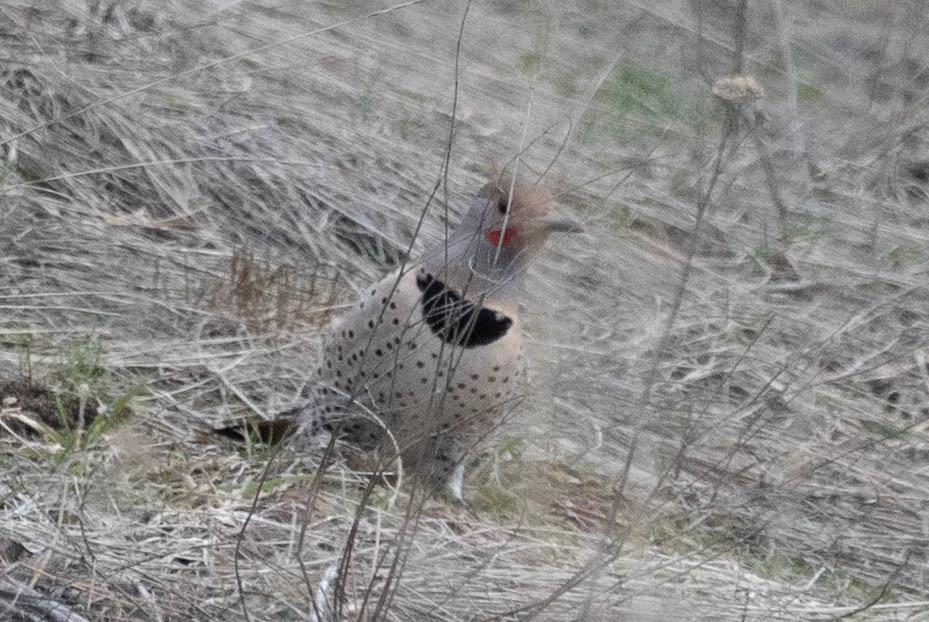
Compare plumage, posture, and field context across this image set.
Northern Flicker sounds
Listen to a small selection of reference recordings.
About the Northern Flicker
The Northern Flicker (Colaptes auratus) is a medium-sized woodpecker native to North America, known for its distinctive appearance and behavior. Unlike most woodpeckers, flickers often forage on the ground, searching for ants and beetles. They play a crucial role in controlling insect populations and are known for their undulating flight pattern and loud, ringing calls. The species holds cultural significance in some Indigenous communities, often associated with certain ceremonial practices and beliefs.
Also known as: Yellow-shafted Flicker, Red-shafted Flicker, Wick-up, Yarrup, Clape, Harry-wicket, Walk-up, Gaffer Woodpecker, Heigh-ho, Wake-up, Gawker Bird.
Scientific classification
Phylum: Chordata
Clazz: Aves
Order: Piciformes
Family: Picidae
Genus: Colaptes
Species: Colaptes auratus
Habitat and distribution
Adaptations: Northern Flickers possess strong claws for gripping tree bark and a long, barbed tongue for extracting insects from crevices. Their slightly curved bill is also well-suited for ground foraging.
Variations: There are several recognized subspecies, including the 'Yellow-shafted Flicker' of the east and the 'Red-shafted Flicker' of the west, distinguished by the color of their feather shafts and underparts.
Distribution: North America, ranging from Alaska and Canada south to Central America and Cuba. Some populations are migratory, moving south for the winter, while others are resident year-round. Their altitudinal range extends from sea level to high mountain forests.
Habitat Types: Open woodlands, Forest edges, Parks, Savannas, Residential areas
Climate Zones: Temperate, Subtropical, Tropical
Diet and feeding
Primary foods: Ants, Beetles, Other insects, Fruits, Berries, Seeds, Nuts
Foraging behavior: Primarily forages on the ground, probing with its bill to find ants and other insects. It also gleans insects from tree bark and occasionally catches insects in flight.
Seasonal diet variations: Diet shifts seasonally. Insects are more prevalent in the diet during the warmer months, while fruits, berries, and seeds are more important in the fall and winter.
Specializations: The long, sticky, barbed tongue is specialized for extracting ants from their tunnels.
Reproduction and lifecycle
Breeding season: Generally, from March to June, depending on the location.
Regional variations: Breeding may start earlier in the southern parts of the range.
Courtship rituals: Courtship involves loud calling, drumming, and displays such as head-swinging and tail-spreading. Males may engage in aggressive encounters with rivals.
Nest Type: Cavity nester, typically excavating a hole in a tree or using an existing cavity.
Nesting Materials: Wood chips (from excavation)
Parental care: Both parents incubate the eggs for about 11-13 days and share the responsibility of feeding the chicks. Chicks are altricial (helpless at hatching).
Fledging period: Chicks fledge (leave the nest) about 25-28 days after hatching.
Clutch Size: Typically 5-8 eggs.
Physical characteristics
Sex-Based Plumage Differences: Minimal
Length: 28-36 cm
Wingspan: 42-54 cm
Weight: 110-160 g
Lifespan: Up to 9 years in the wild, though the average is likely lower.
Breeding Plumage: Plumage is generally similar year-round. However, breeding birds may have slightly brighter colors.
Seasonal Feather Changes: Minimal seasonal variation.
Notable features: Brownish overall with black barring on the back and wings., Black bib on the chest., White rump patch visible in flight., Brightly colored feather shafts (yellow or red depending on subspecies).
Interesting facts
Northern Flickers are one of the few woodpecker species that frequently forage on the ground.: This behavior is related to their preference for ants, which make up a significant portion of their diet.
They have an undulating flight pattern: Alternating between flapping and gliding, creating a rollercoaster-like motion in the air.
Yellow-shafted and Red-shafted Flickers were once considered separate species.: They hybridize where their ranges overlap, leading to their reclassification as one species.
Frequently asked questions
What do I do if I find a baby Northern Flicker?
If the bird appears injured or truly orphaned, contact a local wildlife rehabilitator. It's best to leave uninjured fledglings alone, as their parents are likely nearby. Consult a professional for expert advice.
Why is a Northern Flicker drumming on my house?
They may be trying to attract a mate, establish territory, or search for insects. The drumming is usually harmless, but if it's causing damage, you can try deterrents like reflective tape or bird netting.
How can I attract Northern Flickers to my yard?
Provide a source of fresh water, plant native trees and shrubs that provide food and shelter, and consider putting up a nest box suitable for woodpeckers. Avoid using pesticides.
Compare the image, sound, habitat, and physical characteristics together when reviewing a sighting.