
The Mourning Dove (Zenaida macroura) is a widespread and adaptable bird found throughout North America. It is recognized by its soft, mournful cooing call, which gives it its common name. Ecologically, Mourning Doves play a significant role as seed dispersers, contributing to plant diversity. They are also a popular game bird in many regions. Culturally, the Mourning Dove is sometimes associated with peace and tranquility, appearing in art and folklore.
Photos of Mourning Dove
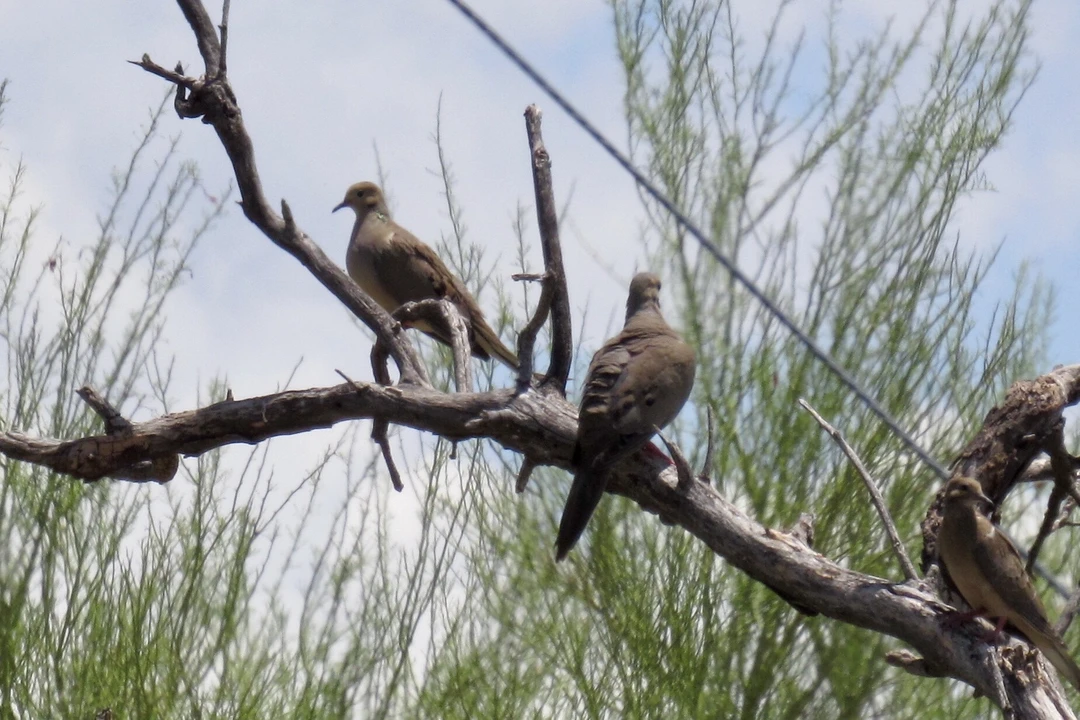
Compare plumage, posture, and field context across this image set.
Mourning Dove sounds
Listen to a small selection of reference recordings.
About the Mourning Dove
The Mourning Dove (Zenaida macroura) is a widespread and adaptable bird found throughout North America. It is recognized by its soft, mournful cooing call, which gives it its common name. Ecologically, Mourning Doves play a significant role as seed dispersers, contributing to plant diversity. They are also a popular game bird in many regions. Culturally, the Mourning Dove is sometimes associated with peace and tranquility, appearing in art and folklore.
Also known as: Carolina Turtle Dove, Carolina Pigeon, Long-tailed Pea Dove.
Scientific classification
Phylum: Chordata
Clazz: Aves
Order: Columbiformes
Family: Columbidae
Genus: Zenaida
Species: Zenaida macroura
Habitat and distribution
Adaptations: Mourning Doves are highly adaptable to various habitats, thriving in both natural and human-altered landscapes. Their ability to consume a wide variety of seeds allows them to survive in different environments.
Variations: Several subspecies are recognized, differing slightly in size and coloration. For example, the Western Mourning Dove (Z. m. marginella) tends to be paler than the Eastern Mourning Dove (Z. m. carolinensis).
Distribution: The Mourning Dove's range extends from southern Canada to central Mexico, and across the entire continental United States. Some populations are migratory, with northern birds moving south for the winter, while others are resident year-round. They are found in altitudinal ranges, from sea level to around 3000m.
Habitat Types: Open woodlands, Grasslands, Agricultural fields, Urban and suburban areas, Deserts, Forest edges
Climate Zones: Temperate, Subtropical, Arid
Diet and feeding
Primary foods: Seeds, Grains, Occasionally small insects and snails
Foraging behavior: Mourning Doves primarily forage on the ground, picking up seeds and grains. They often feed in open areas and along roadsides.
Seasonal diet variations: Diet remains largely seed-based year-round, but the specific types of seeds consumed may vary depending on availability.
Specializations: They have a crop, an enlarged part of the esophagus, where they can store seeds before digesting them. This allows them to gather food quickly in exposed areas and digest it later in a safer location.
Reproduction and lifecycle
Breeding season: Breeding season is prolonged, often extending from early spring to late summer, and even year-round in some southern regions.
Regional variations: Breeding may occur year-round in warmer southern climates, while it is more restricted to spring and summer in northern areas.
Courtship rituals: Males perform a 'perch-coo' display, puffing up their neck feathers and bobbing their heads while calling. They also engage in display flights.
Nest Type: A flimsy platform nest made of twigs.
Nesting Materials: Twigs, Pine needles, Grass stems
Parental care: Both parents share incubation duties, with the male typically incubating during the day and the female at night. Both parents also feed the young 'crop milk,' a secretion from the lining of the crop.
Fledging period: Approximately 11-15 days until first flight.
Clutch Size: Typically 2 eggs.
Physical characteristics
Sex-Based Plumage Differences: Males are generally slightly larger.
Length: 22-36 cm
Wingspan: 37-45 cm
Weight: 85-170 g
Lifespan: Average lifespan in the wild is 1-1.5 years, though some individuals can live much longer (up to 19 years in captivity).
Breeding Plumage: Plumage is generally consistent year-round.
Seasonal Feather Changes: No significant seasonal variations.
Notable features: Slender body with a long, pointed tail., Small head relative to body size., Black spots on the wings., Pinkish legs and feet.
Interesting facts
Mourning Doves can drink brackish water.: They have a higher tolerance for salt than many other birds, allowing them to utilize water sources unavailable to some species.
They are one of the most abundant and widespread birds in North America.: Their adaptability to various habitats and high reproductive rate contribute to their large population size.
Mourning Doves can produce multiple broods in a single breeding season.: In favorable conditions, they may raise up to six broods per year.
Frequently asked questions
What is the difference between a Mourning Dove and a pigeon?
Mourning Doves are generally smaller and more slender than Rock Pigeons (the common city pigeon), with a longer, pointed tail. Their coloration is also different, with Mourning Doves being predominantly brown and gray.
Why do I hear Mourning Doves cooing all the time?
The cooing call is primarily used by males to attract mates and defend territories, especially during the breeding season.
What should I do if I find a baby Mourning Dove?
If the bird appears healthy and is fully feathered, it is likely a fledgling and is best left alone. The parents are likely nearby. If it is injured or clearly orphaned, contact a local wildlife rehabilitator. *Consult a professional for expert advice.*
Are Mourning Doves hunted?
Yes, Mourning Doves are a popular game bird in many parts of the United States and are subject to regulated hunting seasons.
Compare the image, sound, habitat, and physical characteristics together when reviewing a sighting.