
The Java Sparrow (*Padda oryzivora*) is a striking bird native to Indonesia, specifically the islands of Java, Bali, and Bawean. It is a member of the Estrildidae family, commonly known as the estrildid finches. While prized for its beauty as a cage bird, it plays a crucial role in its native ecosystem, primarily as a seed disperser. Due to its popularity in the pet trade and persecution as an agricultural pest, wild populations have declined significantly, leading to its classification as Endangered by the IUCN. Interestingly, it has established feral populations in many other parts of the world.
Photos of Java Sparrow
Compare plumage, posture, and field context across this image set.
About the Java Sparrow
The Java Sparrow (*Padda oryzivora*) is a striking bird native to Indonesia, specifically the islands of Java, Bali, and Bawean. It is a member of the Estrildidae family, commonly known as the estrildid finches. While prized for its beauty as a cage bird, it plays a crucial role in its native ecosystem, primarily as a seed disperser. Due to its popularity in the pet trade and persecution as an agricultural pest, wild populations have declined significantly, leading to its classification as Endangered by the IUCN. Interestingly, it has established feral populations in many other parts of the world.
Scientific classification
Phylum: Chordata
Clazz: Aves
Order: Passeriformes
Family: Estrildidae
Genus: Lonchura
Species: Padda oryzivora
Habitat and distribution
Adaptations: The Java Sparrow's strong beak is well-suited for cracking seeds, its primary food source. Their ability to thrive in human-modified landscapes has contributed to their success in introduced ranges, although it has also led to conflict with farmers.
Variations: No recognized subspecies exist, but slight variations in plumage color and size have been observed between different island populations. These differences are not significant enough to warrant subspecies classification.
Distribution: Originally endemic to Java, Bali, and Bawean in Indonesia. Introduced and established populations exist in many locations, including other parts of Southeast Asia, the Indian subcontinent, various Pacific Islands (e.g., Hawaii), parts of Africa, and even some regions in the Americas (e.g., Florida).
Habitat Types: Grasslands, Savannas, Cultivated areas (particularly rice paddies), Open woodlands, Urban and suburban areas (where introduced)
Climate Zones: Tropical, Subtropical
Diet and feeding
Primary foods: Rice, Grass seeds, Other small seeds, Occasionally small insects (especially during breeding)
Foraging behavior: Forages primarily on the ground, often in large flocks, particularly in open areas and rice fields. They use their strong beaks to husk seeds efficiently.
Seasonal diet variations: Diet shifts depending on seed availability. During the rice-growing season, they consume large quantities of rice, leading to their reputation as an agricultural pest. At other times, they rely more on wild grass seeds.
Specializations: The robust, conical bill is a specialization for cracking seed husks.
Reproduction and lifecycle
Breeding season: Breeding can occur year-round in favorable conditions, but typically peaks during the wet season when food is abundant.
Regional variations: Breeding season timing may vary slightly depending on local rainfall patterns.
Courtship rituals: Courtship involves the male puffing up his feathers, bobbing his head, and singing a soft, repetitive song to the female. He may also present nesting material.
Nest Type: A globular or dome-shaped nest with a side entrance.
Nesting Materials: Grass, Plant fibers, Feathers, Other soft materials
Parental care: Both parents share incubation duties, which last for approximately 13-14 days. Both parents also feed and care for the chicks.
Fledging period: Chicks fledge (leave the nest) around 2-3 weeks after hatching.
Clutch Size: 4-8 eggs
Physical characteristics
Sex-Based Plumage Differences: Minimal
Length: 15-17 cm
Weight: 20-30 g
Lifespan: Typically 5-10 years in captivity; wild lifespan is likely shorter, but precise data is limited.
Breeding Plumage: Adult plumage is consistent year-round, with no significant differences between breeding and non-breeding seasons.
Seasonal Feather Changes: None
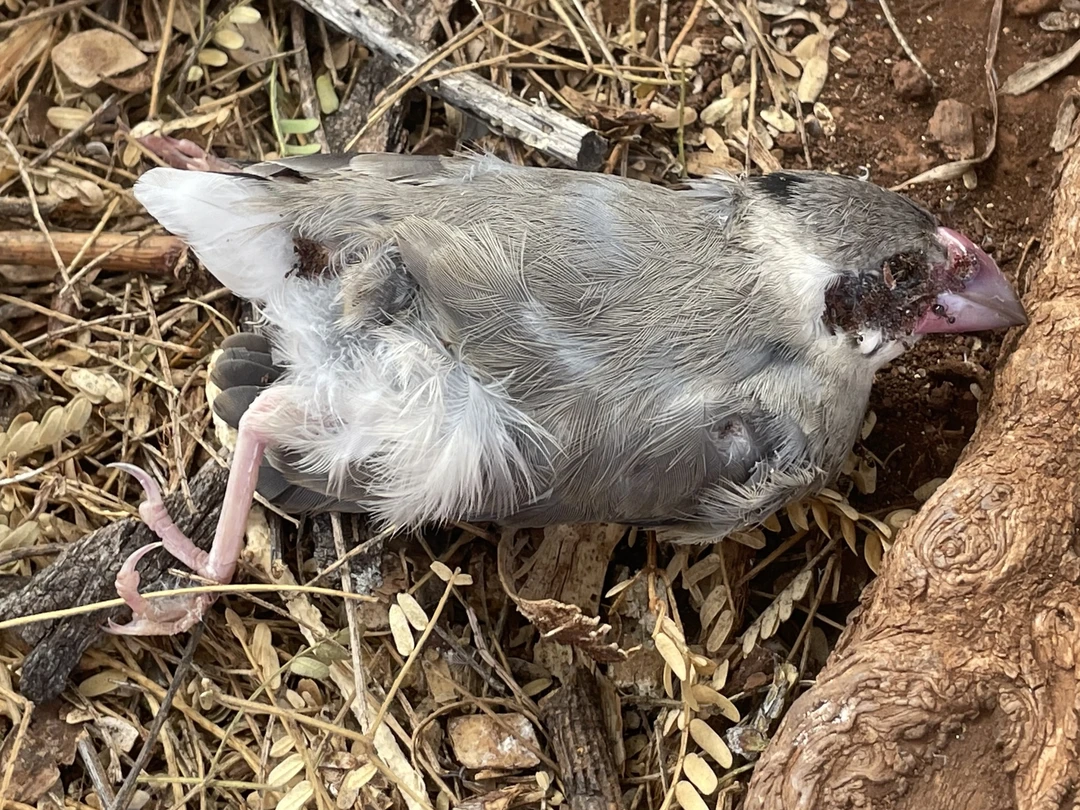
Notable features: Distinctive black head, Large white cheek patches, Thick, conical, reddish-pink bill, Gray upperparts and breast, Pinkish belly
Interesting facts
They are considered a symbol of good luck in some cultures.: This belief has contributed to their popularity as cage birds.
They can become quite tame in captivity.: This has made them popular pets, although wild-caught birds are much more skittish.
Their scientific name, *oryzivora*, means 'rice eater'.: This reflects their strong association with rice paddies and their impact on rice crops.
Feral populations have become established in many unlikely locations.: Escapees from the cage bird trade have adapted to various environments worldwide.
Frequently asked questions
Are Java Sparrows good pets?
While they can be beautiful and relatively low-maintenance pets, it's crucial to ensure they are captive-bred and not wild-caught. Due to their Endangered status, supporting the illegal bird trade is detrimental to their wild populations. Consult a professional for aviary or pet ownership advice.
Why are they considered pests?
In their native range, large flocks can consume significant amounts of rice, leading to conflicts with farmers.
How can I tell a male from a female?
It's very difficult to distinguish between the sexes visually. Subtle differences in beak and eye-ring color may be present, but DNA testing or observing breeding behavior is often necessary for accurate sexing.
What should I do if I find an injured Java Sparrow?
If you find an injured bird, your best course of action is to contact a local wildlife rehabilitator or veterinarian experienced with birds. Attempting to care for a wild bird yourself without proper training can often do more harm than good. Consult a professional for medical or expert advice.
Compare the image, sound, habitat, and physical characteristics together when reviewing a sighting.