
The Japanese Tit (Parus minor), also known as Oriental Tit, is a passerine bird belonging to the tit family Paridae. It is a common and widespread species throughout East Asia, known for its adaptability, intelligence, and lively behavior. While closely related to the Great Tit (Parus major) of Europe, the Japanese Tit exhibits distinct plumage variations and vocalizations. Ecologically, it plays a crucial role in controlling insect populations, particularly in forests and urban green spaces. It is not currently considered globally threatened, but habitat loss and fragmentation can impact local populations.
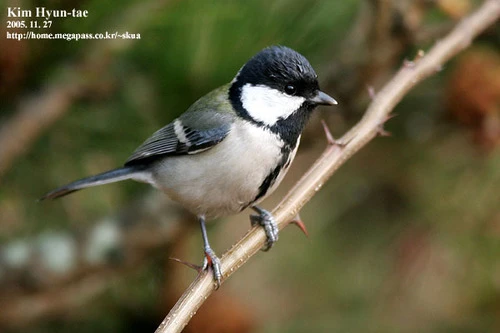
Photos of Japanese Tit
Compare plumage, posture, and field context across this image set.
About the Japanese Tit
The Japanese Tit (Parus minor), also known as Oriental Tit, is a passerine bird belonging to the tit family Paridae. It is a common and widespread species throughout East Asia, known for its adaptability, intelligence, and lively behavior. While closely related to the Great Tit (Parus major) of Europe, the Japanese Tit exhibits distinct plumage variations and vocalizations. Ecologically, it plays a crucial role in controlling insect populations, particularly in forests and urban green spaces. It is not currently considered globally threatened, but habitat loss and fragmentation can impact local populations.
Scientific classification
Phylum: Chordata
Clazz: Aves
Order: Passeriformes
Family: Paridae
Genus: Parus
Species: Parus minor
Habitat and distribution
Adaptations: Japanese Tits are highly adaptable to various habitats. They possess strong legs and feet for clinging to branches and foraging in diverse environments. Their relatively short, pointed beaks are well-suited for gleaning insects from foliage and probing crevices.
Variations: Several subspecies of the Japanese Tit are recognized, differing slightly in plumage coloration and size. These variations are often linked to geographic isolation and adaptation to local conditions. For example, island populations may exhibit darker plumage or larger body size.
Distribution: The Japanese Tit is found across a wide range in East Asia, including Japan, Korea, eastern China, and parts of southeastern Russia. It is generally a non-migratory species, although some populations in the northern parts of its range may move to lower elevations or more southerly locations during harsh winters. Its altitudinal range varies from sea level to montane forests.
Habitat Types: Deciduous forests, Mixed forests, Coniferous forests, Urban parks, Gardens, Orchards
Climate Zones: Temperate, Subtropical, Boreal (in the northernmost part of its range)
Diet and feeding
Primary foods: Insects, Spiders, Seeds, Berries, Nuts
Foraging behavior: Japanese Tits are active foragers, gleaning insects and spiders from leaves, branches, and bark. They often hang upside down to reach prey. They also readily visit bird feeders, especially during winter.
Seasonal diet variations: During the breeding season, their diet consists primarily of insects and spiders, providing protein for growing chicks. In winter, they shift to a more seed-based diet when insects are scarce.
Specializations: Their strong legs and feet allow them to cling to various surfaces while foraging. Their beaks are adapted for both catching insects and cracking seeds.
Reproduction and lifecycle
Breeding season: Typically from March to July, with some variation depending on location and climate.
Regional variations: Breeding may start earlier in warmer southern regions and later in colder northern areas.
Courtship rituals: Courtship involves males displaying to females with wing-fluttering, singing, and offering food.
Nest Type: Cavity nester, using natural tree holes, old woodpecker holes, or artificial nest boxes.
Nesting Materials: Moss, Leaves, Animal hair, Feathers
Parental care: Both parents incubate the eggs (primarily the female) and feed the chicks. Incubation lasts about 12-14 days.
Fledging period: Chicks fledge (leave the nest) approximately 16-20 days after hatching.
Clutch Size: Typically 5-10 eggs.
Physical characteristics
Sex-Based Plumage Differences: Minimal, males may be slightly larger
Length: 12.5-15 cm
Wingspan: 18-22 cm
Weight: 11-20 g
Lifespan: Average lifespan in the wild is 2-3 years, but some individuals can live longer.
Breeding Plumage: Plumage is generally similar year-round, though breeding birds may have slightly brighter colors.
Seasonal Feather Changes: Minimal seasonal variation.
Notable features: Black cap and bib, White cheeks and nape, Greenish-grey back, Black central stripe running down the breast and belly, Pale yellowish-white underparts
Interesting facts
Japanese Tits are known for their intelligence and problem-solving abilities.: They have been observed using tools, such as small twigs, to extract insects from crevices.
They are cavity nesters and readily use artificial nest boxes.: This makes them a popular subject for citizen science projects and backyard birdwatching.
They can remember the locations of thousands of cached food items.: This is crucial for surviving harsh winters when food is scarce.
They sometimes participate in 'mobbing' behavior.: Flocks of Japanese Tits, along with other small birds, will harass and chase away potential predators, such as owls or hawks.
Frequently asked questions
What is the difference between a Japanese Tit and a Great Tit?
While closely related, Japanese Tits have a more greenish-grey back and a black central stripe, while Great Tits have a more yellowish back and a broader black band. Their vocalizations are also distinct.
Do Japanese Tits migrate?
Most populations are resident year-round, but some northern populations may move short distances in winter.
What do Japanese Tits eat?
They eat a variety of insects, spiders, seeds, berries, and nuts, with their diet shifting seasonally.
How can I attract Japanese Tits to my garden?
Provide a variety of food sources, such as sunflower seeds and suet, and install nest boxes. A bird bath with fresh water is also attractive.
Compare the image, sound, habitat, and physical characteristics together when reviewing a sighting.