
The Japanese Bush Warbler (*Horornis diphone*) is a small, elusive songbird renowned for its distinctive and melodious call, often heard echoing through the forests and hillsides of East Asia. It plays a crucial role in its ecosystem as an insectivore, helping to control insect populations. Culturally, the Japanese Bush Warbler's song is a herald of spring in Japan, deeply embedded in poetry and art, symbolizing renewal and the changing seasons.
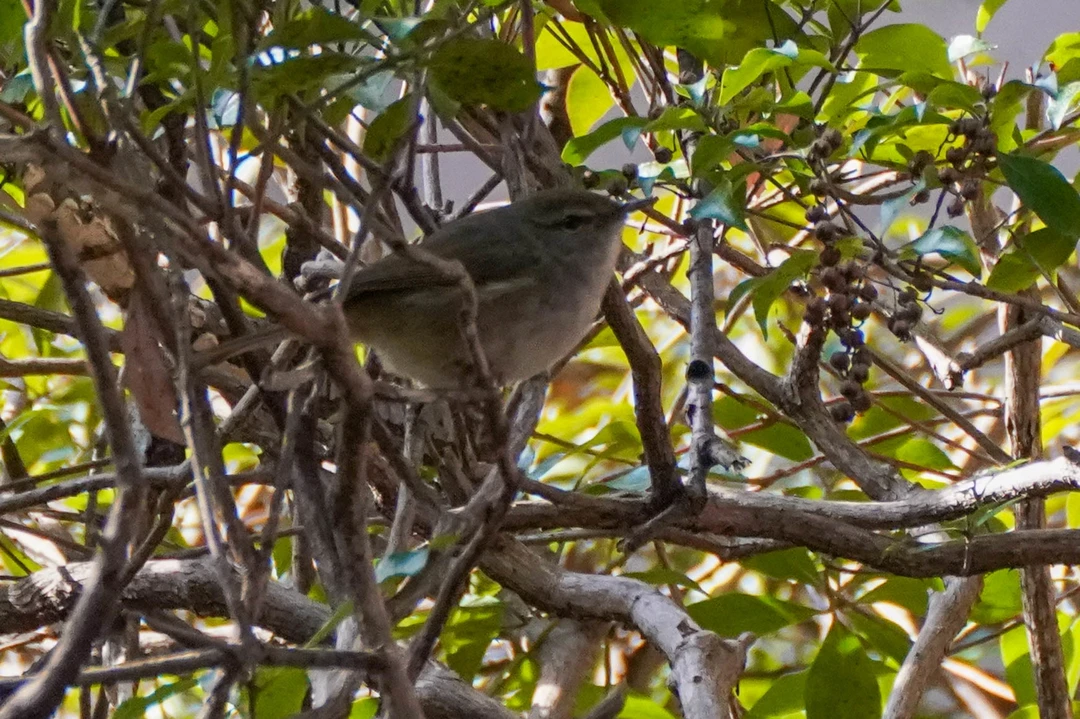
Photos of Japanese Bush Warbler
Compare plumage, posture, and field context across this image set.
Japanese Bush Warbler sounds
Listen to a small selection of reference recordings.
About the Japanese Bush Warbler
The Japanese Bush Warbler (*Horornis diphone*) is a small, elusive songbird renowned for its distinctive and melodious call, often heard echoing through the forests and hillsides of East Asia. It plays a crucial role in its ecosystem as an insectivore, helping to control insect populations. Culturally, the Japanese Bush Warbler's song is a herald of spring in Japan, deeply embedded in poetry and art, symbolizing renewal and the changing seasons.
Scientific classification
Phylum: Chordata
Clazz: Aves
Order: Passeriformes
Family: Cettiidae
Genus: Horornis
Species: Horornis diphone
Habitat and distribution
Adaptations: Its dense plumage provides insulation in cooler temperate climates, while its agility allows it to navigate dense undergrowth. Its strong legs and feet are well-suited for hopping and climbing among branches.
Variations: Several subspecies are recognized, differing slightly in plumage coloration and song characteristics. For example, populations in the northern parts of its range tend to be slightly larger and darker.
Distribution: The Japanese Bush Warbler breeds primarily in Japan, the Korean Peninsula, and parts of eastern Russia (Sakhalin, Kuril Islands). It winters in southern China, Taiwan, and Southeast Asia. It exhibits altitudinal migration, moving to lower elevations in winter.
Habitat Types: Temperate forests, Shrublands, Bamboo thickets, Forest edges, Parks and gardens (in winter)
Climate Zones: Temperate, Subtropical (in wintering areas)
Diet and feeding
Primary foods: Insects, Spiders, Small invertebrates, Berries (occasionally, especially in winter)
Foraging behavior: The Japanese Bush Warbler primarily forages in dense undergrowth, gleaning insects from leaves and branches. It is an active and agile forager, often hopping and flitting through vegetation.
Seasonal diet variations: Diet is primarily insectivorous during the breeding season. In winter, it may consume more berries and seeds when insects are less abundant.
Specializations: Its slender bill is well-suited for picking insects from crevices and foliage.
Reproduction and lifecycle
Breeding season: Typically from May to August in Japan and other breeding areas.
Regional variations: Breeding may start slightly earlier in warmer southern regions.
Courtship rituals: Males sing vigorously from exposed perches to attract females. Courtship displays may include wing-fluttering and chasing.
Nest Type: A well-concealed, cup-shaped nest built low in dense vegetation or on the ground.
Nesting Materials: Grass, Leaves, Moss, Twigs, Animal hair (lining)
Parental care: Both parents incubate the eggs (for about 14-15 days) and feed the chicks. Chicks are altricial, meaning they are born helpless and require extensive parental care.
Fledging period: Approximately 12-14 days after hatching.
Clutch Size: Typically 4-6 eggs.
Physical characteristics
Sex-Based Plumage Differences: Minimal
Length: 15-16 cm
Wingspan: 18-20 cm
Weight: 10-18 g
Lifespan: Typically 2-5 years in the wild, though some individuals may live longer.
Breeding Plumage: Plumage is generally similar year-round, but may be slightly brighter during the breeding season.
Seasonal Feather Changes: Minor variations; may appear slightly duller in winter.
Notable features: Olive-brown upperparts, Pale grayish-white underparts, Distinctive white supercilium (eyebrow stripe), Short, rounded wings, Relatively long tail
Interesting facts
The Japanese Bush Warbler's song is considered one of the most beautiful bird songs in Japan.: It is often featured in traditional Japanese poetry and art.
Despite its loud song, the bird is often difficult to see.: It spends most of its time hidden in dense vegetation.
The Japanese name, 'Uguisu', is often used to refer to the bird's song rather than the bird itself.: This highlights the cultural significance of the song.
The Japanese Bush Warbler's song changes throughout the day.: The complete song is often only heared at dawn and dusk.
Frequently asked questions
What does the Japanese Bush Warbler's song sound like?
The song is a distinctive and melodious 'ho-hokekyo', often described as flute-like.
Where can I see a Japanese Bush Warbler?
They are more often heard than seen. Look for them in dense vegetation, forests, and shrublands in East Asia, especially during the breeding season.
Are Japanese Bush Warblers endangered?
No, they are currently classified as 'Least Concern' by the IUCN, meaning their population is relatively stable.
What do Japanese Bush Warblers eat?
They primarily eat insects, spiders, and other small invertebrates. They may also eat some berries, especially in winter.
Compare the image, sound, habitat, and physical characteristics together when reviewing a sighting.