
The Jack Snipe (*Lymnocryptes minimus*) is a small, secretive wading bird known for its elusive nature and distinctive cryptic plumage. It plays a crucial role in wetland ecosystems as both predator and prey, consuming invertebrates and, in turn, being a food source for larger predators. Unlike many other snipe species, the Jack Snipe is generally less vocal, adding to its mysterious reputation. It holds little widespread cultural significance, but its presence is often an indicator of healthy wetland habitats.
Photos of Jack Snipe
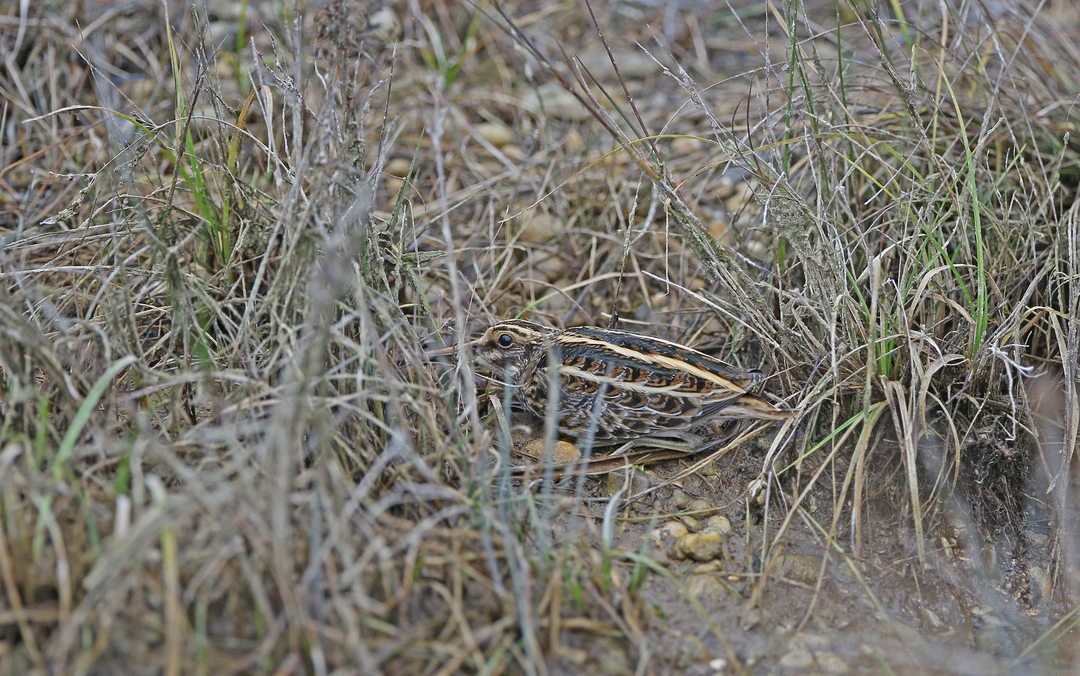
Compare plumage, posture, and field context across this image set.
About the Jack Snipe
The Jack Snipe (*Lymnocryptes minimus*) is a small, secretive wading bird known for its elusive nature and distinctive cryptic plumage. It plays a crucial role in wetland ecosystems as both predator and prey, consuming invertebrates and, in turn, being a food source for larger predators. Unlike many other snipe species, the Jack Snipe is generally less vocal, adding to its mysterious reputation. It holds little widespread cultural significance, but its presence is often an indicator of healthy wetland habitats.
Scientific classification
Phylum: Chordata
Clazz: Aves
Order: Charadriiformes
Family: Scolopacidae
Genus: Lymnocryptes
Species: Lymnocryptes minimus
Habitat and distribution
Adaptations: Prefers areas with dense, low-lying vegetation for cover and soft, muddy substrates for probing with its bill. Its cryptic plumage provides excellent camouflage in these environments.
Variations: No recognized subspecies.
Distribution: Breeds across northern Eurasia, from Scandinavia to Siberia. Winters in western and southern Europe, Africa (north of the equator and the Rift Valley), the Middle East, and South Asia. Migrates nocturnally, making precise routes difficult to track.
Habitat Types: Freshwater marshes, Bogs, Swamps, Wet meadows, Flooded grasslands
Climate Zones: Boreal, Temperate, Subarctic
Diet and feeding
Primary foods: Insects, Insect larvae, Earthworms, Small crustaceans, Mollusks, Seeds
Foraging behavior: Probes soft mud with its bill, often using a characteristic 'sewing machine' motion. Typically forages alone or in very small, loose groups.
Seasonal diet variations: May consume more seeds during winter months when invertebrate prey is less abundant.
Specializations: Sensitive bill tip helps locate prey buried in mud.
Reproduction and lifecycle
Breeding season: May-July, depending on latitude.
Regional variations: Earlier breeding in southern parts of the breeding range.
Courtship rituals: Males perform display flights with a distinctive 'drumming' sound produced by vibrating tail feathers. Also engage in ground chases.
Nest Type: Shallow scrape on the ground, well-concealed in dense vegetation.
Nesting Materials: Grass, Leaves, Moss
Parental care: Female incubates the eggs for 21-24 days. Both parents care for the chicks, which are precocial (able to move and feed themselves shortly after hatching).
Fledging period: Approximately 19-20 days.
Clutch Size: Usually 4 eggs.
Physical characteristics
Sex-Based Plumage Differences: Minimal
Length: 17-19 cm
Wingspan: 30-36 cm
Weight: 35-73 g
Lifespan: Unknown, but likely similar to other small waders (potentially 5-10 years).
Breeding Plumage: Subtle differences; breeding plumage may show slightly richer colors.
Seasonal Feather Changes: Limited seasonal variation.
Notable features: Cryptic plumage with dark brown, black, and buff stripes., Greenish sheen on the upperparts., Relatively short, straight bill., Short legs.
Interesting facts
The Jack Snipe is known for its 'freezing' behavior when threatened.: Instead of flushing immediately, it often crouches low to the ground, relying on its camouflage to avoid detection.
It is the smallest snipe species in Europe.: Its small size and secretive habits make it difficult to observe.
The Jack Snipe's scientific name, *Lymnocryptes minimus*, means 'smallest marsh-hider'.: This name reflects its small size and preference for concealed wetland habitats.
Frequently asked questions
How can I distinguish a Jack Snipe from a Common Snipe?
Jack Snipes are smaller, have shorter bills, and lack the bold white stripes on their backs that Common Snipes have. Jack Snipes also tend to be much more secretive and less vocal.
Where is the best place to see a Jack Snipe?
Look for them in well-vegetated freshwater marshes, bogs, and wet meadows, particularly during migration. However, they are notoriously difficult to spot due to their camouflage and secretive behavior.
Are Jack Snipes hunted?
Yes, Jack Snipes are hunted in some parts of their range, although regulations vary by country. Sustainable hunting practices are important for maintaining healthy populations.
Compare the image, sound, habitat, and physical characteristics together when reviewing a sighting.