
The Indian Peafowl (Pavo cristatus), commonly known as the peacock, is a large and vibrantly colored bird native to South Asia. Renowned for the male's extravagant iridescent tail feathers, which are displayed in a spectacular fan during courtship, the peafowl holds a significant place in various cultures, often symbolizing beauty, royalty, and immortality. Ecologically, they play a role in seed dispersal and insect control, contributing to the biodiversity of their native habitats. They are well-adapted to a variety of environments, from forests to agricultural lands.
Photos of Indian Peafowl
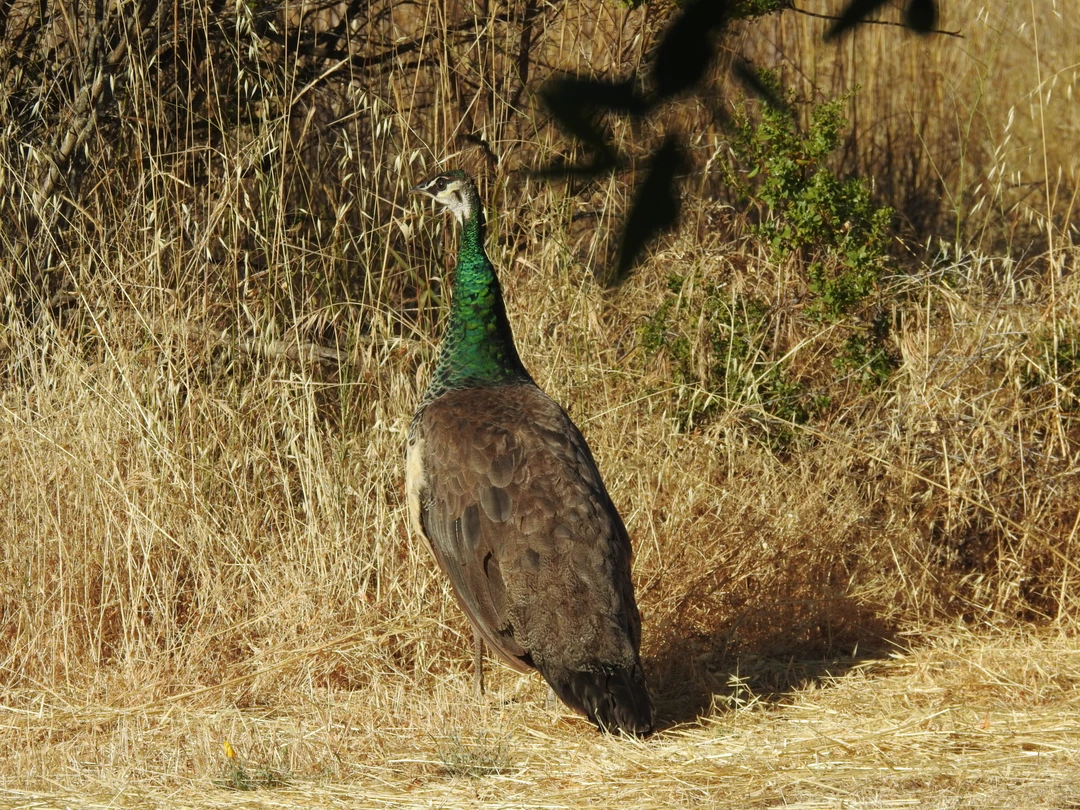
Compare plumage, posture, and field context across this image set.
Indian Peafowl sounds
Listen to a small selection of reference recordings.
About the Indian Peafowl
The Indian Peafowl (Pavo cristatus), commonly known as the peacock, is a large and vibrantly colored bird native to South Asia. Renowned for the male's extravagant iridescent tail feathers, which are displayed in a spectacular fan during courtship, the peafowl holds a significant place in various cultures, often symbolizing beauty, royalty, and immortality. Ecologically, they play a role in seed dispersal and insect control, contributing to the biodiversity of their native habitats. They are well-adapted to a variety of environments, from forests to agricultural lands.
Also known as: Blue Peafowl, Common Peafowl.
Scientific classification
Phylum: Chordata
Clazz: Aves
Order: Galliformes
Family: Phasianidae
Genus: Pavo
Species: Pavo cristatus
Habitat and distribution
Adaptations: Adaptable to a range of environments, thriving in both moist and dry deciduous forests. They are often found near water sources and prefer areas with dense undergrowth for cover.
Variations: While *Pavo cristatus* is generally considered monotypic (no recognized subspecies), some regional variations in plumage color and size have been anecdotally observed, but not formally classified.
Distribution: Native to the Indian subcontinent, including India, Sri Lanka, and parts of Nepal, Bhutan, and Bangladesh. Introduced populations exist in many other parts of the world, including the United States, Australia, and South Africa.
Habitat Types: Deciduous forests, Scrublands, Agricultural areas, Near human settlements
Climate Zones: Tropical, Subtropical
Diet and feeding
Primary foods: Seeds, Insects, Fruits, Small reptiles, Small mammals, Grains
Foraging behavior: Forages on the ground, scratching at the leaf litter and soil with their feet to uncover food. Often feeds in small groups, particularly in the early morning and late afternoon.
Seasonal diet variations: Diet may vary slightly with seasonal availability of food resources. For example, they may consume more insects during the monsoon season when insect populations are high.
Specializations: No highly specialized feeding adaptations, reflecting their generalist diet.
Reproduction and lifecycle
Breeding season: Generally coincides with the monsoon season, but can vary regionally. In India, the main breeding season is typically from April to August.
Regional variations: Breeding may occur earlier in southern India, where the monsoon arrives sooner.
Courtship rituals: Males display their train by fanning it out and vibrating it, accompanied by calls and strutting behavior. This display is directed towards females.
Nest Type: Shallow scrape on the ground, usually hidden in dense vegetation.
Nesting Materials: Leaves, Twigs, Grass
Parental care: The female incubates the eggs for about 28-30 days. Chicks are precocial (relatively mature and mobile from hatching) and are cared for primarily by the female.
Fledging period: Chicks can fly short distances after about a week, but remain with the mother for several months.
Clutch Size: 4-8 eggs
Physical characteristics
Sex-Based Plumage Differences: Males are significantly larger, especially when including their train.
Length: 100-230 cm
Wingspan: 130-160 cm
Weight: 2750-6000 g
Lifespan: 10-25 years in the wild; up to 25 years or more in captivity.
Breeding Plumage: Males exhibit striking iridescent blue and green plumage, with a prominent train of elongated upper tail coverts bearing ocelli (eyespots) during the breeding season. Females (peahens) have cryptic brown, grey, and cream plumage. Non-breeding males may have shorter trains.
Seasonal Feather Changes: Males molt and regrow their train annually. The train is fully developed during the breeding season.
Notable features: Elongated train with ocelli (males), Crest of feathers on head (both sexes), Strong legs and feet for running and scratching
Interesting facts
The 'eyes' on a peacock's train are called ocelli.: These markings play a crucial role in attracting females during courtship.
Peafowl are capable of flight, despite their large size.: They often roost in trees at night to avoid predators.
The Indian Peafowl is the national bird of India.: It holds a significant place in Indian culture and mythology.
The collective noun for peafowl is an 'ostentation' or a 'muster'.: These terms reflect the showy nature of the birds.
Frequently asked questions
What is the difference between a peacock and a peahen?
Peacock refers to the male, while peahen refers to the female. The term 'peafowl' encompasses both sexes.
Why do peacocks have such long tails?
The long train is used in courtship displays to attract females. Females are thought to choose males based on the size, color, and symmetry of their trains.
Are peacocks aggressive?
Males can be territorial during the breeding season, but they are generally not aggressive towards humans unless threatened.
Can peafowl be kept as pets?
While they can be kept in captivity, peafowl require large spaces and specific care. Local regulations should be checked before acquiring peafowl.
Compare the image, sound, habitat, and physical characteristics together when reviewing a sighting.