
The House Wren (Troglodytes aedon) is a small, active songbird common throughout much of the Americas. Known for its energetic and often complex songs, it plays a vital role in controlling insect populations. While not particularly flashy in appearance, its bubbling personality and adaptable nature have made it a familiar backyard bird for many. It holds no particular cultural significance, but its ubiquity and willingness to nest near human habitation have made it a well-studied and generally appreciated species.
Photos of House Wren
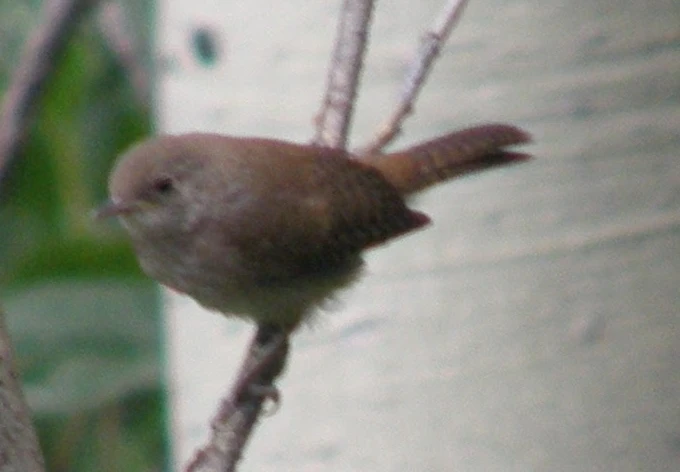
Compare plumage, posture, and field context across this image set.
House Wren sounds
Listen to a small selection of reference recordings.
About the House Wren
The House Wren (Troglodytes aedon) is a small, active songbird common throughout much of the Americas. Known for its energetic and often complex songs, it plays a vital role in controlling insect populations. While not particularly flashy in appearance, its bubbling personality and adaptable nature have made it a familiar backyard bird for many. It holds no particular cultural significance, but its ubiquity and willingness to nest near human habitation have made it a well-studied and generally appreciated species.
Also known as: Northern House Wren.
Scientific classification
Phylum: Chordata
Clazz: Aves
Order: Passeriformes
Family: Troglodytidae
Genus: Troglodytes
Species: Troglodytes aedon
Habitat and distribution
Adaptations: House Wrens are highly adaptable to a variety of habitats, showing a preference for areas with dense undergrowth or cavities for nesting. Their small size allows them to exploit a wide range of nesting sites, from natural tree hollows to man-made birdhouses.
Variations: Numerous subspecies of House Wren are recognized, reflecting geographic variations in plumage color and size. Island populations, in particular, may show distinct characteristics.
Distribution: The House Wren has a wide distribution, ranging from southern Canada throughout the United States and Mexico, extending south into Central America and large parts of South America. Some populations are migratory, with northern birds moving south for the winter. They occupy a broad altitudinal range, from sea level to over 3,000 meters.
Habitat Types: Forest edges, Woodlands, Parks, Gardens, Shrublands, Savannas
Climate Zones: Temperate, Subtropical, Tropical
Diet and feeding
Primary foods: Insects, Spiders, Other small invertebrates
Foraging behavior: House Wrens actively forage on the ground, in shrubs, and in low tree branches, gleaning insects and spiders from foliage and bark. They are known for their quick, darting movements.
Seasonal diet variations: Diet remains largely consistent year-round, although the specific types of insects consumed may vary depending on availability.
Specializations: Their small size and agility allow them to access insects in tight spaces.
Reproduction and lifecycle
Breeding season: Breeding season varies by location, but generally occurs from late spring to summer (April-August in North America).
Regional variations: Southern populations may have a longer breeding season, sometimes producing multiple broods per year.
Courtship rituals: Males establish territories and attract females with elaborate songs and by building multiple 'dummy' nests. The female chooses the final nest site.
Nest Type: Cavity nester; uses a wide variety of natural and artificial cavities.
Nesting Materials: Twigs, Grass, Feathers, Spider webs, Animal hair
Parental care: Both parents incubate the eggs (primarily the female) and feed the chicks. Males may be polygynous, mating with multiple females.
Fledging period: Approximately 15-17 days until the young birds leave the nest.
Clutch Size: Typically 5-8 eggs.
Physical characteristics
Sex-Based Plumage Differences: Minimal
Length: 11-13 cm
Wingspan: 15-17 cm
Weight: 10-12 g
Lifespan: The average lifespan in the wild is about 7 years, although individuals living longer have been recorded.
Breeding Plumage: There is generally little difference between breeding and non-breeding plumage, though breeding birds may appear slightly brighter.
Seasonal Feather Changes: Minor seasonal variations; plumage may be slightly duller after molting.
Notable features: Plain brown overall with subtle barring on wings and tail., Short, slightly curved bill., Often holds its tail cocked upwards.
Interesting facts
House Wrens are known for their aggressive behavior.: Despite their small size, they will fiercely defend their territories and nests, even against larger birds.
Males build multiple nests.: This is part of the courtship ritual, and the female chooses which nest to use.
House wrens will use many differnet locations to nest: They have been seen to use old boots, tin cans and even the pockets of hanging laundry.
Frequently asked questions
What can I do to attract House Wrens to my yard?
Provide nesting boxes, maintain dense shrubs and vegetation, and avoid pesticide use.
Why do House Wrens destroy the nests of other birds?
This is likely a form of competition for nesting sites, reducing the success of other species that might compete for resources.
Are House Wrens beneficial to have around?
Yes, they are voracious insect eaters and help control populations of many garden pests.
Compare the image, sound, habitat, and physical characteristics together when reviewing a sighting.