
The House Sparrow (Passer domesticus) is one of the most widespread and recognizable birds globally. Originally native to Eurasia and North Africa, it has followed human settlements to nearly every corner of the world, making it a ubiquitous presence in urban and rural environments alike. Its adaptability and close association with humans have allowed it to thrive, often outcompeting native species. Ecologically, the House Sparrow plays a role in seed dispersal and insect control, although its impact can be complex and context-dependent. While not particularly revered in folklore, its sheer familiarity has made it a subject of numerous studies on avian behavior and adaptation.
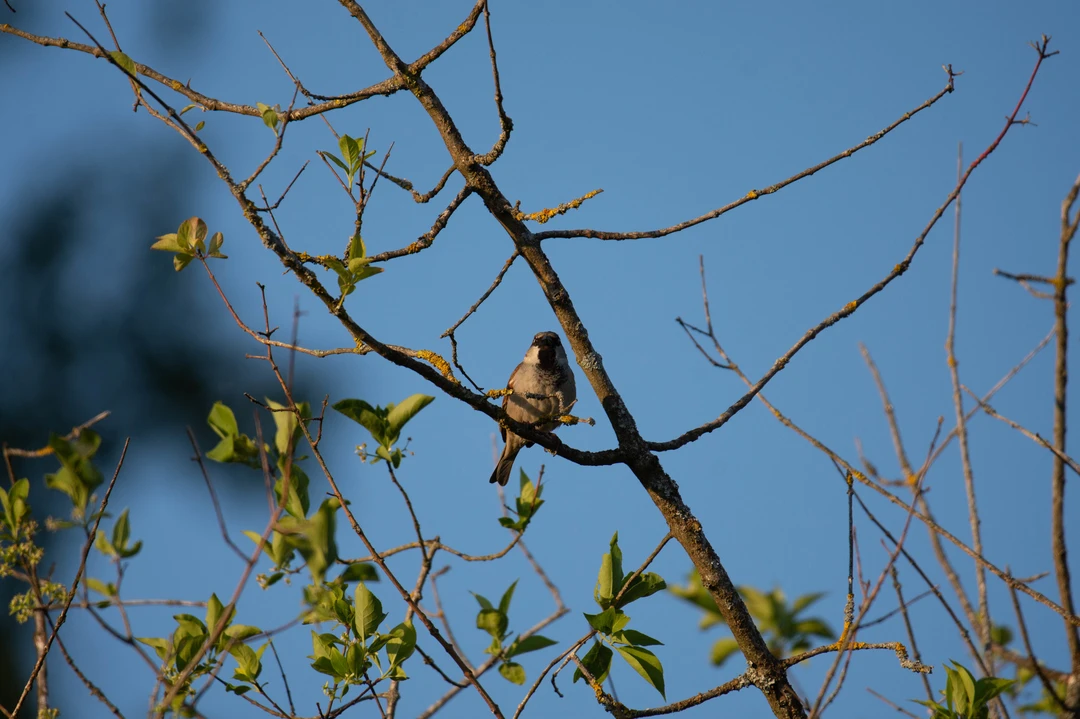
Photos of House Sparrow
Compare plumage, posture, and field context across this image set.
House Sparrow sounds
Listen to a small selection of reference recordings.
About the House Sparrow
The House Sparrow (Passer domesticus) is one of the most widespread and recognizable birds globally. Originally native to Eurasia and North Africa, it has followed human settlements to nearly every corner of the world, making it a ubiquitous presence in urban and rural environments alike. Its adaptability and close association with humans have allowed it to thrive, often outcompeting native species. Ecologically, the House Sparrow plays a role in seed dispersal and insect control, although its impact can be complex and context-dependent. While not particularly revered in folklore, its sheer familiarity has made it a subject of numerous studies on avian behavior and adaptation.
Also known as: English Sparrow.
Scientific classification
Phylum: Chordata
Clazz: Aves
Order: Passeriformes
Family: Passeridae
Genus: Passer
Species: Passer domesticus
Habitat and distribution
Adaptations: Highly adaptable to human-modified environments. Can utilize a wide range of food sources and nesting sites, including buildings, crevices, and nest boxes. Tolerant of a broad range of temperatures and climatic conditions.
Variations: Numerous subspecies (around 12) are recognized, differing subtly in plumage coloration and size. These variations are often linked to local climate and environmental conditions.
Distribution: Native to Eurasia and North Africa. Introduced and established in North and South America, sub-Saharan Africa, Australia, and New Zealand. Generally non-migratory, although some populations in higher altitudes or latitudes may move shorter distances in winter.
Habitat Types: Urban areas, Suburban areas, Agricultural lands, Rural villages
Climate Zones: Temperate, Tropical, Subtropical, Arid
Diet and feeding
Primary foods: Seeds, Grains, Insects (especially during breeding season), Food scraps
Foraging behavior: Forages primarily on the ground, hopping and pecking. Often feeds in flocks, especially outside the breeding season. Readily takes food from bird feeders and scavenges human food waste.
Seasonal diet variations: Diet shifts to include more insects during the breeding season to provide protein for growing chicks. Relies more heavily on seeds and grains during the winter.
Specializations: Strong, conical bill adapted for cracking seeds. Agile and opportunistic, able to exploit a variety of food sources.
Reproduction and lifecycle
Breeding season: Variable depending on location, but generally spring and summer in temperate regions. Can have multiple broods per year.
Regional variations: In warmer climates, breeding may occur year-round. In temperate regions, breeding is typically restricted to the warmer months.
Courtship rituals: Males display by hopping around females with drooped wings and a raised tail, often accompanied by chirping calls.
Nest Type: Untidy, domed nest often built in cavities or crevices.
Nesting Materials: Grass, Feathers, Twigs, String, Paper
Parental care: Both parents incubate the eggs (10-14 days) and feed the chicks. Chicks are altricial (helpless at hatching).
Fledging period: Approximately 11-17 days after hatching.
Clutch Size: Typically 3-5 eggs, but can range from 1-8.
Physical characteristics
Sex-Based Plumage Differences: Males are typically slightly larger
Length: 14-18 cm
Wingspan: 19-25 cm
Weight: 24-39.5 g
Lifespan: Typically 3-5 years in the wild, but can live longer in captivity (up to 10+ years).
Breeding Plumage: Males have a distinctive black bib, grey crown, and chestnut nape during the breeding season. Females and non-breeding males are duller, with streaked brown upperparts and greyish-buff underparts.
Seasonal Feather Changes: The black bib on breeding males becomes more prominent and sharply defined during the breeding season. After breeding, the plumage becomes slightly duller and less contrasting.
Notable features: Stout, conical bill adapted for seed-cracking., Short, rounded wings., Black bib (males only).
Interesting facts
House Sparrows are not native to North America.: They were introduced to Brooklyn, New York, in the 1850s and have since spread across the continent.
They can swim underwater.: Although rare, House Sparrows have been observed swimming underwater to escape predators.
House Sparrows often take dust baths.: This helps to maintain their plumage by removing parasites and excess oil.
They are highly adaptable to urban environments.: They have learned to exploit human resources, including buildings for nesting and food scraps for sustenance.
Frequently asked questions
Why are House Sparrows declining in some areas?
Several factors contribute to declines, including habitat loss, pesticide use, and increased competition with other bird species.
What can I do to help House Sparrows?
Provide food and water sources, create bird-friendly gardens with native plants, and avoid using pesticides.
Are House Sparrows aggressive towards other birds?
They can be aggressive, particularly around nesting sites and food sources, and may outcompete native birds for resources.
Do House Sparrows mate for life?
While they may form pair bonds for a breeding season, they don't necessarily mate for life and may have different partners in subsequent years.
How can I tell the difference between a male and female House Sparrow?
Males have a black bib, grey crown, and chestnut nape, while females are duller brown and buff overall.
Compare the image, sound, habitat, and physical characteristics together when reviewing a sighting.