
The House Finch (Haemorhous mexicanus) is a small, lively songbird native to North America and now widespread across the continent and Hawaii. Originally found in the western United States and Mexico, it was introduced to the eastern United States in the 1940s and has since thrived, becoming a familiar sight in urban and suburban areas. House Finches play a role in seed dispersal and are known for their cheerful, warbling songs. Their adaptable nature and tolerance of human-altered landscapes have contributed to their success. While not of significant cultural importance, they are appreciated for their bright colors and lively presence.
Photos of House Finch
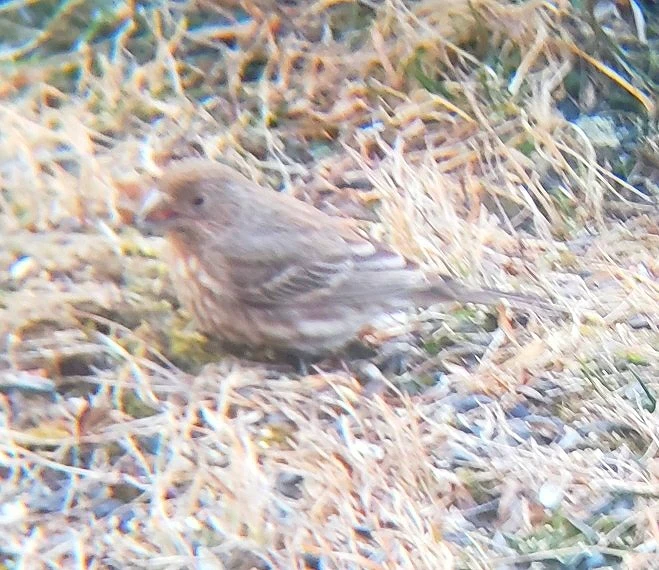
Compare plumage, posture, and field context across this image set.
House Finch sounds
Listen to a small selection of reference recordings.
About the House Finch
The House Finch (Haemorhous mexicanus) is a small, lively songbird native to North America and now widespread across the continent and Hawaii. Originally found in the western United States and Mexico, it was introduced to the eastern United States in the 1940s and has since thrived, becoming a familiar sight in urban and suburban areas. House Finches play a role in seed dispersal and are known for their cheerful, warbling songs. Their adaptable nature and tolerance of human-altered landscapes have contributed to their success. While not of significant cultural importance, they are appreciated for their bright colors and lively presence.
Also known as: Hollywood Finch.
Scientific classification
Phylum: Chordata
Clazz: Aves
Order: Passeriformes
Family: Fringillidae
Genus: Haemorhous
Species: Haemorhous mexicanus
Habitat and distribution
Adaptations: Highly adaptable to various habitats, including those significantly altered by human activity. They readily use bird feeders and nest in human-made structures.
Variations: Numerous subspecies are recognized, differing slightly in plumage color and size. These variations are often subtle and reflect adaptation to local conditions.
Distribution: Native to the southwestern United States and Mexico. Introduced and now widespread across most of the United States, southern Canada, and much of Mexico. Also established in Hawaii.
Habitat Types: Urban areas, Suburban gardens, Parks, Open woodlands, Desert grasslands, Agricultural fields
Climate Zones: Temperate, Subtropical, Arid
Diet and feeding
Primary foods: Seeds, Grains, Fruits, Buds
Foraging behavior: Forages on the ground, in trees, and at bird feeders. Often feeds in small flocks.
Seasonal diet variations: May consume more insects during the breeding season to provide protein for developing chicks. Fruit consumption increases when available.
Specializations: Strong, conical bill for efficiently cracking seeds.
Reproduction and lifecycle
Breeding season: Primarily spring and summer, but can vary depending on location and food availability.
Regional variations: Breeding may occur earlier in warmer climates.
Courtship rituals: Males sing to attract females and may perform courtship flights. They also feed females as part of courtship.
Nest Type: Cup-shaped nest often placed in trees, shrubs, cacti, or on buildings.
Nesting Materials: Twigs, Grass, Leaves, Feathers, String
Parental care: Both parents incubate the eggs (primarily the female) and feed the chicks. Incubation lasts about 12-14 days.
Fledging period: Approximately 12-19 days after hatching.
Clutch Size: Typically 2-6 eggs.
Physical characteristics
Sex-Based Plumage Differences: Minimal
Length: 12.5-15 cm
Wingspan: 20-25 cm
Weight: 16-27 g
Lifespan: Typically up to a few years in the wild; record lifespan in captivity is over 11 years.
Breeding Plumage: Males have bright red, orange, or yellow feathers on the head, breast, and rump, especially during breeding season. Females are brown and streaky. The intensity of the male's coloration depends on diet.
Seasonal Feather Changes: Male coloration may be slightly duller in the non-breeding season.
Notable features: Conical bill adapted for cracking seeds., Streaked brown plumage in females., Variable red, orange, or yellow coloration in males (head, breast, rump).
Interesting facts
The red color of male House Finches comes from carotenoid pigments in their diet.: The brightness of the red indicates the male's foraging ability and overall health.
House Finches were illegally sold as cage birds in New York in the 1940s, leading to their introduction to the eastern United States.: They were marketed as "Hollywood Finches."
Females tend to show preference to the reddest Male.: The redder the male, the better he is at foraging, making him a better option for feeding their chicks.
Frequently asked questions
Why are some male House Finches yellow or orange instead of red?
The color variation is due to differences in their diet. Birds consuming foods with lower levels of carotenoids will have yellow or orange plumage.
Do House Finches mate for life?
They may form pair bonds that last for a single breeding season, but they don't necessarily mate for life. New pair bonds may form each year.
What should I do if I find a baby House Finch?
The best course of action is usually to leave it alone, as the parents are likely nearby. If it is clearly injured or in immediate danger, contact a local wildlife rehabilitator. Consult a professional for medical or expert advice.
Compare the image, sound, habitat, and physical characteristics together when reviewing a sighting.