
The Harpy Eagle (Harpia harpyja) is one of the world's largest and most powerful eagles, renowned for its impressive size, formidable talons, and crucial role as an apex predator in Neotropical rainforests. It plays a vital part in maintaining the health of its ecosystem by regulating prey populations. Culturally, the Harpy Eagle holds significance in various indigenous communities, often symbolizing strength and power, and appearing in folklore and mythology.
Photos of Harpy Eagle
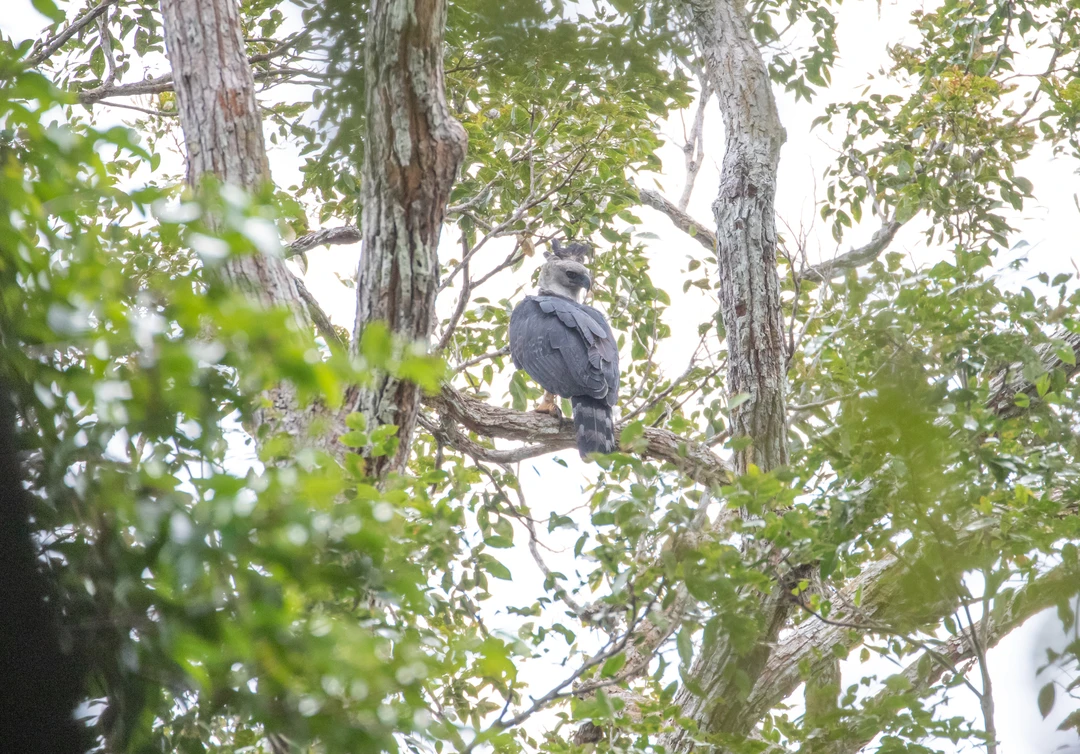
Compare plumage, posture, and field context across this image set.
About the Harpy Eagle
The Harpy Eagle (Harpia harpyja) is one of the world's largest and most powerful eagles, renowned for its impressive size, formidable talons, and crucial role as an apex predator in Neotropical rainforests. It plays a vital part in maintaining the health of its ecosystem by regulating prey populations. Culturally, the Harpy Eagle holds significance in various indigenous communities, often symbolizing strength and power, and appearing in folklore and mythology.
Scientific classification
Phylum: Chordata
Clazz: Aves
Order: Accipitriformes
Family: Accipitridae
Genus: Harpia
Species: Harpia harpyja
Habitat and distribution
Adaptations: Their broad wings and relatively short tail enable exceptional maneuverability within dense forest canopies. Their powerful legs and enormous talons are adapted for capturing and carrying large prey.
Variations: While generally considered monotypic (no recognized subspecies), slight variations in size and plumage coloration may occur across their extensive range, but these are not formally classified.
Distribution: The Harpy Eagle's range extends from southern Mexico through Central America and into South America, reaching as far south as northern Argentina. They are most commonly found in lowland tropical rainforests, but can inhabit areas up to 2,000 meters in elevation. Key areas include the Amazon Basin and the Pantanal.
Habitat Types: Lowland tropical rainforests, Subtropical forests, Occasionally, forest edges and fragmented areas
Climate Zones: Tropical, Subtropical
Diet and feeding
Primary foods: Sloths, Monkeys, Other arboreal mammals (e.g., opossums, porcupines), Occasionally, large birds (e.g., macaws) and reptiles
Foraging behavior: Harpy Eagles are primarily sit-and-wait predators. They perch on high vantage points within the forest canopy, using their keen eyesight to locate prey. Once prey is spotted, they launch powerful, swift attacks.
Seasonal diet variations: Diet may vary slightly depending on prey availability in different seasons or regions, but they primarily remain focused on arboreal mammals.
Specializations: Their exceptionally large and strong talons are specialized for grasping and killing large prey. Their legs and feet are incredibly powerful, allowing them to exert immense pressure.
Reproduction and lifecycle
Breeding season: Breeding season varies across their range but generally occurs during the late dry season or early wet season.
Regional variations: In some areas, breeding may occur every 2-3 years, tied to resource availability.
Courtship rituals: Courtship involves aerial displays, vocalizations, and mutual preening. Pairs often reinforce their bond by presenting each other with nesting material.
Nest Type: Large platform nest built high in emergent trees, often in the fork of a large branch.
Nesting Materials: Large sticks, Branches, Greenery, Animal bones
Parental care: Both parents participate in incubation, which lasts around 56 days. The female primarily incubates and broods the chick, while the male provides food. After hatching, parental care is extensive, lasting for several months.
Fledging period: Approximately 5-6 months until the young eagle fledges, but they may remain dependent on their parents for food for up to 10 months or longer.
Clutch Size: Typically 1-2 eggs.
Physical characteristics
Sex-Based Plumage Differences: Females are significantly larger than males.
Length: 86.5-107 cm
Wingspan: 176-224 cm
Weight: 4-9 kg
Lifespan: Estimated 25-35 years in the wild.
Breeding Plumage: Plumage is generally consistent throughout the year.
Seasonal Feather Changes: No significant seasonal variations.
Notable features: Large, prominent double crest on the head., Massive talons, larger than a grizzly bear's claws., Dark band across the chest., Broad wings and a relatively short, rounded tail.
Interesting facts
Their talons can exert several hundred pounds of pressure per square inch.: This immense pressure allows them to crush the bones of their prey instantly.
They are considered one of the most powerful raptors in the world.: Their size, strength, and hunting prowess place them at the top of the food chain in their rainforest habitat.
They have been known to take prey weighing up to their own body weight.: This demonstrates their incredible strength and lifting capacity.
The name "Harpy" comes from the harpies of Greek mythology.: These were fierce, winged creatures with the bodies of birds and the faces of women.
Frequently asked questions
Are Harpy Eagles dangerous to humans?
While Harpy Eagles are powerful predators, attacks on humans are extremely rare. They generally avoid human contact.
What is the biggest threat to Harpy Eagles?
Habitat loss and fragmentation due to deforestation are the primary threats to their survival.
How can I help protect Harpy Eagles?
Support organizations working to conserve rainforest habitats, advocate for sustainable land use practices, and raise awareness about the importance of these magnificent birds.
Do Harpy Eagles mate for life?
Harpy eagles are believed to mate for life. They form strong pair bonds and maintain their territories together for many years.
Compare the image, sound, habitat, and physical characteristics together when reviewing a sighting.