
The Green Jay (Cyanocorax yncas) is a vibrant and strikingly colored bird known for its intelligence and adaptability. It is a member of the Corvidae family, which includes crows, ravens, and other jays, all renowned for their problem-solving abilities. The Green Jay plays an important ecological role as a seed disperser, contributing to the health of its forest habitat. Unlike some other jays, the Green Jay's range is relatively stable, and it is not considered globally threatened. It holds little specific cultural significance beyond being admired for its beauty and lively presence.
Photos of Green Jay
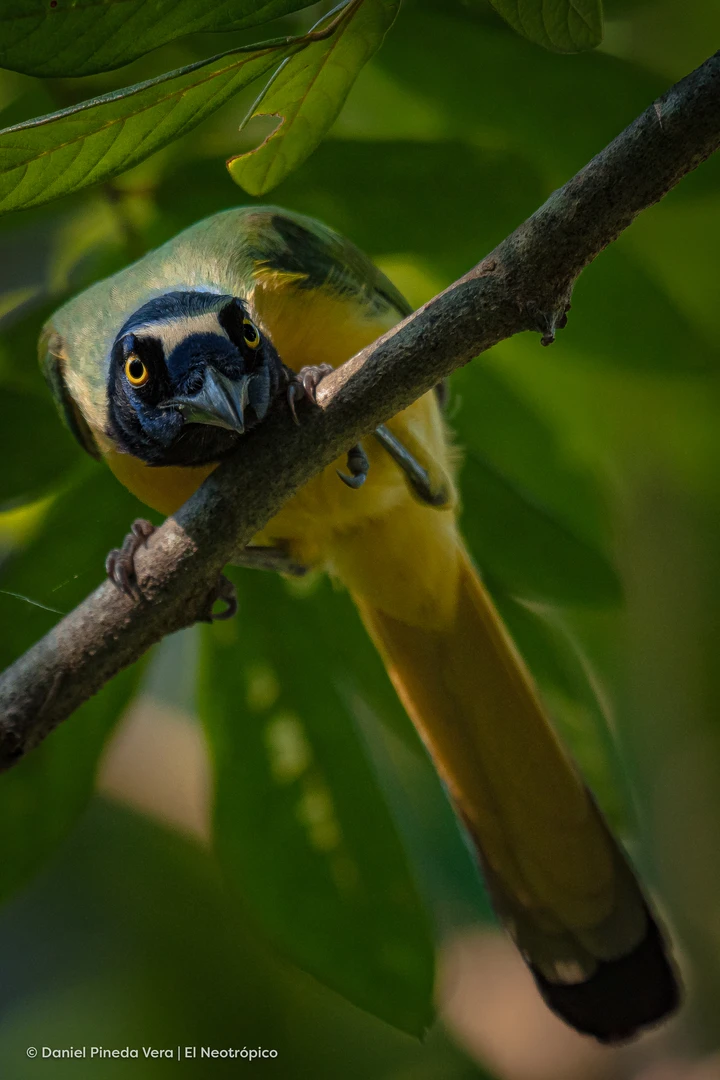
Compare plumage, posture, and field context across this image set.
Green Jay sounds
Listen to a small selection of reference recordings.
About the Green Jay
The Green Jay (Cyanocorax yncas) is a vibrant and strikingly colored bird known for its intelligence and adaptability. It is a member of the Corvidae family, which includes crows, ravens, and other jays, all renowned for their problem-solving abilities. The Green Jay plays an important ecological role as a seed disperser, contributing to the health of its forest habitat. Unlike some other jays, the Green Jay's range is relatively stable, and it is not considered globally threatened. It holds little specific cultural significance beyond being admired for its beauty and lively presence.
Also known as: Inca Jay.
Scientific classification
Phylum: Chordata
Clazz: Aves
Order: Passeriformes
Family: Corvidae
Genus: Cyanocorax
Species: Cyanocorax yncas
Habitat and distribution
Adaptations: Green Jays are highly adaptable to a range of forest environments, from dense rainforest to more open woodland. Their varied diet allows them to thrive in different habitats. Their strong legs and feet are well-suited for perching and maneuvering through branches.
Variations: Several subspecies of Green Jay are recognized, with variations in plumage color and size. For example, populations in South Texas tend to be greener, while those further south may have more yellowish or bluish tones.
Distribution: The Green Jay's range extends from southern Texas in the United States through eastern and southern Mexico, and into parts of Central America, including Guatemala, Belize, and Honduras. They are non-migratory, generally staying within their established territories year-round.
Habitat Types: Tropical and subtropical forests, Woodlands, Thickets, Scrubland, Forest edges, Parks and gardens (in some areas)
Climate Zones: Tropical, Subtropical
Diet and feeding
Primary foods: Insects, Spiders, Small vertebrates (lizards, frogs, nestlings), Fruits, Seeds, Nectar
Foraging behavior: Green Jays are opportunistic omnivores, foraging at all levels of the forest, from the ground to the canopy. They are active and acrobatic, often hopping and flitting through branches in search of food. They may also glean insects from leaves or probe into crevices.
Seasonal diet variations: Diet may shift slightly with seasonal availability. For example, they might consume more fruit during fruiting seasons and more insects when they are abundant.
Specializations: Their relatively strong bill allows them to handle a wide variety of food items, including hard-shelled insects and seeds.
Reproduction and lifecycle
Breeding season: Breeding season varies across its range, but generally occurs in spring (March-May in Texas).
Regional variations: Breeding may occur earlier in the southern parts of its range.
Courtship rituals: Courtship involves vocalizations, mutual preening, and the male feeding the female.
Nest Type: Cup-shaped nest built in trees or shrubs.
Nesting Materials: Twigs, Sticks, Moss, Leaves, Plant fibers
Parental care: Both parents participate in nest building, incubation, and feeding the young. Incubation lasts approximately 17-18 days.
Fledging period: Chicks fledge (leave the nest) around 20-24 days after hatching.
Clutch Size: Typically 3-5 eggs.
Physical characteristics
Sex-Based Plumage Differences: Minimal
Length: 25-29 cm
Wingspan: 34-42 cm
Weight: 66-110 g
Lifespan: The average lifespan in the wild is not well-documented, but other similar jay species live 7-10 years, and this is a reasonable estimate.
Breeding Plumage: Plumage is generally consistent year-round.
Seasonal Feather Changes: Minimal seasonal variation.
Notable features: Bright green back, wings, and tail., Blue head with black bib and mask., Yellowish-green underparts., Thick, black bill.
Interesting facts
Green Jays are known for their intelligence.: Like other corvids, they exhibit problem-solving skills and have been observed using tools in captivity.
They are excellent mimics.: Green Jays can imitate the calls of other birds, including raptors, possibly to scare away competitors or warn of danger.
They sometimes engage in 'anting'.: This behavior involves rubbing ants on their feathers, possibly to remove parasites or soothe skin irritation.
The Green Jay exhibits cooperative breeding.: Young birds often remain with their parents for a year or more, helping to raise subsequent broods.
Frequently asked questions
Are Green Jays related to Blue Jays?
Yes, both Green Jays and Blue Jays are members of the Corvidae family, but they belong to different genera. Green Jays are in the genus *Cyanocorax*, while Blue Jays are in the genus *Cyanocitta*.
Do Green Jays migrate?
No, Green Jays are non-migratory, resident birds that typically stay in the same general area year-round.
What should I do if I find a baby Green Jay?
If the bird appears injured or truly orphaned, contact a local wildlife rehabilitator. It's best to leave young birds alone unless they are in immediate danger, as their parents are likely nearby. Consult a professional for expert advice.
Do Green Jays come to bird feeders?
Yes, Green Jays may visit bird feeders, especially those offering peanuts, sunflower seeds, or suet. They are also attracted to fruit and may visit gardens.
Compare the image, sound, habitat, and physical characteristics together when reviewing a sighting.