
The Great Tit (*Parus major*) is a widespread and easily recognizable passerine bird found throughout Europe and Asia. Known for its striking black and white head, bright yellow underparts, and olive-green back, it's a common sight in gardens, woodlands, and parks. This adaptable bird plays a significant role in controlling insect populations, particularly caterpillars, making it beneficial to both natural ecosystems and human agriculture. Culturally, the Great Tit is often associated with cheerfulness and resilience due to its lively nature and ability to thrive in diverse environments, including urban settings.
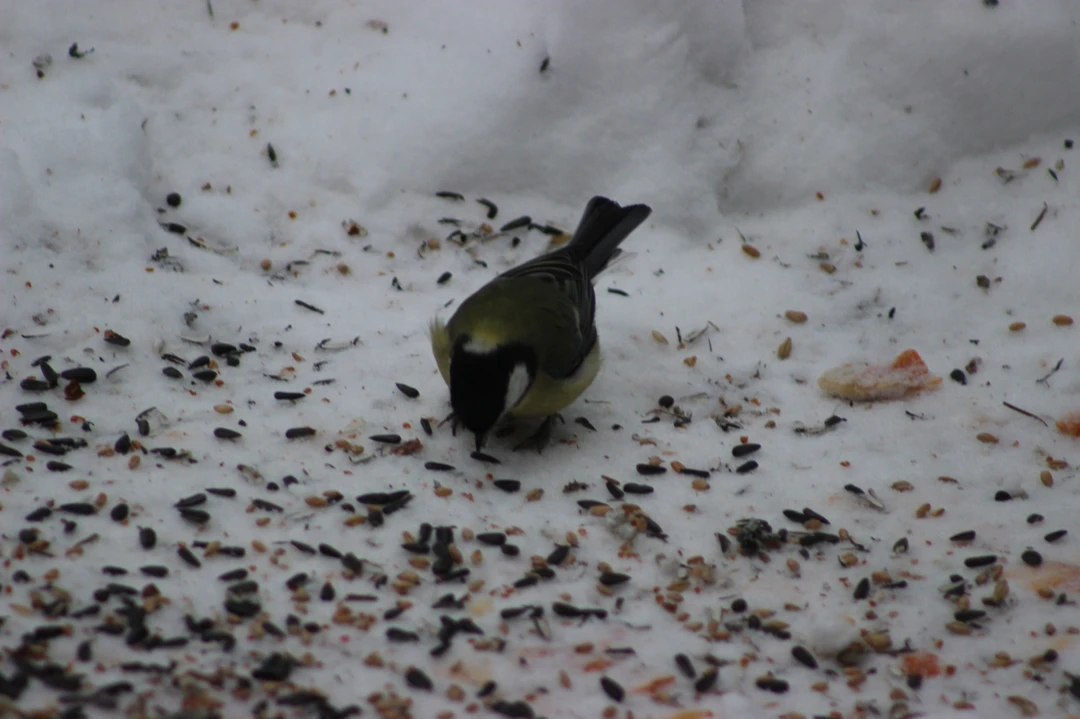
Photos of Great Tit
Compare plumage, posture, and field context across this image set.
Great Tit sounds
Listen to a small selection of reference recordings.
About the Great Tit
The Great Tit (*Parus major*) is a widespread and easily recognizable passerine bird found throughout Europe and Asia. Known for its striking black and white head, bright yellow underparts, and olive-green back, it's a common sight in gardens, woodlands, and parks. This adaptable bird plays a significant role in controlling insect populations, particularly caterpillars, making it beneficial to both natural ecosystems and human agriculture. Culturally, the Great Tit is often associated with cheerfulness and resilience due to its lively nature and ability to thrive in diverse environments, including urban settings.
Also known as: Eurasian Great Tit, Northern Great Tit.
Scientific classification
Phylum: Chordata
Clazz: Aves
Order: Passeriformes
Family: Paridae
Genus: Parus
Species: Parus major
Habitat and distribution
Adaptations: Great Tits are highly adaptable to various habitats. Their strong beaks allow them to exploit a wide range of food sources, and their agility helps them navigate complex tree canopies and access food in tight spaces. They readily utilize human-provided resources like bird feeders and nest boxes.
Variations: Numerous subspecies of Great Tit exist, differing subtly in plumage coloration and size. For instance, *Parus major major* is the nominate subspecies found across much of Europe, while *Parus major minor* is found in East Asia and tends to be smaller with slightly different markings.
Distribution: The Great Tit has an extensive range, covering most of Europe, the Middle East, Central Asia, and parts of North Africa. It extends eastward across Siberia to the Russian Far East and south into parts of Southeast Asia. It is largely resident, but northern populations may migrate south in winter.
Habitat Types: Deciduous woodlands, Mixed forests, Parks, Gardens, Hedgerows, Orchards
Climate Zones: Temperate, Boreal, Mediterranean
Diet and feeding
Primary foods: Insects, Caterpillars, Spiders, Seeds, Nuts, Berries
Foraging behavior: Great Tits are active foragers, searching for food on branches, leaves, and the ground. They often hang upside down to reach insects on the undersides of leaves. They are also frequent visitors to bird feeders, where they readily consume seeds and suet.
Seasonal diet variations: During the breeding season, their diet consists mainly of insects, especially caterpillars, which are crucial for feeding their young. In winter, they rely more on seeds, nuts, and berries.
Specializations: Their strong beaks allow them to crack open seeds and nuts. They also have good spatial memory, remembering locations where they have cached food.
Reproduction and lifecycle
Breeding season: The breeding season typically occurs from late winter to early summer, varying slightly depending on location and climate. In temperate regions, it generally starts in March or April.
Regional variations: Breeding may start earlier in warmer southern regions and later in colder northern areas.
Courtship rituals: Courtship involves males displaying to females by singing, spreading their wings, and offering food. The male's black breast stripe is thought to play a role in mate attraction.
Nest Type: Cavity nester, using natural tree holes, nest boxes, or other enclosed spaces.
Nesting Materials: Moss, Grass, Feathers, Animal hair
Parental care: Both parents incubate the eggs, which hatch after about 13-15 days. Both parents also feed the chicks, bringing them a constant supply of insects. The female broods the nestlings, to keep them warm.
Fledging period: Chicks fledge (leave the nest) around 16-22 days after hatching.
Clutch Size: Typically 5-12 eggs, but can vary widely.
Physical characteristics
Sex-Based Plumage Differences: Minimal
Length: 12.5-14 cm
Wingspan: 22.5-25.5 cm
Weight: 14-22 g
Lifespan: The average lifespan in the wild is around 3 years, but some individuals have been recorded living up to 15 years.
Breeding Plumage: Plumage is generally consistent year-round, though it may appear brighter during the breeding season due to fresher feathers.
Seasonal Feather Changes: Minimal seasonal variation; colors may be slightly duller after molting.
Notable features: Black cap and throat, White cheeks, Yellow underparts with a central black stripe, Olive-green back
Interesting facts
Great Tits have a remarkably diverse repertoire of songs.: Different populations have distinct 'dialects,' and individual males can have dozens of different song variations.
They are known for their intelligence and problem-solving abilities.: Studies have shown they can learn to solve puzzles to access food and can adapt quickly to new feeding opportunities.
Great Tits are important predators of caterpillars.: A single pair of Great Tits can consume thousands of caterpillars while raising their young, helping to control pest populations.
Great Tits sometimes utilize tools.: Captive birds have demonstrated the ability to use small sticks to extract food that is out of reach.
Frequently asked questions
What do Great Tits eat?
Great Tits have a varied diet. They mainly eat insects and spiders in the summer. In the winter, they will eat seeds, nuts and berries.
Where do Great Tits nest?
Great Tits nest in cavities, such as tree holes or nest boxes. They build a cup-shaped nest using moss, grass, feathers, and animal hair.
Are Great Tits migratory?
Most Great Tits are resident, but some northern populations may migrate short distances in winter.
How can I attract Great Tits to my garden?
Provide food sources like bird feeders with seeds, nuts, and suet. Install nest boxes to offer nesting sites. Planting native trees and shrubs also provides natural food and shelter.
How long do great tits live?
The average lifespan is around three years. But the record is 15 years.
Compare the image, sound, habitat, and physical characteristics together when reviewing a sighting.