
The Great Spotted Woodpecker (Dendrocopos major) is a widespread and easily recognizable member of the woodpecker family. Known for its striking black, white, and red plumage, it plays a crucial role in forest ecosystems by controlling insect populations and creating nesting cavities used by other species. It is a highly adaptable bird, found in a variety of wooded habitats across Eurasia. While not currently considered globally threatened, localized declines have been noted in some areas due to habitat loss. It holds no particular major cultural significance, but its distinctive drumming sound is a familiar and welcome sign of spring in many regions.
Photos of Great Spotted Woodpecker
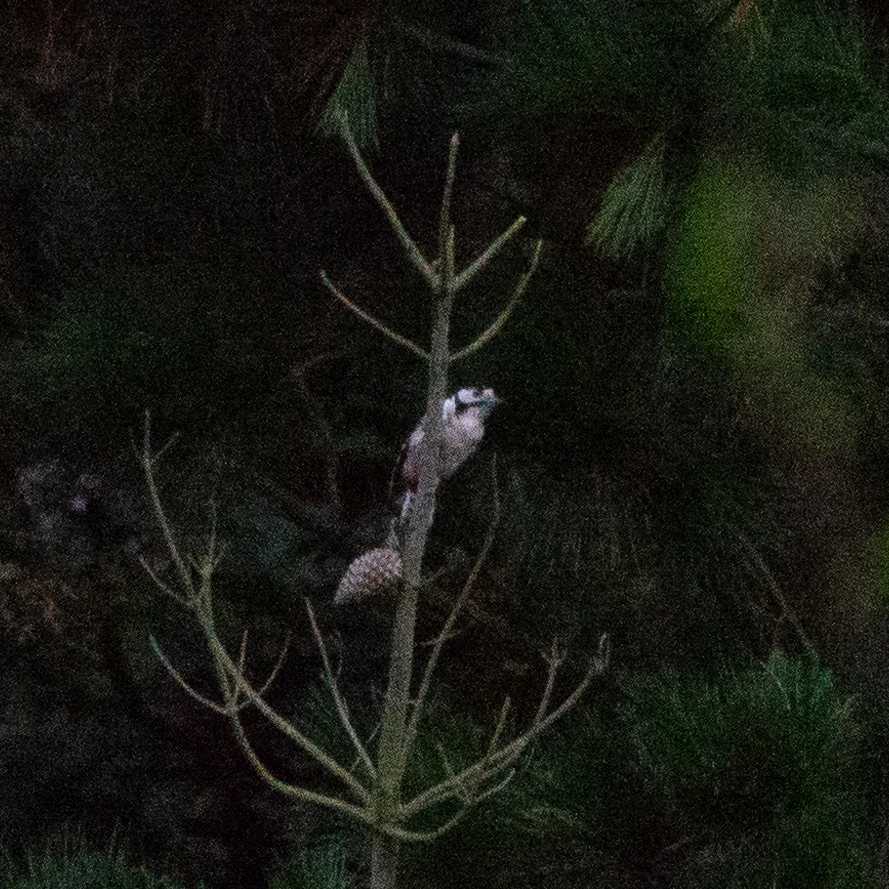
Compare plumage, posture, and field context across this image set.
About the Great Spotted Woodpecker
The Great Spotted Woodpecker (Dendrocopos major) is a widespread and easily recognizable member of the woodpecker family. Known for its striking black, white, and red plumage, it plays a crucial role in forest ecosystems by controlling insect populations and creating nesting cavities used by other species. It is a highly adaptable bird, found in a variety of wooded habitats across Eurasia. While not currently considered globally threatened, localized declines have been noted in some areas due to habitat loss. It holds no particular major cultural significance, but its distinctive drumming sound is a familiar and welcome sign of spring in many regions.
Scientific classification
Phylum: Chordata
Clazz: Aves
Order: Piciformes
Family: Picidae
Genus: Dendrocopos
Species: Dendrocopos major
Habitat and distribution
Adaptations: Strong, pointed bill for excavating wood; zygodactyl feet (two toes pointing forward, two backward) for secure grip on tree trunks; stiff tail feathers for support while climbing; long, barbed tongue for extracting insects from crevices.
Variations: Numerous subspecies have been described, differing subtly in plumage coloration and size. For example, *D. m. pinetorum* is found in central Europe, while *D. m. japonicus* occurs in Japan.
Distribution: The Great Spotted Woodpecker has a vast range, extending across Europe and northern Asia, from the British Isles and the Iberian Peninsula in the west to Japan and eastern China in the east. It is also found in parts of North Africa. Its altitudinal range varies, occurring from sea level to the tree line in mountainous regions.
Habitat Types: Coniferous forests, Deciduous woodlands, Mixed forests, Parks, Gardens with mature trees
Climate Zones: Temperate, Boreal, Subtropical (in parts of its range)
Diet and feeding
Primary foods: Insects and their larvae, Seeds (especially pine and other conifer seeds), Nuts, Berries, Occasionally, eggs and nestlings of other birds
Foraging behavior: Forages primarily on tree trunks and branches, using its strong bill to excavate wood and extract insects. It also gleans insects from the surface of bark and foliage. Will visit bird feeders, especially for suet and nuts.
Seasonal diet variations: Diet shifts with seasonal availability. Insects are the primary food source during the breeding season, while seeds and nuts become more important in autumn and winter.
Specializations: The skull is specially adapted to withstand the repeated impacts of drumming. The tongue is long and sticky, with barbs at the tip, allowing it to extract insects from deep within crevices.
Reproduction and lifecycle
Breeding season: Typically begins in early spring, from April to May in temperate regions.
Regional variations: Breeding season may start earlier in warmer regions and later at higher latitudes or altitudes.
Courtship rituals: Courtship involves loud drumming by both sexes, chasing flights, and mutual tapping near the nest site. The male may also perform a display flight with slow, exaggerated wingbeats.
Nest Type: Excavates a new nest cavity each year, usually in a dead or decaying tree.
Nesting Materials: Wood chips (created during excavation)
Parental care: Both parents incubate the eggs for 10-12 days. Both parents also feed the chicks, bringing them insects and other food. Chicks are altricial (helpless at hatching).
Fledging period: 18-21 days
Clutch Size: 4-7 eggs
Physical characteristics
Sex-Based Plumage Differences: Minimal
Length: 20-24 cm
Wingspan: 34-39 cm
Weight: 70-98 g
Lifespan: Up to 11 years in the wild, though average lifespan is likely shorter.
Breeding Plumage: Little to no difference between breeding and non-breeding plumage.
Seasonal Feather Changes: Minimal seasonal variation; plumage may appear slightly duller after molting.
Notable features: Bold black and white patterning on the back and wings., Red undertail coverts., White cheeks and underparts., Strong, chisel-like bill.
Interesting facts
They can drum at speeds of up to 20 strikes per second.: This rapid drumming is used for communication, not just for excavating food.
Their brain is protected from the impact of drumming by special adaptations.: These include a spongy bone structure in the skull and a tight fit between the brain and skull.
The Great Spotted Woodpecker's tongue wraps around its skull.: This unusual anatomy helps to cushion the brain during drumming and allows the tongue to extend far out to reach insects.
Great Spotted Woodpeckers are known to occasionally predate on the nests of other birds.: They will sometimes break into nest boxes or natural cavities to eat eggs and nestlings.
Frequently asked questions
What is the difference between a male and female Great Spotted Woodpecker?
Males have a red patch on the nape (back of the neck), while females do not.
Do Great Spotted Woodpeckers migrate?
Most Great Spotted Woodpeckers are resident, but some northern populations may move south in winter if food becomes scarce.
What should I do if I find a Great Spotted Woodpecker nest?
Observe the nest from a distance and avoid disturbing the birds. It is illegal to intentionally damage or destroy the nest of any wild bird.
How can I attract Great Spotted Woodpeckers to my garden?
Provide a source of food, such as suet, peanuts, or sunflower seeds. Leaving dead or decaying trees standing (if safe to do so) can also provide nesting opportunities.
Are Great Spotted Woodpeckers harmful to trees?
While they do excavate holes in trees, Great Spotted Woodpeckers primarily target dead or decaying wood, playing an important role in decomposition and nutrient cycling. They rarely cause significant damage to healthy trees.
Compare the image, sound, habitat, and physical characteristics together when reviewing a sighting.