
The Great Horned Owl (Bubo virginianus) is a large, powerful owl native to the Americas. It is easily recognizable by its prominent ear tufts, often referred to as "horns," though they are not actually ears. This adaptable predator plays a crucial role in its ecosystem, controlling populations of rodents and other small animals. It's found in a wide variety of habitats, showcasing its remarkable resilience. The Great Horned Owl holds cultural significance in some Indigenous cultures, often symbolizing wisdom or protection, while in others, it can be seen as an omen.
Photos of Great Horned Owl
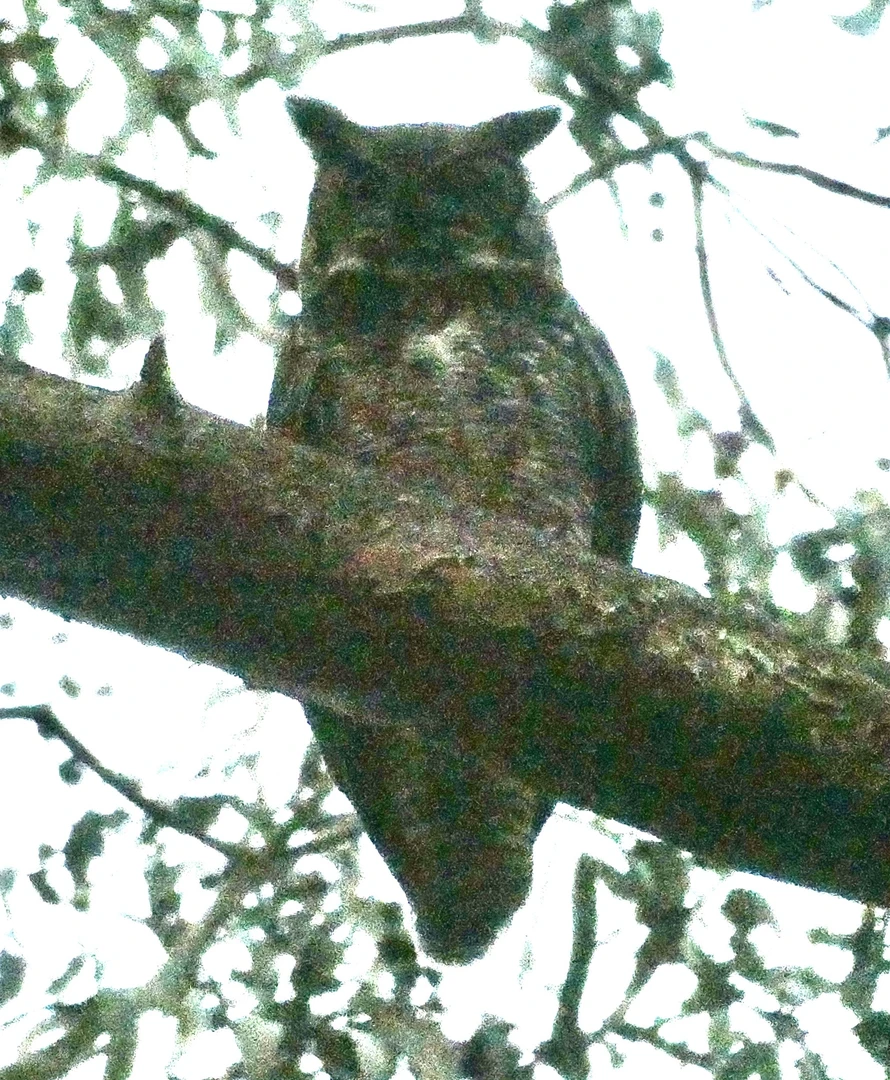
Compare plumage, posture, and field context across this image set.
Great Horned Owl sounds
Listen to a small selection of reference recordings.
About the Great Horned Owl
The Great Horned Owl (Bubo virginianus) is a large, powerful owl native to the Americas. It is easily recognizable by its prominent ear tufts, often referred to as "horns," though they are not actually ears. This adaptable predator plays a crucial role in its ecosystem, controlling populations of rodents and other small animals. It's found in a wide variety of habitats, showcasing its remarkable resilience. The Great Horned Owl holds cultural significance in some Indigenous cultures, often symbolizing wisdom or protection, while in others, it can be seen as an omen.
Also known as: American Horned Owl, American Eagle-Owl, Tiger Owl, Hoot Owl, Virginian Eagle-Owl, Cat Owl, King Owl, Big Hoot Owl.
Scientific classification
Phylum: Chordata
Clazz: Aves
Order: Strigiformes
Family: Strigidae
Genus: Bubo
Species: Bubo virginianus
Habitat and distribution
Adaptations: Great Horned Owls are highly adaptable to diverse environments. Their broad diet and varied nesting sites allow them to thrive in a wide range of conditions. Their feathered legs and feet provide insulation in colder climates.
Variations: There are numerous recognized subspecies of Great Horned Owls, differing in coloration and size depending on geographic location. For example, Arctic populations tend to be paler, while those in more humid regions are darker.
Distribution: The Great Horned Owl has an extensive range, spanning from northern North America to parts of South America. It is absent from the high Arctic tundra and some Caribbean islands. It is generally non-migratory, although northern populations may move south in winter.
Habitat Types: Forests, Woodlands, Grasslands, Deserts, Wetlands, Urban areas, Suburban environments
Climate Zones: Arctic, Temperate, Subtropical, Tropical
Diet and feeding
Primary foods: Mammals (rodents, rabbits, hares), Birds (including other raptors), Reptiles, Amphibians, Insects, Fish, Scorpions
Foraging behavior: Primarily nocturnal hunters, Great Horned Owls use a 'sit-and-wait' strategy, perching and scanning for prey. They also fly low over the ground to ambush prey.
Seasonal diet variations: Diet varies depending on prey availability. In winter, they may rely more on larger prey items like rabbits.
Specializations: Excellent night vision and hearing. Asymmetrical ear openings help pinpoint prey location. Sharp talons and powerful grip.
Reproduction and lifecycle
Breeding season: Variable, but generally late winter to early spring (January-April in many areas).
Regional variations: Breeding season can start earlier in southern latitudes.
Courtship rituals: Courtship involves hooting duets, bowing, and bill-rubbing. Males may also present food to females.
Nest Type: Typically uses nests built by other large birds (hawks, crows, herons), tree cavities, cliffs, or even on the ground.
Nesting Materials: Sticks, Leaves, Feathers, Prey remains
Parental care: Females primarily incubate the eggs, while males provide food. Both parents feed and protect the young.
Fledging period: 6-9 weeks until first flight; young remain dependent on parents for several months.
Clutch Size: 1-5 eggs (typically 2-3).
Physical characteristics
Sex-Based Plumage Differences: Females are generally larger than males.
Length: 43-64 cm
Wingspan: 91-153 cm
Weight: 680-2500 g
Lifespan: Up to 28 years in the wild; longer in captivity.
Breeding Plumage: Plumage is generally similar year-round.
Seasonal Feather Changes: Minimal seasonal variation.
Notable features: Prominent ear tufts (feather tufts, not ears), Large, forward-facing yellow eyes, Mottled brown, gray, and white plumage for camouflage, Feathered legs and feet
Interesting facts
They are sometimes called "tigers of the sky.": Due to their ferocity and hunting prowess.
Their eyes are fixed in their sockets.: They must turn their heads (up to 270 degrees) to look around.
They can prey on animals larger than themselves.: Including skunks, other raptors, and even domestic cats and small dogs.
Great Horned Owls have virtually silent flight.: Due to specialized feathers that reduce noise.
Frequently asked questions
What do Great Horned Owls eat?
They have a very broad diet, including mammals, birds, reptiles, amphibians, insects, and even fish.
Where do Great Horned Owls live?
They are found in a wide variety of habitats across North and South America, from forests to deserts to urban areas.
Are Great Horned Owls dangerous to humans?
They are generally not aggressive towards humans unless threatened or protecting their nest. Attacks are very rare.
How long do Great Horned Owls live?
They can live up to 28 years in the wild, and even longer in captivity.
Do Great Horned Owls migrate?
Most Great Horned Owls are non-migratory, although some northern populations may move south during harsh winters.
Compare the image, sound, habitat, and physical characteristics together when reviewing a sighting.