
The Great Crested Flycatcher (Myiarchus crinitus) is a striking, medium-sized passerine bird known for its vibrant colors, distinctive calls, and bold behavior. It plays a significant ecological role as an insectivore, helping to control insect populations in its breeding and wintering habitats. This species is not typically associated with strong cultural symbolism, but its presence is often welcomed by birdwatchers as a sign of a healthy, diverse ecosystem.
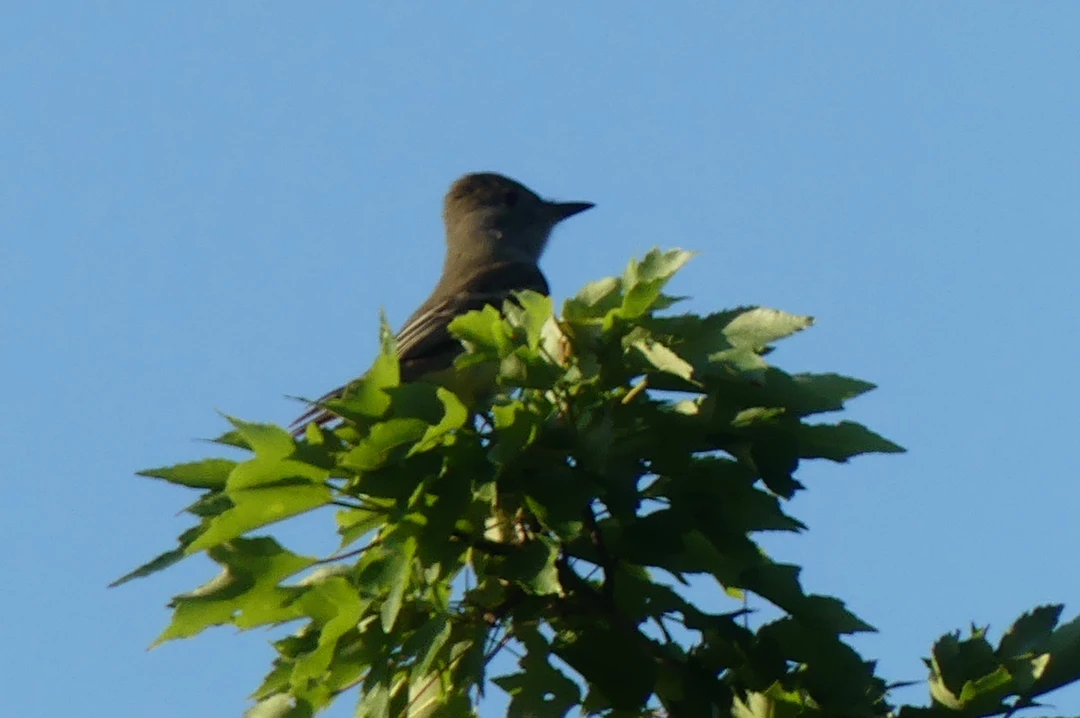
Photos of Great Crested Flycatcher
Compare plumage, posture, and field context across this image set.
Great Crested Flycatcher sounds
Listen to a small selection of reference recordings.
About the Great Crested Flycatcher
The Great Crested Flycatcher (Myiarchus crinitus) is a striking, medium-sized passerine bird known for its vibrant colors, distinctive calls, and bold behavior. It plays a significant ecological role as an insectivore, helping to control insect populations in its breeding and wintering habitats. This species is not typically associated with strong cultural symbolism, but its presence is often welcomed by birdwatchers as a sign of a healthy, diverse ecosystem.
Scientific classification
Phylum: Chordata
Clazz: Aves
Order: Passeriformes
Family: Tyrannidae
Genus: Myiarchus
Species: Myiarchus crinitus
Habitat and distribution
Adaptations: Strong legs and feet for perching on branches while hunting insects. Cavity nester, adapted to using pre-existing holes in trees or nest boxes.
Variations: No widely recognized subspecies, though some subtle plumage variations may exist across its broad range.
Distribution: Breeds across eastern and east-central North America, from southern Canada south to Florida and the Gulf Coast. Migrates to Central America and northern South America (primarily Mexico, Guatemala, Honduras, and Colombia) for the winter. Occasional vagrant to the Caribbean islands.
Habitat Types: Deciduous forests, Mixed woodlands, Forest edges, Open woodlands with clearings, Orchards, Parks
Climate Zones: Temperate, Subtropical
Diet and feeding
Primary foods: Insects (flies, beetles, wasps, caterpillars, etc.), Spiders, Small fruits and berries (especially during migration and winter)
Foraging behavior: Typically perches on a branch and sallies out to catch flying insects in mid-air. Also gleans insects and spiders from foliage. Occasionally hovers to pick insects from leaves or branches.
Seasonal diet variations: Diet is primarily insects during the breeding season. Incorporates more fruits and berries into the diet during migration and in wintering areas when insects are less abundant.
Specializations: Agile flight allows for capturing fast-flying insects. Wide gape for swallowing larger prey.
Reproduction and lifecycle
Breeding season: May-July in most of its range.
Regional variations: Slightly earlier breeding in the southern parts of its range.
Courtship rituals: Males display by raising their crest, spreading their wings and tail, and giving loud calls. May also engage in chase flights.
Nest Type: Cavity nester; uses natural tree cavities, old woodpecker holes, or artificial nest boxes.
Nesting Materials: Twigs, Leaves, Grass, Bark strips, Feathers, Snakeskin (often included)
Parental care: Both parents incubate the eggs (primarily the female) for about 13-15 days. Both parents feed the nestlings, which fledge after about 13-15 days.
Fledging period: 13-15 days.
Clutch Size: Typically 4-8 eggs.
Physical characteristics
Sex-Based Plumage Differences: Minimal
Length: 17-21 cm
Wingspan: 28-33 cm
Weight: 27-40 g
Lifespan: Average lifespan in the wild is unknown, but likely around 5-7 years, with a maximum recorded lifespan of over 14 years.
Breeding Plumage: Plumage is similar year-round.
Seasonal Feather Changes: Minimal seasonal variation; may appear slightly duller in non-breeding plumage.
Notable features: Erectile crest on head (often raised when agitated), Bright yellow belly, Rufous (reddish-brown) wings and tail, Grayish-brown upperparts, White throat and upper breast
Interesting facts
Great Crested Flycatchers often include shed snakeskin in their nests.: The reason for this behavior is not fully understood, but it may deter predators or parasites.
They are known for their aggressive defense of their nests.: They will actively mob and chase away potential predators, including much larger birds.
They are one of the latest spring migrants to arrive on their breeding grounds.: This may be related to their reliance on flying insects, which become abundant later in the spring.
This is a highly vocal species.: Their calls are far carrying and can be heard at great distances.
They can hover like a hummingbird.: This flight adaptation is used during feeding.
Frequently asked questions
What do Great Crested Flycatchers eat?
They primarily eat insects, but also consume spiders, small fruits, and berries.
Where do Great Crested Flycatchers nest?
They nest in tree cavities, old woodpecker holes, or artificial nest boxes.
Are Great Crested Flycatchers aggressive?
They can be very aggressive in defending their nesting territory, but are not generally aggressive towards humans.
How can I attract Great Crested Flycatchers to my yard?
Providing a nest box in a suitable wooded area can attract them. Maintaining a healthy, insect-rich environment is also important.
What does the snakeskin in their nest do?
It is believed the snakeskin acts as a deterrent to potential nest predators or parasites.
Compare the image, sound, habitat, and physical characteristics together when reviewing a sighting.