
The Great Blue Heron (Ardea herodias) is a large wading bird in the heron family Ardeidae, common near the shores of open water and in wetlands over most of North America and Central America, as well as the Caribbean and the Galápagos Islands. It is the largest North American heron. With its impressive size, striking plumage, and deliberate hunting style, the Great Blue Heron plays a significant role in its ecosystem as a top predator in wetland environments. While not holding specific cultural significance universally, it is often admired for its grace and is a symbol of patience and tranquility.
Photos of Great Blue Heron
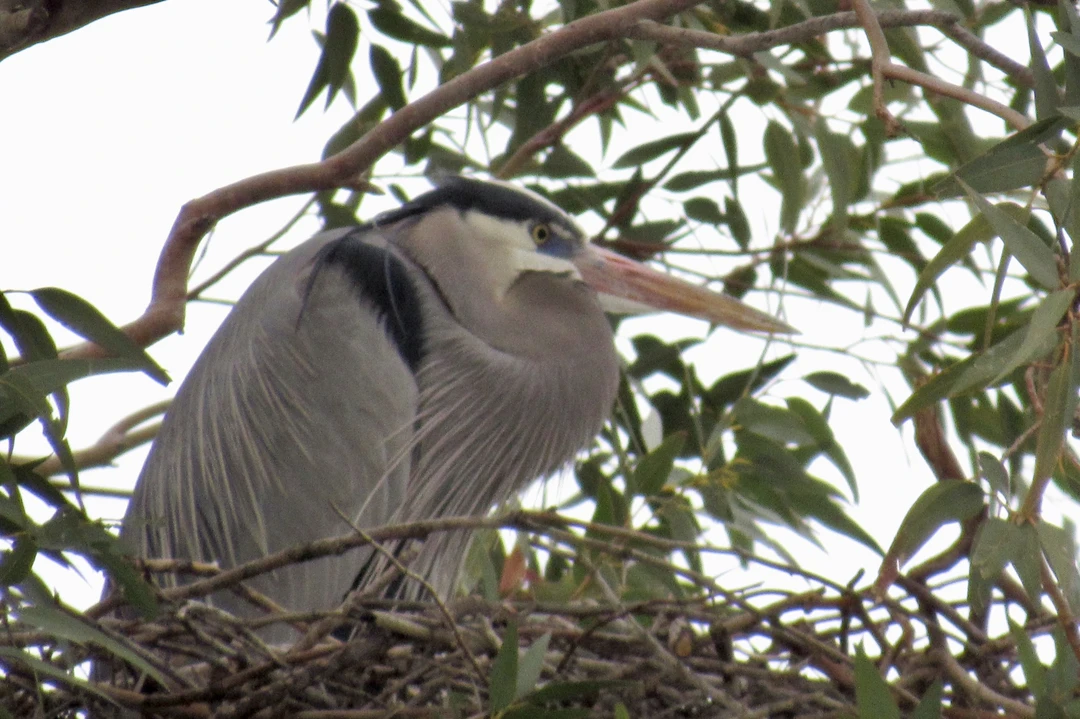
Compare plumage, posture, and field context across this image set.
Great Blue Heron sounds
Listen to a small selection of reference recordings.
About the Great Blue Heron
The Great Blue Heron (Ardea herodias) is a large wading bird in the heron family Ardeidae, common near the shores of open water and in wetlands over most of North America and Central America, as well as the Caribbean and the Galápagos Islands. It is the largest North American heron. With its impressive size, striking plumage, and deliberate hunting style, the Great Blue Heron plays a significant role in its ecosystem as a top predator in wetland environments. While not holding specific cultural significance universally, it is often admired for its grace and is a symbol of patience and tranquility.
Also known as: Blue Heron.
Scientific classification
Phylum: Chordata
Clazz: Aves
Order: Pelecaniformes
Family: Ardeidae
Genus: Ardea
Species: Ardea herodias
Habitat and distribution
Adaptations: Great Blue Herons possess long legs and necks, allowing them to wade in relatively deep water and spot prey from a distance. Their sharp, spear-like bills are perfectly adapted for capturing fish, amphibians, and other aquatic creatures. Specialized neck vertebrae allow for rapid striking. Their eyes have a high density of rod cells, enhancing their vision in low-light conditions, useful for foraging at dawn and dusk.
Variations: Several subspecies are recognized, differing slightly in size and plumage coloration. For example, *Ardea herodias fannini* found in the Pacific Northwest is darker overall, while *Ardea herodias occidentalis* (sometimes called the 'Great White Heron') found in southern Florida and the Caribbean is almost entirely white.
Distribution: The Great Blue Heron has a wide range across North and Central America. Breeding occurs from southeastern Alaska, central Canada, and Nova Scotia south to Mexico and the Caribbean. It winters from the southern United States southward, extending to northern South America. Some populations are resident year-round, while others undertake substantial migrations. Altitudinally, they can be found from sea level to moderately high elevations in suitable habitats.
Habitat Types: Freshwater marshes, Saltwater marshes, Mangrove swamps, Lakeshores, Riverbanks, Coastal lagoons, Wet meadows, Estuaries
Climate Zones: Temperate, Subtropical, Tropical
Diet and feeding
Primary foods: Fish, Amphibians (frogs, salamanders), Reptiles (small snakes, turtles), Crustaceans (crayfish, shrimp), Insects, Small mammals (rodents), Small birds
Foraging behavior: Great Blue Herons are primarily visual hunters. They typically stand motionless in shallow water, waiting for prey to come within striking distance. They then use their long necks and sharp bills to quickly seize their prey. They may also slowly stalk prey or, less commonly, dive from the air.
Seasonal diet variations: Diet varies depending on prey availability. In areas where fish are less abundant during winter, they may rely more on amphibians, crustaceans, or small mammals.
Specializations: Their long necks and specialized vertebrae allow for a rapid strike, essential for catching fast-moving fish. Their long legs enable them to wade in deeper water than many other wading birds.
Reproduction and lifecycle
Breeding season: Breeding season varies geographically. In northern regions, it typically occurs from March to May. In southern regions, it may start earlier or extend longer.
Regional variations: Birds in southern Florida may breed nearly year-round, while those in northern Canada have a much shorter breeding window.
Courtship rituals: Courtship involves elaborate displays, including bill duels, neck stretching, and the presentation of nesting materials. Males often perform 'stretch' displays, extending their necks and pointing their bills skyward.
Nest Type: Large platform nests, often built in colonies (heronries) in trees, bushes, or on the ground.
Nesting Materials: Sticks, Twigs, Leaves, Moss, Other vegetation
Parental care: Both parents share incubation duties, which last about 28 days. They also both feed the chicks by regurgitating food. Chicks are initially helpless (altricial).
Fledging period: Young herons typically fledge (leave the nest) at around 60 days old, but may remain dependent on their parents for some time after.
Clutch Size: Typically 3-5 eggs, but can range from 2-7.
Physical characteristics
Sex-Based Plumage Differences: Males are slightly larger than females, but overlap is considerable.
Length: 91-137 cm
Wingspan: 167-201 cm
Weight: 1800-3600 g
Lifespan: The oldest recorded Great Blue Heron in the wild lived to be at least 24 years old. Average lifespans are likely shorter, with many birds not surviving their first year.
Breeding Plumage: Breeding adults develop long, wispy plumes on their head, neck, and back. Non-breeding adults have less elaborate plumage. The overall coloration is a mix of gray-blue, slate-gray, black, and white.
Seasonal Feather Changes: Plumage is brighter and more defined during the breeding season. The plumes are most prominent during courtship and early nesting.
Notable features: Long, S-shaped neck, Sharp, dagger-like bill (yellowish or dusky), Long, dark legs, White head with a black stripe extending above the eye, Blue-gray body plumage, Shaggy neck plumes during breeding season
Interesting facts
They can hunt both day and night.: Thanks to a high percentage of rod-type photoreceptors in their eyes, they have excellent night vision.
They sometimes choke on prey that is too large.: While they can swallow surprisingly large fish, they occasionally misjudge and can die from attempting to eat something too big.
They often reuse nests for many years.: Established colonies can persist for decades, with nests being repaired and expanded each year.
Great Blue Herons have special powder down feathers.: These feathers continuously grow and fray, producing a fine powder that the heron uses to clean its plumage and remove fish slime and oils.
Frequently asked questions
What is the difference between a Great Blue Heron and a crane?
While both are large, long-legged birds, herons fly with their necks retracted in an S-shape, while cranes fly with their necks extended.
Do Great Blue Herons mate for life?
They typically form new pair bonds each breeding season, although some pairs may remain together for multiple years.
What should I do if I find an injured Great Blue Heron?
Contact a local wildlife rehabilitator or animal control agency. Do not attempt to handle the bird yourself, as they have sharp bills and can inflict serious injury. *Consult a professional for medical or expert advice.*
Are Great Blue Herons endangered?
No, Great Blue Herons are classified as 'Least Concern' by the IUCN. Their populations are generally stable, although they face threats from habitat loss and pollution.
Compare the image, sound, habitat, and physical characteristics together when reviewing a sighting.