
The Grey Heron (Ardea cinerea) is a large, long-legged wading bird, instantly recognizable by its elegant posture and distinctive grey, black, and white plumage. A common sight near wetlands, rivers, and lakes across much of the Old World, this adaptable bird plays a crucial role in its ecosystem as a top predator of fish, amphibians, and other small aquatic creatures. While not typically considered culturally significant in the same way as some other birds, its widespread presence has made it a familiar feature of many landscapes and a subject of artistic and literary representation.
Photos of Gray Heron
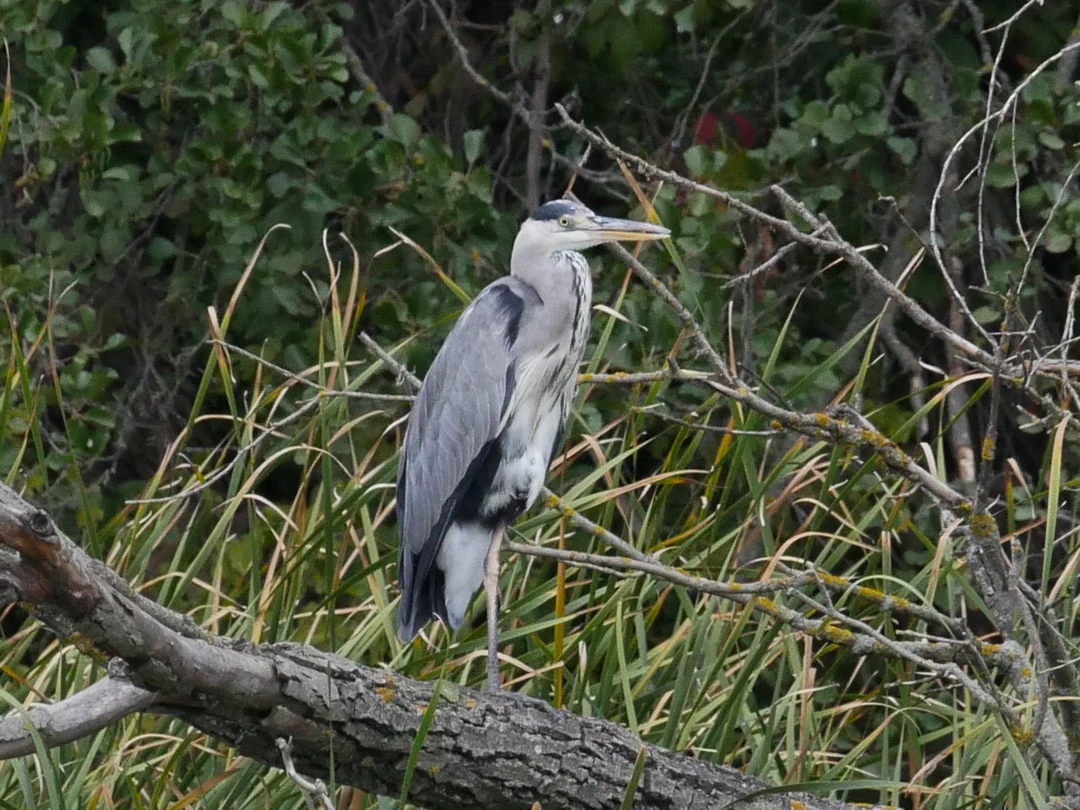
Compare plumage, posture, and field context across this image set.
About the Gray Heron
The Grey Heron (Ardea cinerea) is a large, long-legged wading bird, instantly recognizable by its elegant posture and distinctive grey, black, and white plumage. A common sight near wetlands, rivers, and lakes across much of the Old World, this adaptable bird plays a crucial role in its ecosystem as a top predator of fish, amphibians, and other small aquatic creatures. While not typically considered culturally significant in the same way as some other birds, its widespread presence has made it a familiar feature of many landscapes and a subject of artistic and literary representation.
Also known as: Grey Heron.
Scientific classification
Phylum: Chordata
Clazz: Aves
Order: Pelecaniformes
Family: Ardeidae
Genus: Ardea
Species: Ardea cinerea
Habitat and distribution
Adaptations: Grey Herons possess long legs and specialized toes for wading in shallow water and navigating muddy substrates. Their long, sharp bills are perfectly adapted for spearing fish and other prey. They have specialized neck vertebrae that allow for a rapid striking motion.
Variations: Four subspecies are generally recognized: *Ardea cinerea cinerea* (Europe, Africa, western Asia), *Ardea cinerea jouyi* (eastern Asia), *Ardea cinerea firasa* (Madagascar), and *Ardea cinerea monicae* (Mauritania). These subspecies differ slightly in size and plumage coloration.
Distribution: The Grey Heron has a vast range, breeding across much of Europe, Asia, and parts of Africa. It is also found in the Middle East. Many populations are migratory, with European birds wintering in southern Europe and Africa, while Asian populations may move to Southeast Asia. Altitudinal range extends from sea level to higher elevations in some mountain regions, provided suitable feeding habitats are present.
Habitat Types: Wetlands, Riversides, Lakeshores, Estuaries, Marshes, Coastal lagoons, Mangrove swamps, Flooded agricultural fields
Climate Zones: Temperate, Tropical, Subtropical
Diet and feeding
Primary foods: Fish, Amphibians (frogs, newts), Small mammals (rodents, shrews), Crustaceans (crabs, crayfish), Insects, Reptiles (small snakes), Occasionally small birds
Foraging behavior: Grey Herons are primarily 'stand-and-wait' predators. They stand motionless in shallow water, patiently waiting for prey to come within striking distance. They then use their long necks and sharp bills to spear their prey with a rapid, lightning-fast strike. They may also slowly stalk prey.
Seasonal diet variations: Diet can vary depending on prey availability. During winter, when fish may be less active, they may consume more terrestrial prey like rodents.
Specializations: Their long legs and neck allow them to forage in deeper water than many other wading birds. The specialized vertebrae in their neck allow for the rapid striking motion.
Reproduction and lifecycle
Breeding season: Breeding season varies depending on location. In temperate regions, it typically occurs from February to May. In tropical regions, breeding may be timed with the rainy season.
Regional variations: Southern populations may breed earlier than northern populations. Timing is largely influenced by food availability.
Courtship rituals: Courtship displays involve neck stretching, bill clapping, and the raising of crest and body plumes. Pairs engage in mutual preening and vocalizations.
Nest Type: Large, platform nests made of sticks and branches, usually built high in trees, often near water.
Nesting Materials: Sticks, Twigs, Reeds, Other vegetation
Parental care: Both parents share incubation duties, which last for about 25-26 days. Both parents also feed the chicks by regurgitating food. Chicks are fiercely competitive, and the strongest often survive at the expense of weaker siblings.
Fledging period: Chicks fledge (leave the nest) at around 50 days old, but they may remain dependent on their parents for several more weeks.
Clutch Size: Typically 3-5 eggs per clutch.
Physical characteristics
Sex-Based Plumage Differences: Minimal
Length: 84-102 cm
Wingspan: 155-195 cm
Weight: 600-2100 g
Lifespan: The average lifespan in the wild is around 5 years, but individuals can live much longer. The oldest recorded Grey Heron lived for over 25 years.
Breeding Plumage: Adults in breeding plumage develop long plumes on the breast and back, and the bill and legs may become brighter in color. Non-breeding plumage is generally duller.
Seasonal Feather Changes: Plumage changes are mostly related to breeding condition, with the most significant differences seen in the development of plumes.
Notable features: Long, S-shaped neck, Long, pointed bill (yellowish, turning more orange during breeding), Grey upperparts, white neck and head with a black stripe extending from the eye to the black crest, Long, dark legs (yellowish to reddish-brown)
Interesting facts
Grey Herons can regurgitate pellets.: Like owls, they regurgitate indigestible parts of their prey, such as bones, fur, and scales, in the form of pellets.
They have a specialized powder down.: Certain feathers on their breast and flanks continuously grow and disintegrate into a fine powder. This powder is used to clean their plumage, particularly to remove fish slime and oil.
They sometimes use bait to catch fish.: While rare, there are documented cases of Grey Herons using small objects, like feathers or bread, as bait to lure fish within striking range.
They are very adaptable.: They are able to use a wide range of water sources, from small streams to large lakes and even coastal areas.
Frequently asked questions
What is the difference between a Grey Heron and a Great Blue Heron?
While closely related and similar in appearance, the Great Blue Heron is found in the Americas, while the Grey Heron is found in the Old World. Great Blue Herons are generally larger and have more reddish-brown coloration on their necks and thighs.
Are Grey Herons dangerous?
Grey Herons are not typically aggressive towards humans, but they will defend themselves if threatened. Their sharp bills can inflict a painful injury, so it's important to maintain a safe distance.
Do Grey Herons mate for life?
Grey Herons are generally monogamous during a single breeding season, but they may choose different partners in subsequent years. Pair bonds typically last for the duration of the breeding cycle.
What sound does a Grey Heron make?
The most common call is a loud, harsh 'fraaank' sound, often given in flight or when disturbed.
Compare the image, sound, habitat, and physical characteristics together when reviewing a sighting.