
The Grey Catbird (Dumetella carolinensis) is a medium-sized perching bird known for its distinctive cat-like mewing call, which gives it its common name. It's a member of the Mimidae family, which also includes mockingbirds and thrashers, and shares their talent for vocal mimicry, though to a lesser extent. This adaptable bird plays an important role in seed dispersal and insect control within its range. While not particularly flashy in appearance, its secretive nature and unique vocalizations make it a fascinating subject for birdwatchers.
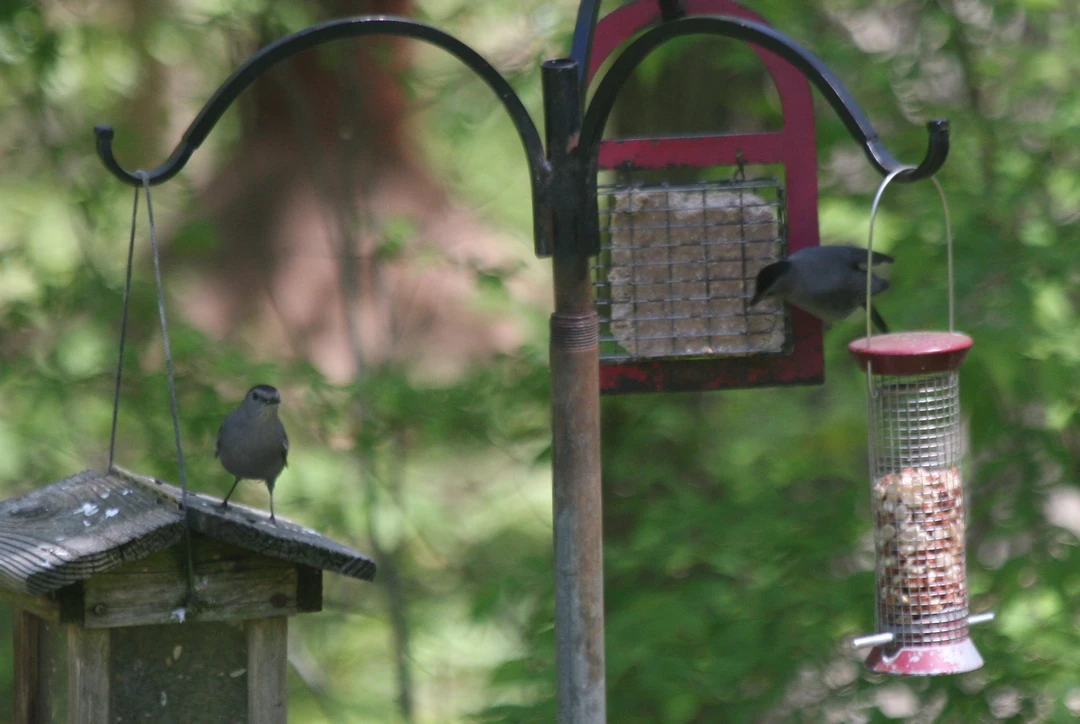
Photos of Gray Catbird
Compare plumage, posture, and field context across this image set.
Gray Catbird sounds
Listen to a small selection of reference recordings.
About the Gray Catbird
The Grey Catbird (Dumetella carolinensis) is a medium-sized perching bird known for its distinctive cat-like mewing call, which gives it its common name. It's a member of the Mimidae family, which also includes mockingbirds and thrashers, and shares their talent for vocal mimicry, though to a lesser extent. This adaptable bird plays an important role in seed dispersal and insect control within its range. While not particularly flashy in appearance, its secretive nature and unique vocalizations make it a fascinating subject for birdwatchers.
Also known as: Grey Catbird.
Scientific classification
Phylum: Chordata
Clazz: Aves
Order: Passeriformes
Family: Mimidae
Genus: Dumetella
Species: Dumetella carolinensis
Habitat and distribution
Adaptations: Grey Catbirds prefer dense, low-lying vegetation, which provides cover for nesting and foraging. Their slender bodies and relatively short, rounded wings are well-suited for maneuvering through tangled undergrowth.
Variations: While generally considered monotypic (no recognized subspecies), some slight regional variations in size and plumage darkness have been observed, but these are not considered distinct enough to warrant subspecies classification.
Distribution: The Grey Catbird breeds across much of North America, from southern Canada (British Columbia to Nova Scotia) south to the central and eastern United States, reaching as far south as northern Texas and Florida. During winter, it migrates to the southeastern US, Mexico, Central America, and the Caribbean.
Habitat Types: Dense thickets, Shrublands, Woodland edges, Overgrown fields, Suburban gardens
Climate Zones: Temperate, Subtropical
Diet and feeding
Primary foods: Insects, Spiders, Fruits, Berries
Foraging behavior: Grey Catbirds primarily forage on or near the ground, gleaning insects and fruits from foliage and leaf litter. They often hop and flit through dense vegetation, probing and searching for prey.
Seasonal diet variations: During the breeding season, their diet is primarily insects and other invertebrates. In the fall and winter, they shift to a diet richer in fruits and berries, which provide essential energy for migration and overwintering.
Specializations: Their slightly downcurved bill is well-suited for probing into crevices and turning over leaves to find insects. They also have a strong gizzard that helps them process the seeds of fruits.
Reproduction and lifecycle
Breeding season: Primarily May to August, with some regional variation.
Regional variations: Breeding may start earlier in the southern parts of their range.
Courtship rituals: Males establish territories and attract females with songs and displays, including fluffing their feathers, spreading their tails, and engaging in short flights.
Nest Type: A bulky, open cup nest typically placed low in dense shrubs or small trees.
Nesting Materials: Twigs, Bark strips, Leaves, Grass, Rootlets, Sometimes lined with fine materials like hair or pine needles
Parental care: Both parents incubate the eggs (primarily the female) for 12-14 days, and both feed the nestlings. Young are altricial (helpless at hatching).
Fledging period: Approximately 10-15 days after hatching.
Clutch Size: Typically 3-5 eggs.
Physical characteristics
Sex-Based Plumage Differences: Minimal
Length: 20.5-24 cm
Wingspan: 22-30 cm
Weight: 23.2-56.5 g
Lifespan: Up to 10 years in the wild; records of over 17 years in captivity exist, but are rare.
Breeding Plumage: Plumage remains relatively consistent year-round.
Seasonal Feather Changes: Minimal seasonal variation; may appear slightly duller in winter due to feather wear.
Notable features: Slate-grey overall plumage, Black cap, Black tail, Rufous (reddish-brown) undertail coverts
Interesting facts
Grey Catbirds are skilled vocal mimics.: Although not as proficient as Northern Mockingbirds, they can incorporate the songs and calls of other birds into their own repertoire.
They are known to destroy the eggs of other bird species.: This behavior, known as heterospecific ovicide, is thought to reduce competition for resources, although the exact reasons are not fully understood.
They recognize and eject Brown-headed Cowbird eggs: Brown-headed Cowbirds are brood parasites, and catbirds have developed the ability to identify and remove their eggs from their nests, a behavior not all host species exhibit.
Frequently asked questions
What does a Grey Catbird sound like?
The most characteristic call is a cat-like "mew," but they also have a complex song that can include imitations of other birds.
Are Grey Catbirds aggressive?
Males can be aggressive during the breeding season, defending their territories vigorously. They are also known to destroy the eggs of other birds.
Do Grey Catbirds migrate?
Yes, they are short- to medium-distance migrants, moving south for the winter to the southeastern US, Mexico, Central America, and the Caribbean.
What do Grey Catbirds eat?
They eat a mix of insects, spiders, fruits, and berries. Their diet shifts seasonally, with more insects during breeding and more fruits in fall and winter.
Compare the image, sound, habitat, and physical characteristics together when reviewing a sighting.