
The Fish Crow (Corvus ossifragus) is a member of the Corvidae family, commonly found along the eastern and southeastern coasts of the United States. While superficially similar to the American Crow, the Fish Crow is distinguished by its smaller size, smoother throat feathers, and, most notably, its distinctive nasal "caw" that sounds more like a double "uh-oh" or "ark-ark-ark." These intelligent birds play an important ecological role as scavengers and predators of small animals, contributing to the health of coastal ecosystems. They don't have significant cultural importance, unlike some other corvids.
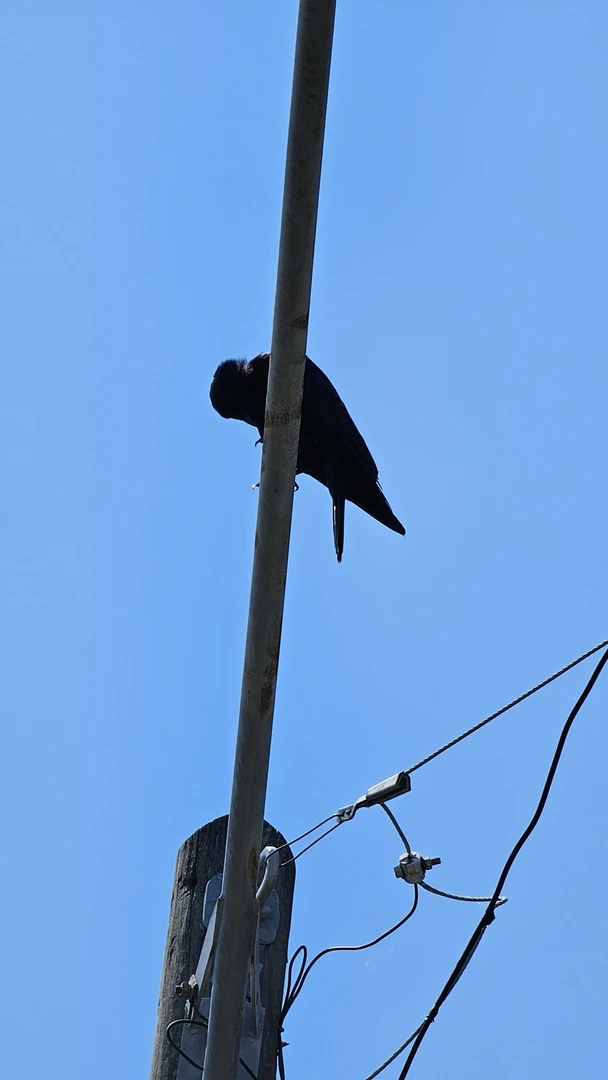
Photos of Fish Crow
Compare plumage, posture, and field context across this image set.
Fish Crow sounds
Listen to a small selection of reference recordings.
About the Fish Crow
The Fish Crow (Corvus ossifragus) is a member of the Corvidae family, commonly found along the eastern and southeastern coasts of the United States. While superficially similar to the American Crow, the Fish Crow is distinguished by its smaller size, smoother throat feathers, and, most notably, its distinctive nasal "caw" that sounds more like a double "uh-oh" or "ark-ark-ark." These intelligent birds play an important ecological role as scavengers and predators of small animals, contributing to the health of coastal ecosystems. They don't have significant cultural importance, unlike some other corvids.
Scientific classification
Phylum: Chordata
Clazz: Aves
Order: Passeriformes
Family: Corvidae
Genus: Corvus
Species: Corvus ossifragus
Habitat and distribution
Adaptations: Fish Crows are highly adaptable to human-altered landscapes, often found in urban and suburban areas near water sources. Their strong bills are well-suited for probing and manipulating a variety of food items found in their coastal and riverside habitats.
Variations: No recognized subspecies exist, though there may be slight variations in size and vocalizations across their range. Further research is needed to confirm any regional genetic differences.
Distribution: Primarily found along the Atlantic and Gulf coasts of the United States, from southern New England to southern Texas. Their range extends inland along major rivers and waterways, particularly in the southeastern states. They are generally non-migratory, although some northern populations may move south short distances in winter.
Habitat Types: Coastal marshes, Estuaries, Beaches, Riverbanks, Lakeshores, Mangrove swamps, Agricultural fields (near water)
Climate Zones: Temperate, Subtropical
Diet and feeding
Primary foods: Fish, Crabs, Shrimp, Other crustaceans, Insects, Eggs (of birds and turtles), Carrion, Grains, Fruits, Human refuse
Foraging behavior: Fish Crows are opportunistic omnivores and forage in a variety of ways. They walk along shorelines probing for food, wade in shallow water, and occasionally drop hard-shelled prey onto rocks to break them open. They are also known to steal food from other birds and scavenge from garbage.
Seasonal diet variations: Diet varies depending on food availability. In winter, when fish and crustaceans may be less abundant, they may rely more on grains, carrion, and human refuse. During nesting season, they may focus on protein-rich foods like insects and eggs to feed their young.
Specializations: Their slightly hooked bill is well-suited for handling slippery prey like fish and crabs. They also have good eyesight for spotting food from a distance.
Reproduction and lifecycle
Breeding season: Generally from March to June, though this can vary slightly depending on location.
Regional variations: Breeding may start slightly earlier in the southern parts of their range.
Courtship rituals: Courtship involves mutual calling, bowing, and offering of food items by the male to the female.
Nest Type: A bulky platform nest made of sticks and twigs, usually lined with softer materials.
Nesting Materials: Twigs, Sticks, Bark, Grass, Moss, Mud, Sometimes human-made materials
Parental care: Both parents participate in nest building, incubation, and feeding the young. Incubation lasts about 17-19 days. Chicks are altricial (helpless at hatching).
Fledging period: Approximately 35 days until fledging (leaving the nest).
Clutch Size: Typically 4-5 eggs.
Physical characteristics
Sex-Based Plumage Differences: Minimal
Length: 36-40 cm
Wingspan: 70-80 cm
Weight: 250-350 g
Lifespan: Typically 7-8 years in the wild. Captive individuals may live longer.
Breeding Plumage: Plumage is generally consistent year-round, with a glossy black appearance.
Seasonal Feather Changes: No significant seasonal variations. Feathers may appear slightly duller after molting.
Notable features: Glossy black plumage overall, Relatively short, squared-off tail, Throat feathers are smoother than those of the American Crow, Slightly hooked bill
Interesting facts
Fish Crows are known to use tools, such as dropping shellfish onto hard surfaces to break them open.: This behavior demonstrates their intelligence and adaptability.
They are often mistaken for American Crows, but their distinctive call is a key identifying feature.: Learning to distinguish their vocalizations is crucial for birdwatchers in areas where their ranges overlap.
They have been observed caching food, hiding it for later consumption.: This is a common behavior among corvids and helps them survive periods of food scarcity.
Fish crows are known to prey on the eggs and nestlings of other birds, including endangered species.: This can pose a conservation challenge in some areas, requiring careful management.
Frequently asked questions
How can I tell a Fish Crow from an American Crow?
The most reliable way is by their call. Fish Crows have a distinctive nasal "caw" or "uh-oh" sound, while American Crows have a more typical "caw-caw" sound. Fish Crows are also slightly smaller and have smoother throat feathers.
Are Fish Crows harmful to other birds?
They can be predators of eggs and nestlings, which can impact populations of other birds, especially in sensitive areas. However, they are also part of the natural ecosystem.
Do Fish Crows migrate?
Most Fish Crows are non-migratory, but some northern populations may move short distances south in winter.
What should I do if I find a baby Fish Crow?
It's best to leave it alone unless it is clearly injured or in immediate danger. The parents are likely nearby and will continue to care for it. If you are concerned, contact a local wildlife rehabilitator.
Compare the image, sound, habitat, and physical characteristics together when reviewing a sighting.