
Fischer's Lovebird (*Agapornis fischeri*) is a small, vibrantly colored parrot species native to a limited area of east-central Africa. Renowned for their strong pair bonds and affectionate behavior, they are popular in aviculture, though their wild populations face increasing pressure. Ecologically, they play a role in seed dispersal within their native grasslands and woodlands. They hold no major cultural significance beyond their popularity as pets, though their striking appearance and social nature have made them a beloved species among bird enthusiasts.
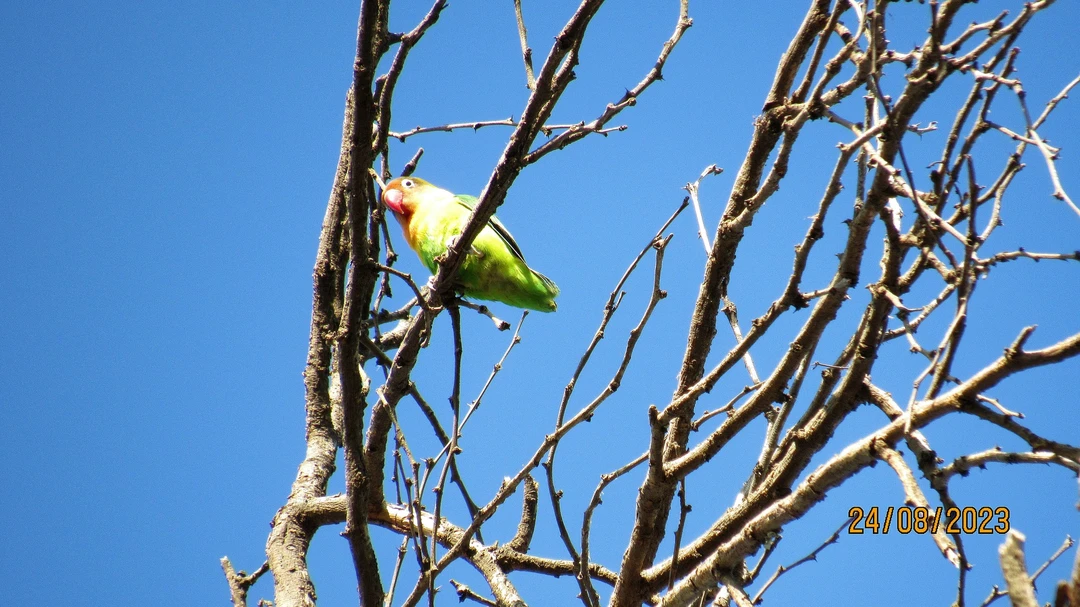
Photos of Fischer's Lovebird
Compare plumage, posture, and field context across this image set.
About the Fischer's Lovebird
Fischer's Lovebird (*Agapornis fischeri*) is a small, vibrantly colored parrot species native to a limited area of east-central Africa. Renowned for their strong pair bonds and affectionate behavior, they are popular in aviculture, though their wild populations face increasing pressure. Ecologically, they play a role in seed dispersal within their native grasslands and woodlands. They hold no major cultural significance beyond their popularity as pets, though their striking appearance and social nature have made them a beloved species among bird enthusiasts.
Scientific classification
Phylum: Chordata
Clazz: Aves
Order: Psittaciformes
Family: Psittacidae
Genus: Agapornis
Species: Agapornis fischeri
Habitat and distribution
Adaptations: Their strong beaks are adapted for cracking seeds and nuts, a staple of their diet. Their zygodactyl feet (two toes pointing forward and two backward) provide excellent grip for climbing and manipulating objects.
Variations: No recognized subspecies exist, but slight variations in plumage coloration can occur between different populations.
Distribution: Fischer's Lovebirds are primarily found in north-central Tanzania, south of Lake Victoria, and in parts of Rwanda and Burundi. During drought conditions, they may move into nearby areas. They have also established feral populations in several locations, including parts of Kenya and other regions with suitable climates.
Habitat Types: Grasslands, Savannas, Woodlands, Agricultural areas (particularly near grain crops)
Climate Zones: Tropical, Subtropical
Diet and feeding
Primary foods: Seeds, Fruits, Berries, Agricultural crops (e.g., millet, maize)
Foraging behavior: Fischer's Lovebirds typically forage in small flocks, feeding on the ground or in low-lying vegetation. They are agile climbers and can hang upside down to reach food.
Seasonal diet variations: Diet may vary depending on the availability of food sources. During the breeding season, they may consume more fruits and berries to provide additional nutrients for their young.
Specializations: Their strong, hooked beak is well-suited for cracking open seeds and accessing the kernels inside.
Reproduction and lifecycle
Breeding season: January to April and June to July, often linked to rainfall patterns.
Regional variations: Breeding may occur at other times of the year depending on local conditions and food availability.
Courtship rituals: Courtship involves mutual preening, feeding, and vocalizations. The male typically performs a head-bobbing display and offers food to the female.
Nest Type: Cavity nester; utilizes tree hollows, abandoned nests of other birds, or crevices in buildings.
Nesting Materials: Strips of bark, Leaves, Grass, Other plant material
Parental care: The female incubates the eggs for approximately 23 days. Both parents participate in feeding and caring for the chicks.
Fledging period: Approximately 38-42 days after hatching.
Clutch Size: 4-6 eggs
Physical characteristics
Sex-Based Plumage Differences: Minimal
Length: 14-15 cm
Wingspan: 88-98 mm
Weight: 43-58 g
Lifespan: 15-25 years in captivity; wild lifespan is likely shorter, but not well documented.
Breeding Plumage: Plumage remains consistent throughout the year.
Seasonal Feather Changes: None
Notable features: Green back and wings, Orange-red upper body and head, Blue rump, Prominent white eye-ring, Red beak
Interesting facts
They are named after German explorer Gustav Fischer.: Fischer first described the species in the late 19th century.
Fischer's Lovebirds are known for their strong pair bonds, often mating for life.: This monogamous behavior is a key characteristic of lovebird species.
The female carries nesting materials tucked into her rump feathers.: This is a unique behavior among parrots.
Frequently asked questions
Are Fischer's Lovebirds good pets?
They can be affectionate and entertaining pets, but they require significant social interaction and mental stimulation. They can also be quite noisy.
Can Fischer's Lovebirds talk?
They are not known for their talking ability, although some individuals may learn a few words or phrases. They are better at mimicking sounds.
What is the biggest threat to wild Fischer's Lovebirds?
Habitat loss and trapping for the pet trade have historically been the biggest threats, although trapping is now less of a concern due to legal protections.
Do Fischer's lovebirds need a companion?
Yes, due to high social needs, it's recommended to always have at least two Fischer's lovebirds together.
Compare the image, sound, habitat, and physical characteristics together when reviewing a sighting.