
The Fieldfare (*Turdus pilaris*) is a striking member of the thrush family, known for its bold, upright stance and distinctive, chattering calls. These birds are highly social, often seen in large flocks, particularly during winter migrations. They play an important ecological role as seed dispersers and consumers of invertebrates, contributing to the health of woodland and agricultural ecosystems. While not typically associated with strong cultural symbolism, their arrival in large numbers is often considered a harbinger of winter in many parts of Europe.
Photos of Fieldfare
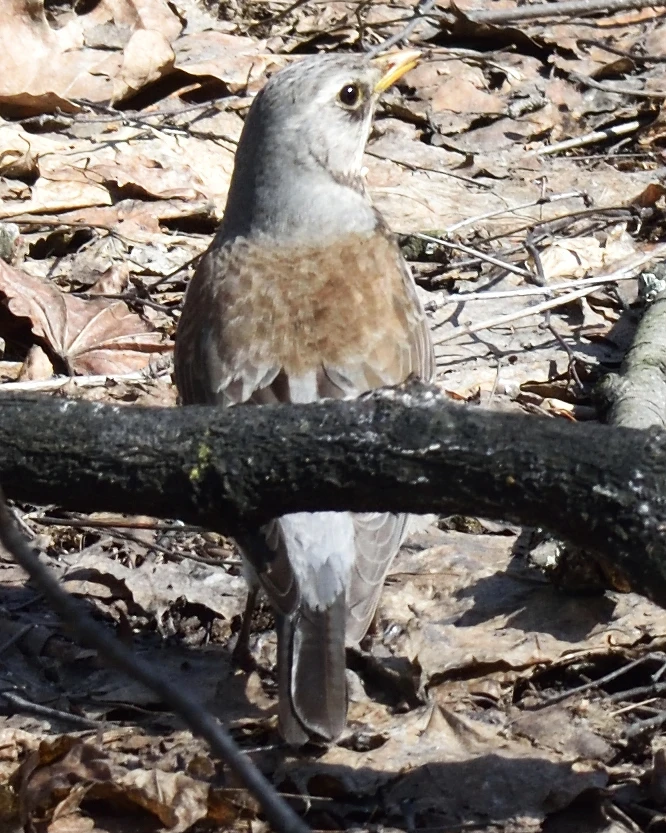
Compare plumage, posture, and field context across this image set.
Fieldfare sounds
Listen to a small selection of reference recordings.
About the Fieldfare
The Fieldfare (*Turdus pilaris*) is a striking member of the thrush family, known for its bold, upright stance and distinctive, chattering calls. These birds are highly social, often seen in large flocks, particularly during winter migrations. They play an important ecological role as seed dispersers and consumers of invertebrates, contributing to the health of woodland and agricultural ecosystems. While not typically associated with strong cultural symbolism, their arrival in large numbers is often considered a harbinger of winter in many parts of Europe.
Scientific classification
Phylum: Chordata
Clazz: Aves
Order: Passeriformes
Family: Turdidae
Genus: Turdus
Species: Turdus pilaris
Habitat and distribution
Adaptations: Fieldfares are adaptable to a range of habitats, showing a preference for areas with a mix of open ground for foraging and trees or shrubs for nesting and roosting. Their robust build allows them to withstand cold temperatures during their winter migrations.
Variations: No clearly defined subspecies are generally recognized, although some variations in plumage coloration and size may occur across their extensive range.
Distribution: The Fieldfare breeds across northern Europe and Asia, extending from Scandinavia and eastern France eastward to Siberia. During winter, they migrate south and west, reaching the British Isles, southern Europe, North Africa, and the Middle East. They have a broad altitudinal range, from lowlands to mountainous regions.
Habitat Types: Woodlands, Farmlands, Parks, Gardens, Hedgerows
Climate Zones: Temperate, Boreal
Diet and feeding
Primary foods: Invertebrates (earthworms, insects, snails), Berries, Fruits, Seeds
Foraging behavior: Fieldfares forage primarily on the ground, hopping and running to search for prey. They often probe the soil with their bills to find earthworms and other invertebrates. They also feed in trees and shrubs, particularly on berries and fruits.
Seasonal diet variations: During the breeding season, their diet is dominated by invertebrates. In autumn and winter, they shift to a diet rich in berries, fruits, and seeds.
Specializations: Their strong legs and bill are well-suited for ground foraging. They can also form large flocks to help locate and exploit food resources.
Reproduction and lifecycle
Breeding season: April-July in most of their breeding range.
Regional variations: Slight variations depending on latitude and local climate conditions.
Courtship rituals: Males display by singing from prominent perches and engaging in chases with females.
Nest Type: Cup-shaped nest, often built in a tree fork or on a branch.
Nesting Materials: Twigs, Grass, Mud, Moss
Parental care: Both parents incubate the eggs (for about 12-14 days) and feed the chicks. Fieldfares are known to aggressively defend their nests against predators.
Fledging period: 12-16 days until first flight.
Clutch Size: 4-6 eggs
Physical characteristics
Sex-Based Plumage Differences: Minimal
Length: 25-28 cm
Wingspan: 39-42 cm
Weight: 80-140 g
Lifespan: Typically 3-5 years in the wild, but can live longer.
Breeding Plumage: Plumage is similar year-round, although it may appear slightly brighter during the breeding season.
Seasonal Feather Changes: Subtle changes, with breeding plumage appearing slightly brighter.
Notable features: Grey head and rump, Chestnut-brown back, Black tail, Heavily speckled breast and flanks
Interesting facts
Fieldfares are known for their aggressive defense of their nests.: They will mob potential predators, such as crows and birds of prey, and even defecate on them as a defense mechanism.
They often form mixed flocks with other thrush species, such as Redwings.: This mixed flocking behavior may provide benefits in terms of foraging efficiency and predator avoidance.
The name 'Fieldfare' is believed to derive from the Anglo-Saxon word 'feldware'.: Meaning 'traveller through the fields'.
Frequently asked questions
What do Fieldfares eat?
Fieldfares have a varied diet. During the breeding season, they primarily eat invertebrates like earthworms, insects, and snails. In autumn and winter, they switch to berries, fruits, and seeds.
Where do Fieldfares nest?
Fieldfares build cup-shaped nests, usually in trees or shrubs. They often nest in loose colonies.
Are Fieldfares migratory?
Yes, Fieldfares are migratory birds. They breed in northern Europe and Asia and migrate south and west for the winter.
Are fieldfares rare?
No. Fieldfares are classified as 'Least Concern' by the IUCN. However, you're more likely to see them in the winter than the summer.
Compare the image, sound, habitat, and physical characteristics together when reviewing a sighting.