
The European Robin (Erithacus rubecula), often simply called the robin, is a small, charismatic bird known for its bright red breast. It holds a prominent place in European folklore and culture, often associated with Christmas and winter. Beyond its cultural significance, the robin plays an important ecological role as an insectivore, helping to control insect populations. Its adaptable nature has allowed it to thrive in a variety of habitats, making it a common sight in gardens, woodlands, and parks across Europe and beyond.
Photos of European Robin
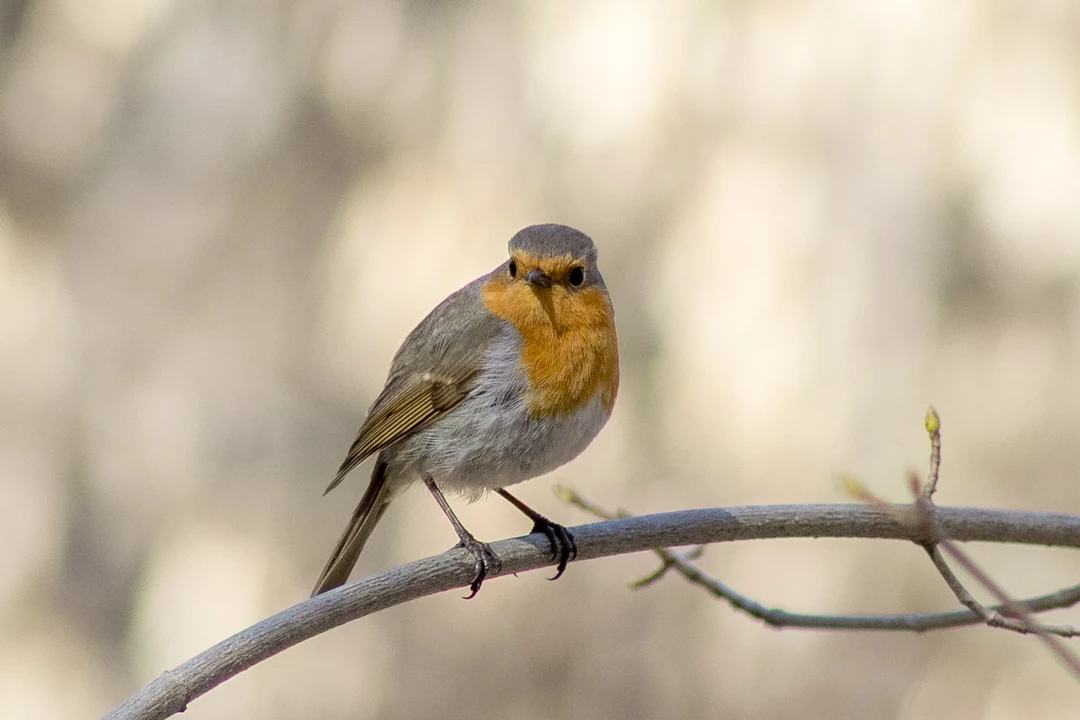
Compare plumage, posture, and field context across this image set.
About the European Robin
The European Robin (Erithacus rubecula), often simply called the robin, is a small, charismatic bird known for its bright red breast. It holds a prominent place in European folklore and culture, often associated with Christmas and winter. Beyond its cultural significance, the robin plays an important ecological role as an insectivore, helping to control insect populations. Its adaptable nature has allowed it to thrive in a variety of habitats, making it a common sight in gardens, woodlands, and parks across Europe and beyond.
Also known as: Robin, Robin Redbreast, Ruddock.
Scientific classification
Phylum: Chordata
Clazz: Aves
Order: Passeriformes
Family: Muscicapidae
Genus: Erithacus
Species: Erithacus rubecula
Habitat and distribution
Adaptations: Robins are relatively adaptable to different habitats, but they prefer areas with some dense vegetation for cover and nesting. Their ability to forage on the ground and in low vegetation allows them to exploit a wide range of food sources.
Variations: Several subspecies are recognized, differing slightly in plumage coloration and size. For example, *Erithacus rubecula melophilus* is found in the British Isles and is slightly darker than the continental subspecies *Erithacus rubecula rubecula*.
Distribution: The European Robin is found throughout Europe, extending eastwards to Western Siberia and southwards to North Africa. Some populations are migratory, with northern birds moving south for the winter, while others, particularly in Western Europe, are resident year-round. They have a broad altitudinal range, from sea level to mountainous regions.
Habitat Types: Woodlands, Gardens, Parks, Hedgerows, Farmland, Scrubland
Climate Zones: Temperate, Boreal, Mediterranean
Diet and feeding
Primary foods: Insects, Spiders, Worms, Berries, Seeds
Foraging behavior: Robins typically forage on the ground, hopping and pausing to scan for prey. They also glean insects from leaves and branches. They are known for their 'worm charming' behavior, where they may tap the ground to encourage worms to surface.
Seasonal diet variations: During the breeding season, their diet consists primarily of invertebrates. In autumn and winter, they supplement their diet with berries and seeds.
Specializations: Their relatively large eyes are adapted for low-light foraging, allowing them to be active at dawn and dusk.
Reproduction and lifecycle
Breeding season: The breeding season typically begins in late March or early April in temperate regions.
Regional variations: Breeding may start earlier in milder, western parts of their range.
Courtship rituals: Courtship involves the male feeding the female and displaying his red breast by puffing it out and singing. Males may also engage in aggressive displays towards rivals.
Nest Type: Cup-shaped nest, often built in a concealed location.
Nesting Materials: Moss, Leaves, Grass, Hair, Feathers
Parental care: Both parents are involved in feeding the chicks, although the female does most of the incubation. Incubation lasts around 13 days.
Fledging period: Chicks fledge approximately 13-14 days after hatching.
Clutch Size: Typically 4-6 eggs.
Physical characteristics
Sex-Based Plumage Differences: Minimal
Length: 12.5-14.0 cm
Wingspan: 20-22 cm
Weight: 16-22 g
Lifespan: The average lifespan in the wild is around 1-2 years, but some individuals have been recorded living much longer (up to 19 years in exceptional cases).
Breeding Plumage: Plumage is generally similar year-round.
Seasonal Feather Changes: Minimal seasonal variation, though juveniles have a mottled brown appearance without the red breast.
Notable features: Bright orange-red breast, Large, dark eyes, Slender, dark bill
Interesting facts
Robins are known for their tameness: They often approach humans, especially in gardens, looking for disturbed soil and potential food.
Only male robins sing during the breeding season: The song is used to establish and defend territory and attract a mate. Both Male and Female sing outside of the breeding season.
Robins can raise multiple broods in a single breeding season: If conditions are favorable, they may have two or even three broods.
The red breast of a robin is not present at birth: Juveniles have a mottled brown plumage, developing the red breast after their first moult.
Frequently asked questions
What do I do if I find a baby robin?
It's best to leave it alone unless it's in immediate danger. The parents are likely nearby and will continue to care for it. If it's injured, contact a local wildlife rehabilitator. Consult a professional for expert advice.
How can I attract robins to my garden?
Provide a source of fresh water, plant shrubs and trees that offer cover, and avoid using pesticides. You can also offer mealworms or other suitable bird food.
Do robins migrate?
Some populations do, particularly those in northern and eastern Europe. Robins in milder regions, like the UK, are often resident.
Why is the robin associated with Christmas?
The association likely stems from the Victorian era in Britain, when postmen wore red uniforms and were nicknamed 'robins'. Christmas cards often depicted robins delivering mail, linking the bird with the festive season.
Compare the image, sound, habitat, and physical characteristics together when reviewing a sighting.