
The European Nightjar (*Caprimulgus europaeus*) is a crepuscular and nocturnal bird known for its distinctive churring song and cryptic plumage. It plays a vital ecological role as an insectivore, helping to control populations of moths, beetles, and other flying insects. This enigmatic bird has also found its way into folklore, often associated with mystery and the supernatural due to its nocturnal habits and eerie calls. It holds no significant cultural meaning.
Photos of European Nightjar
Compare plumage, posture, and field context across this image set.
About the European Nightjar
The European Nightjar (*Caprimulgus europaeus*) is a crepuscular and nocturnal bird known for its distinctive churring song and cryptic plumage. It plays a vital ecological role as an insectivore, helping to control populations of moths, beetles, and other flying insects. This enigmatic bird has also found its way into folklore, often associated with mystery and the supernatural due to its nocturnal habits and eerie calls. It holds no significant cultural meaning.
Also known as: Eurasian Nightjar, Nightjar, Goatsucker, Fern-owl.
Scientific classification
Phylum: Chordata
Clazz: Aves
Order: Caprimulgiformes
Family: Caprimulgidae
Genus: Caprimulgus
Species: Caprimulgus europaeus
Habitat and distribution
Adaptations: Prefers dry, open habitats with scattered trees or shrubs for perching and nesting. Its cryptic plumage provides excellent camouflage on the ground.
Variations: Several subspecies are recognized, differing slightly in plumage coloration and size, reflecting adaptations to local environments.
Distribution: Breeds across Europe and temperate Asia, extending to parts of North Africa. Migrates to sub-Saharan Africa for the winter. Found at altitudes from sea level up to 2,800 meters.
Habitat Types: Heathland, Moorland, Open woodland, Clear-cuts, Young plantations
Climate Zones: Temperate, Boreal, Mediterranean
Diet and feeding
Primary foods: Moths, Beetles, Flies, Other nocturnal flying insects
Foraging behavior: Hunts primarily at dusk and dawn, and on moonlit nights. Catches insects in flight, often with erratic, twisting maneuvers. Also hawks insects from perches.
Seasonal diet variations: Diet composition varies depending on the availability of insect prey throughout the year and during migration.
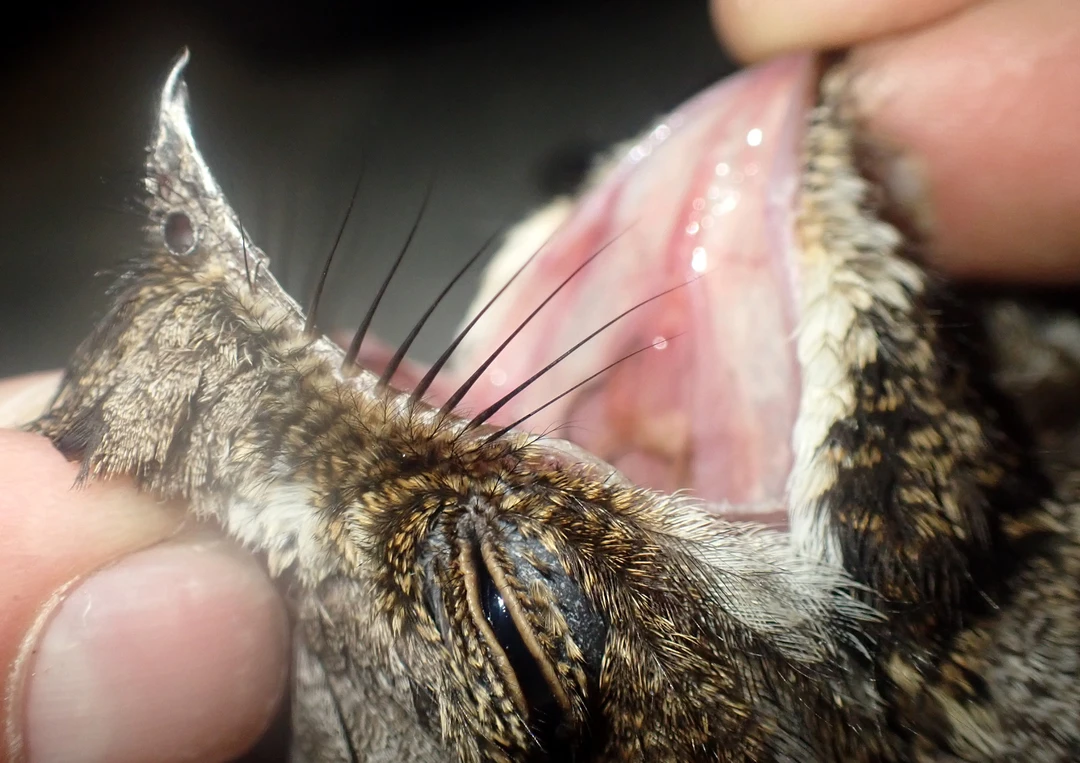
Specializations: Wide gape and rictal bristles aid in capturing insects. Highly agile flight allows for pursuit of prey.
Reproduction and lifecycle
Breeding season: May-August in Europe.
Regional variations: Breeding season may start earlier in southern parts of its range.
Courtship rituals: Males display with wing-clapping and churring calls. They also perform display flights, showing off their white wing and tail patches.
Nest Type: No nest is built; eggs are laid directly on the ground.
Parental care: Females primarily incubate the eggs, while both parents feed the chicks. Chicks are semi-precocial and can move around shortly after hatching.
Fledging period: Approximately 16-18 days until first flight.
Clutch Size: Typically 1-2 eggs.
Physical characteristics
Sex-Based Plumage Differences: Minimal
Length: 24-28 cm
Wingspan: 52-59 cm
Weight: 60-100 g
Lifespan: Typically 4-6 years in the wild, but can reach up to 12 years.
Breeding Plumage: Subtle differences; generally, plumage becomes slightly duller outside the breeding season.
Seasonal Feather Changes: No Major Seasonal variations
Notable features: Cryptic, mottled grey-brown plumage, Large, wide gape for catching insects, Small, weak bill, Large eyes adapted for low-light vision, Rictal bristles around the mouth (help funnel insects)
Interesting facts
They were once called 'goat-suckers': This name originated from the ancient belief that they suckled goats at night, due to their association with livestock and their wide gapes.
Their eyes have a *tapetum lucidum*: This reflective layer behind the retina enhances their night vision.
They can enter torpor: During periods of cold weather or food scarcity, they can lower their body temperature and metabolic rate to conserve energy.
Frequently asked questions
What does the European Nightjar's song sound like?
It's a distinctive, far-carrying, mechanical churring sound, often described as a rising and falling 'kroo-kroo-kroo'.
Where can I see a European Nightjar?
Look for them in open habitats like heathland and moorland at dusk or dawn during the breeding season. They are difficult to spot due to their camouflage.
Are European Nightjars harmful to livestock?
No, the old name 'goat-sucker' is a myth. They only eat insects.
Compare the image, sound, habitat, and physical characteristics together when reviewing a sighting.