
The Herring Gull (*Larus argentatus*) is a large, widespread gull species found across the Northern Hemisphere. Known for their adaptability, these birds are common sights in coastal areas, landfills, and even inland habitats. They play a significant ecological role as scavengers and predators, helping to control populations of smaller animals and clean up organic waste. While often viewed as commonplace, Herring Gulls have complex social behaviors and display remarkable intelligence. They do not have specific cultural import, but are very recognizable.
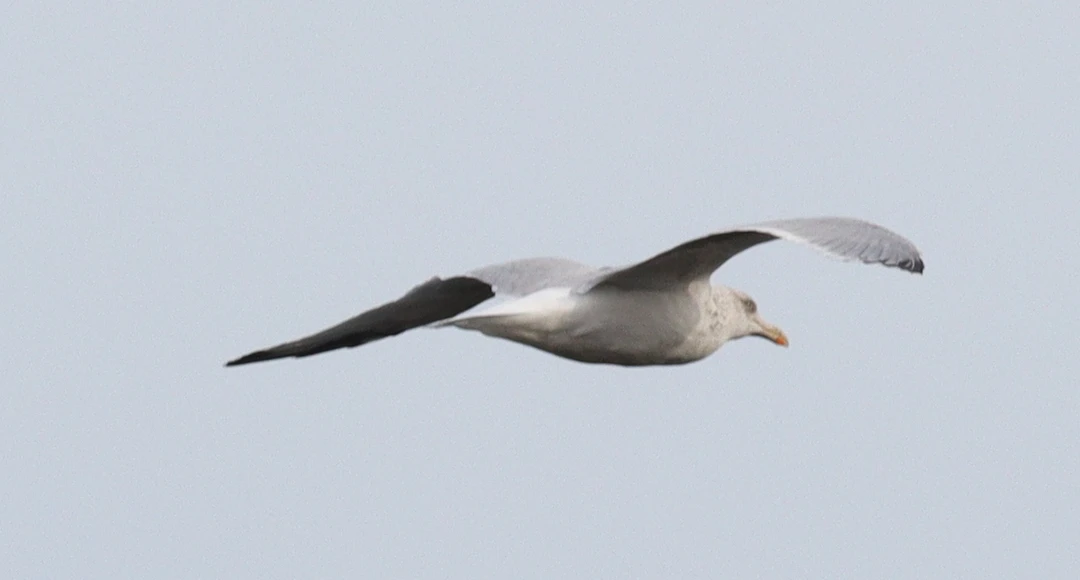
Photos of European Herring Gull
Compare plumage, posture, and field context across this image set.
European Herring Gull sounds
Listen to a small selection of reference recordings.
About the European Herring Gull
The Herring Gull (*Larus argentatus*) is a large, widespread gull species found across the Northern Hemisphere. Known for their adaptability, these birds are common sights in coastal areas, landfills, and even inland habitats. They play a significant ecological role as scavengers and predators, helping to control populations of smaller animals and clean up organic waste. While often viewed as commonplace, Herring Gulls have complex social behaviors and display remarkable intelligence. They do not have specific cultural import, but are very recognizable.
Scientific classification
Phylum: Chordata
Clazz: Aves
Order: Charadriiformes
Family: Laridae
Genus: Larus
Species: Larus argentatus
Habitat and distribution
Adaptations: Herring Gulls are highly adaptable to various food sources and habitats. Their strong beaks and digestive systems allow them to consume a wide range of food items. They can also tolerate a wide range of temperatures.
Variations: Several subspecies are recognized, differing slightly in size and mantle (back) coloration. For example, the European Herring Gull (*L. a. argenteus*) tends to have a lighter gray mantle than the American Herring Gull (*L. a. smithsonianus*).
Distribution: Northern Hemisphere, including North America, Europe, and Asia. Migratory, with northern populations moving south for the winter. Found along coastlines, but also inland near lakes, rivers, and human-altered habitats.
Habitat Types: Coastal areas, Estuaries, Lakes, Rivers, Landfills, Agricultural fields
Climate Zones: Temperate, Subarctic, Arctic
Diet and feeding
Primary foods: Fish, Invertebrates, Carrion, Refuse, Eggs, Small birds, Rodents
Foraging behavior: Herring Gulls are opportunistic feeders, employing various foraging techniques. They may scavenge on beaches, steal food from other birds (kleptoparasitism), drop shellfish onto hard surfaces to break them open, or follow fishing boats.
Seasonal diet variations: Diet can vary seasonally based on food availability. For instance, they may consume more fish during the breeding season when feeding chicks, and more refuse during the winter.
Specializations: Their generalized diet and strong beaks allow them to exploit a wide range of food resources.
Reproduction and lifecycle
Breeding season: Typically spring and early summer (April-June in many regions).
Regional variations: Breeding season can vary slightly depending on latitude and local climate conditions.
Courtship rituals: Courtship involves displays such as head-tossing, calling, and presenting nesting material.
Nest Type: Ground nest, often a scrape lined with vegetation.
Nesting Materials: Grass, Seaweed, Twigs, Feathers
Parental care: Both parents incubate the eggs (for about 28-30 days) and care for the chicks. Chicks are semi-precocial, meaning they are covered in down and can walk shortly after hatching, but still depend on parents for food.
Fledging period: Approximately 6 weeks until fledging (first flight).
Clutch Size: Typically 2-4 eggs.
Physical characteristics
Sex-Based Plumage Differences: Males are slightly larger.
Length: 55-67 cm
Wingspan: 137-152 cm
Weight: 800-1400 g
Lifespan: Up to 30 years in the wild, though average lifespan is likely shorter.
Breeding Plumage: Adult breeding plumage features a white head, body, and tail, with a light gray back and wings. Non-breeding adults have some brown streaking on the head and neck.
Seasonal Feather Changes: Plumage changes are primarily related to age. Juveniles are mottled brown, gradually acquiring adult plumage over 3-4 years.
Notable features: Yellow bill with a red spot on the lower mandible, Pink legs, Dark eyes in juveniles, yellow eyes in adults, Stout build
Interesting facts
Herring Gulls can drink both fresh and saltwater.: They have specialized glands above their eyes that excrete excess salt.
They are known for their intelligence and problem-solving abilities.: They have been observed using tools (e.g., dropping shells onto rocks) and learning complex foraging techniques.
Herring Gulls can sometimes hybridize with other gull species.: This can make identification challenging in areas where ranges overlap.
Frequently asked questions
Are Herring Gulls aggressive?
They can be aggressive, especially when defending their nests or young, or when competing for food. It's best to give them space.
What is the lifespan of a Herring Gull?
They can live for up to 30 years in the wild, although the average lifespan is often shorter.
Why do Herring Gulls gather at landfills?
Landfills provide an easy and abundant source of food for these opportunistic scavengers.
Do Herring Gulls mate for life?
Herring Gulls typically form long-term pair bonds, but 'divorce' can occur, especially if breeding attempts are unsuccessful.
Compare the image, sound, habitat, and physical characteristics together when reviewing a sighting.