
The European Greenfinch (*Chloris chloris*) is a vibrant and familiar bird commonly found across Europe and parts of North Africa and the Middle East. Known for its bright olive-green and yellow plumage, it plays a vital role in seed dispersal within its ecosystem. It's a frequent visitor to gardens and parks, often seen at bird feeders. While not holding specific major cultural significance, its cheerful song and lively presence have made it a welcome sight for birdwatchers and nature enthusiasts for generations. Its adaptability has allowed it to thrive in various habitats, though recent population declines raise concerns.
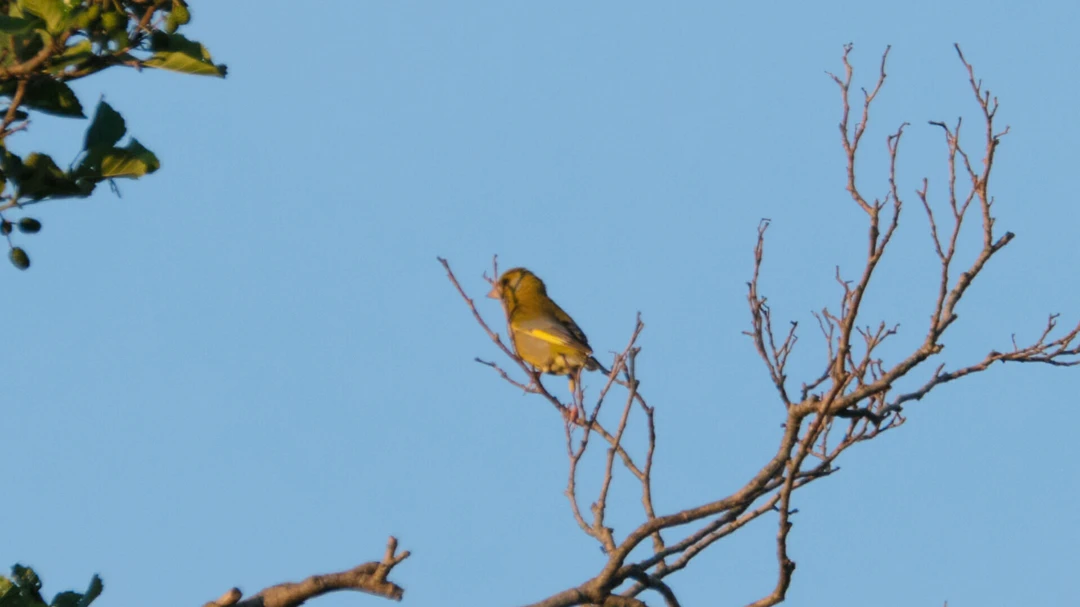
Photos of European Greenfinch
Compare plumage, posture, and field context across this image set.
About the European Greenfinch
The European Greenfinch (*Chloris chloris*) is a vibrant and familiar bird commonly found across Europe and parts of North Africa and the Middle East. Known for its bright olive-green and yellow plumage, it plays a vital role in seed dispersal within its ecosystem. It's a frequent visitor to gardens and parks, often seen at bird feeders. While not holding specific major cultural significance, its cheerful song and lively presence have made it a welcome sight for birdwatchers and nature enthusiasts for generations. Its adaptability has allowed it to thrive in various habitats, though recent population declines raise concerns.
Also known as: Greenfinch, Common Greenfinch, Western Greenfinch.
Scientific classification
Phylum: Chordata
Clazz: Aves
Order: Passeriformes
Family: Fringillidae
Genus: Chloris
Species: Chloris chloris
Habitat and distribution
Adaptations: The Greenfinch's robust bill is well-suited for cracking seeds, a primary food source. Its relatively short wings allow for maneuverability in dense vegetation. They have adapted well to human-altered landscapes, thriving in areas with sufficient food and nesting sites.
Variations: Several subspecies of the European Greenfinch are recognized, differing slightly in plumage coloration and size. These variations are often subtle and linked to geographic location, such as island populations or those at the edges of the species' range.
Distribution: The European Greenfinch is native to Europe, North Africa, and Southwest Asia. Its range extends from Scandinavia in the north to the Mediterranean region in the south, and from Ireland in the west to parts of Russia and the Middle East. It has also been introduced to other regions, including South America and New Zealand. They are generally resident, but some northern populations may migrate south for the winter.
Habitat Types: Woodlands, Farmlands, Gardens, Parks, Hedgerows, Orchards
Climate Zones: Temperate, Mediterranean
Diet and feeding
Primary foods: Seeds, Berries, Buds, Insects (especially during breeding season)
Foraging behavior: Greenfinches often forage on the ground, in bushes, and in trees. They are frequently seen at bird feeders, particularly those offering sunflower seeds or peanuts. They use their strong bills to crack open seeds.
Seasonal diet variations: During the breeding season, they consume more insects to provide protein for their growing chicks. In winter, they rely more heavily on seeds and berries.
Specializations: Their strong, conical bill is a specialized adaptation for efficiently cracking open a wide variety of seeds.
Reproduction and lifecycle
Breeding season: Typically from late March to August, with variations depending on location.
Regional variations: Breeding may start earlier in warmer, southern regions and later in colder, northern areas.
Courtship rituals: Males perform display flights, often with exaggerated wing beats and singing. They may also present food to the female.
Nest Type: Cup-shaped nest, usually built in a tree, bush, or hedge.
Nesting Materials: Twigs, Grass, Moss, Plant down, Feathers
Parental care: Both parents incubate the eggs (for about 12-14 days) and feed the chicks. The female does most of the brooding.
Fledging period: Approximately 13-16 days until the chicks leave the nest.
Clutch Size: Typically 4-6 eggs.
Physical characteristics
Sex-Based Plumage Differences: Minimal
Length: 14-16 cm
Wingspan: 24-27 cm
Weight: 17-35 g
Lifespan: Typically 2-3 years in the wild, though some individuals can live longer (up to 13 years recorded in captivity).
Breeding Plumage: Males in breeding plumage are brighter, with more intense yellow and green coloration. Non-breeding males and females are duller, with more brownish tones.
Seasonal Feather Changes: Plumage becomes brighter in spring for the breeding season and duller in autumn and winter.
Notable features: Bright yellow wing bars, Yellow edges on the tail feathers, Thick, conical bill, Olive-green body (especially in males)
Interesting facts
Greenfinches have suffered significant population declines in some areas due to a disease called trichomonosis.: This parasitic disease affects the bird's throat, making it difficult for them to swallow food.
They are known for their 'wheezing' call.: This distinctive call is often heard in flight or from perches.
Greenfinches are highly adaptable and can thrive in a variety of habitats.: This adaptability has allowed them to colonize new areas and persist in human-modified landscapes.
They are avid visitors to bird feeders: Their fondness for sunflower seeds makes them a common sight in gardens.
Frequently asked questions
What should I do if I find a sick Greenfinch?
If you find a sick or dead Greenfinch, it's best to avoid direct contact. Report the sighting to a local wildlife rescue organization or a relevant authority (e.g., RSPB in the UK). They can provide advice and may collect the bird for testing.
What can I feed Greenfinches in my garden?
Greenfinches are particularly fond of sunflower seeds, peanuts, and niger seeds. Providing a variety of seeds and ensuring a clean feeding station can help attract and support them.
Are Greenfinches aggressive?
Greenfinches can be somewhat assertive at bird feeders, often dominating smaller birds. However, they are not generally aggressive towards humans.
How can I tell a male Greenfinch from a female?
Males have brighter green and yellow plumage, especially on the wings and tail. Females are duller and browner overall.
Where do they nest?
European Greenfinches typically nest in trees, bushes, or hedges, building a cup-shaped nest from twigs, grass, and other plant materials.
Compare the image, sound, habitat, and physical characteristics together when reviewing a sighting.