
The European Goldfinch (*Carduelis carduelis*) is a small, brightly colored songbird known for its vibrant red face, black and white head, and yellow wing bars. It plays a significant ecological role as a seed disperser, contributing to the health and diversity of plant communities. Culturally, the Goldfinch has been a symbol of good luck and perseverance, often featured in Renaissance art and literature, reflecting its cheerful song and striking appearance.
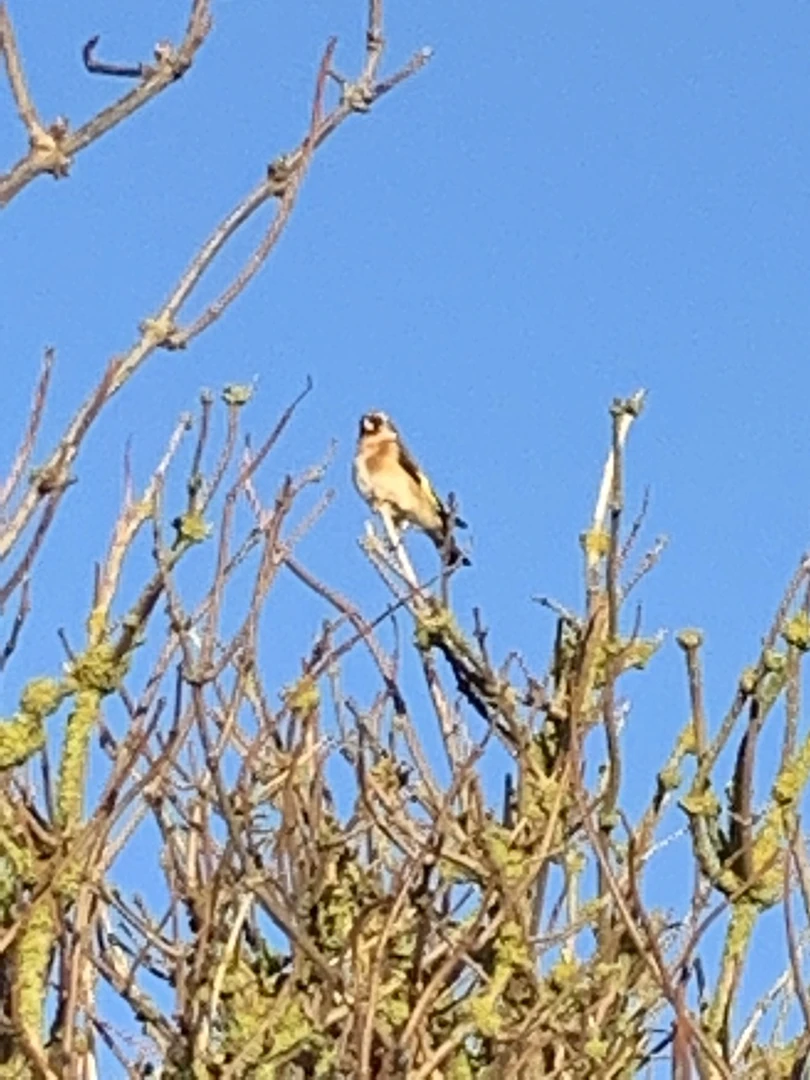
Photos of European Goldfinch
Compare plumage, posture, and field context across this image set.
European Goldfinch sounds
Listen to a small selection of reference recordings.
About the European Goldfinch
The European Goldfinch (*Carduelis carduelis*) is a small, brightly colored songbird known for its vibrant red face, black and white head, and yellow wing bars. It plays a significant ecological role as a seed disperser, contributing to the health and diversity of plant communities. Culturally, the Goldfinch has been a symbol of good luck and perseverance, often featured in Renaissance art and literature, reflecting its cheerful song and striking appearance.
Also known as: Eurasian Goldfinch.
Scientific classification
Phylum: Chordata
Clazz: Aves
Order: Passeriformes
Family: Fringillidae
Genus: Carduelis
Species: Carduelis carduelis
Habitat and distribution
Adaptations: Their fine beaks are perfectly adapted for extracting seeds from thistles and teasels, their preferred food sources.
Variations: Numerous subspecies exist, differing slightly in plumage and size. For example, the British subspecies (*Carduelis carduelis britannica*) is slightly darker than the continental form.
Distribution: Native to Europe, North Africa, and western and central Asia. Introduced populations exist in Australia, New Zealand, and parts of South America. It is largely resident but northern populations may migrate south for winter.
Habitat Types: Open woodlands, Orchards, Parks, Gardens, Hedgerows, Farmland with weeds
Climate Zones: Temperate, Mediterranean
Diet and feeding
Primary foods: Seeds (especially thistle and teasel), Small insects (especially during breeding season)
Foraging behavior: Goldfinches are agile and often feed upside down, clinging to seed heads. They are also known to visit bird feeders, particularly those with niger seeds.
Seasonal diet variations: The diet is primarily seeds year-round, but insects become a more significant component during the breeding season to provide protein for growing chicks.
Specializations: Their slender, pointed beaks are specialized for extracting seeds from difficult-to-reach places within flower heads.
Reproduction and lifecycle
Breeding season: Typically begins in late March or early April, extending into summer.
Regional variations: Breeding may start slightly earlier in warmer, southern regions.
Courtship rituals: Males display to females with a swaying, song-filled performance, often spreading their wings to show off the yellow wing bars.
Nest Type: A neat, cup-shaped nest, often built in a tree or bush.
Nesting Materials: Moss, Grass, Plant down, Spiderwebs, Wool
Parental care: Both parents incubate the eggs (primarily the female) and feed the chicks. Incubation lasts around 11-13 days.
Fledging period: Approximately 13-18 days after hatching.
Clutch Size: 4-6 eggs
Physical characteristics
Sex-Based Plumage Differences: Minimal
Length: 12-13 cm
Wingspan: 21-25 cm
Weight: 14-19 g
Lifespan: Typically 2-3 years in the wild, but can live up to 10 years in captivity.
Breeding Plumage: Plumage is generally consistent year-round, though it may appear slightly brighter during the breeding season due to fresh feather growth.
Seasonal Feather Changes: Minor wear and tear may make plumage appear slightly duller outside of the breeding season.
Notable features: Bright red face, Black and white head pattern, Bright yellow wing bars, Black wings with white spots
Interesting facts
Goldfinches are highly associated with thistles.: Their scientific name, *Carduelis carduelis*, is derived from the Latin word for thistle, *Carduus*.
A group of goldfinches is called a 'charm'.: This collective noun reflects their delightful song and appearance.
They were once popular cage birds.: Due to their attractive plumage and song. This practice is now largely illegal in many countries.
Frequently asked questions
What do I do if I find a baby goldfinch?
If the bird appears healthy and is fully feathered, it is likely a fledgling that is still being cared for by its parents. It is best to leave it alone. If it is injured or clearly orphaned, contact a local wildlife rehabilitator. *Consult a professional for expert advice.*
How can I attract goldfinches to my garden?
Provide a source of fresh water, plant seed-bearing plants like thistles and teasels, and offer niger seeds in a suitable feeder.
Are goldfinches aggressive?
Goldfinches are not generally aggressive, although males may show some territorial behavior around the nest during the breeding season. They are usually quite tolerant of other birds.
Compare the image, sound, habitat, and physical characteristics together when reviewing a sighting.