
The Eurasian Jay (Garrulus glandarius) is a vibrant and intelligent member of the crow family (Corvidae) found across a vast range of Eurasia. Known for its striking plumage, raucous calls, and remarkable ability to mimic other birds' sounds, the Eurasian Jay plays a crucial role in forest ecosystems as a key disperser of seeds, particularly acorns. It's a highly adaptable bird, thriving in various habitats, and is often recognized for its curious and sometimes mischievous behavior. While not generally considered of high cultural significance in the same way as some other corvids, its bright appearance and vocalizations have made it a familiar and often appreciated part of the landscape.
Photos of Eurasian Jay
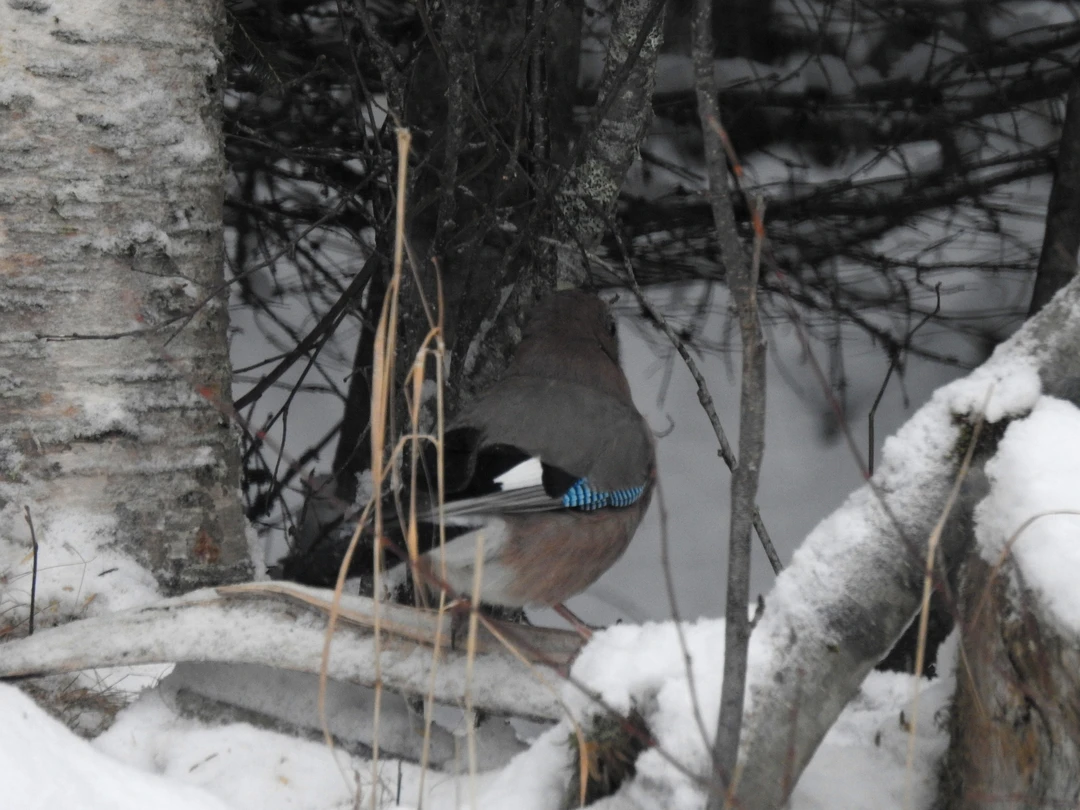
Compare plumage, posture, and field context across this image set.
About the Eurasian Jay
The Eurasian Jay (Garrulus glandarius) is a vibrant and intelligent member of the crow family (Corvidae) found across a vast range of Eurasia. Known for its striking plumage, raucous calls, and remarkable ability to mimic other birds' sounds, the Eurasian Jay plays a crucial role in forest ecosystems as a key disperser of seeds, particularly acorns. It's a highly adaptable bird, thriving in various habitats, and is often recognized for its curious and sometimes mischievous behavior. While not generally considered of high cultural significance in the same way as some other corvids, its bright appearance and vocalizations have made it a familiar and often appreciated part of the landscape.
Also known as: Watchman of the Forest.
Scientific classification
Phylum: Chordata
Clazz: Aves
Order: Passeriformes
Family: Corvidae
Genus: Garrulus
Species: Garrulus glandarius
Habitat and distribution
Adaptations: Eurasian Jays are highly adaptable to various habitats. Their strong beaks are suited for cracking acorns and other nuts, and their caching behavior allows them to survive in areas with seasonal food availability. They have excellent spatial memory to relocate their hidden food stores.
Variations: Numerous subspecies exist across the Eurasian Jay's vast range, differing in plumage coloration and size. For example, some island populations or those in isolated mountain ranges exhibit distinct characteristics.
Distribution: The Eurasian Jay is found throughout Europe, extending into North Africa, the Middle East, and across Asia to Japan and Southeast Asia. It is largely non-migratory, though some northern populations may move south in harsh winters. It can be found at elevations ranging from sea level to mountainous regions, up to the tree line.
Habitat Types: Deciduous woodlands, Mixed forests, Coniferous forests, Parks, Large gardens, Orchards
Climate Zones: Temperate, Boreal, Subtropical
Diet and feeding
Primary foods: Acorns, Beechnuts, Other nuts, Insects, Small invertebrates, Fruits, Berries, Small vertebrates (e.g., nestlings, eggs, small rodents)
Foraging behavior: Eurasian Jays forage both on the ground and in trees. They are known for their habit of caching food, particularly acorns, burying them in the ground for later retrieval. They use a variety of techniques, including hopping, gleaning, and probing.
Seasonal diet variations: In autumn and winter, acorns and other nuts form a major part of their diet. In spring and summer, they consume more insects, invertebrates, and sometimes the eggs and young of other birds.
Specializations: Their strong beak is well-suited for opening hard-shelled nuts. They also possess a gular pouch, a small sac in the throat, which they can use to carry multiple acorns at once.
Reproduction and lifecycle
Breeding season: Breeding typically occurs in spring, from April to June in temperate regions.
Regional variations: Breeding may start slightly earlier in warmer southern regions and later in colder northern areas.
Courtship rituals: Courtship involves the male offering food to the female, bowing, and displaying his crest. Both sexes engage in mutual calling.
Nest Type: A bulky cup-shaped nest built in a tree or large shrub.
Nesting Materials: Twigs, Roots, Moss, Leaves, Hair, Feathers
Parental care: Both parents incubate the eggs for about 16-19 days. Both parents also feed and care for the chicks.
Fledging period: Chicks fledge (leave the nest) after approximately 19-23 days.
Clutch Size: Typically 4-6 eggs.
Physical characteristics
Sex-Based Plumage Differences: Minimal
Length: 32-35 cm
Wingspan: 52-58 cm
Weight: 140-190 g
Lifespan: The average lifespan in the wild is around 5-7 years, but they can live longer in captivity.
Breeding Plumage: Plumage remains largely the same throughout the year.
Seasonal Feather Changes: Minimal seasonal variation; plumage may appear slightly duller after molting.
Notable features: Pinkish-brown body plumage, Bright blue wing patches with black barring, Black and white striped crown feathers that can be raised into a crest, Black 'mustache' stripe, White rump
Interesting facts
Eurasian Jays are highly intelligent: They are known for their problem-solving abilities and their capacity for complex social interactions.
They are excellent mimics: They can imitate the calls of various other bird species, often including predators like buzzards, possibly to scare away competitors or warn of danger.
They play a vital role in forest regeneration: By caching and forgetting acorns, they help to disperse oak trees, contributing to the spread and growth of woodlands.
They have a good memory for cache locations: Eurasian Jays can remember the locations of thousands of buried acorns, even months after hiding them.
Frequently asked questions
Are Eurasian Jays related to Blue Jays?
Both Eurasian Jays and Blue Jays are members of the Corvidae family (crows, jays, and magpies), but they belong to different genera. Blue Jays are native to North America, while Eurasian Jays are found in Eurasia and North Africa.
What is the purpose of the Eurasian Jay's bright blue wing patch?
The bright blue wing patch serves as a visual signal, likely used in communication between individuals, such as during courtship or territorial displays. It may also play a role in species recognition.
Do Eurasian Jays eat other birds' eggs?
Yes, Eurasian Jays are opportunistic feeders and will sometimes consume the eggs and nestlings of other birds, particularly during the breeding season when they need extra protein for their own young.
Why do Eurasian Jays bury acorns?
Burying acorns, a behavior known as caching, is a way for Eurasian Jays to store food for later consumption, especially during the winter months when food is scarce. This behavior also inadvertently helps with the dispersal of oak trees.
Compare the image, sound, habitat, and physical characteristics together when reviewing a sighting.