
The Eurasian Coot (Fulica atra) is a distinctive waterbird known for its dark plumage and prominent white frontal shield. It plays a vital role in wetland ecosystems, primarily as a consumer of aquatic plants and invertebrates, influencing vegetation structure and nutrient cycling. While not particularly celebrated in culture, it's a familiar and easily recognizable species across its broad range, offering a common point of connection with nature for many people in Europe, Asia, Africa, and Australasia.
Photos of Eurasian Coot
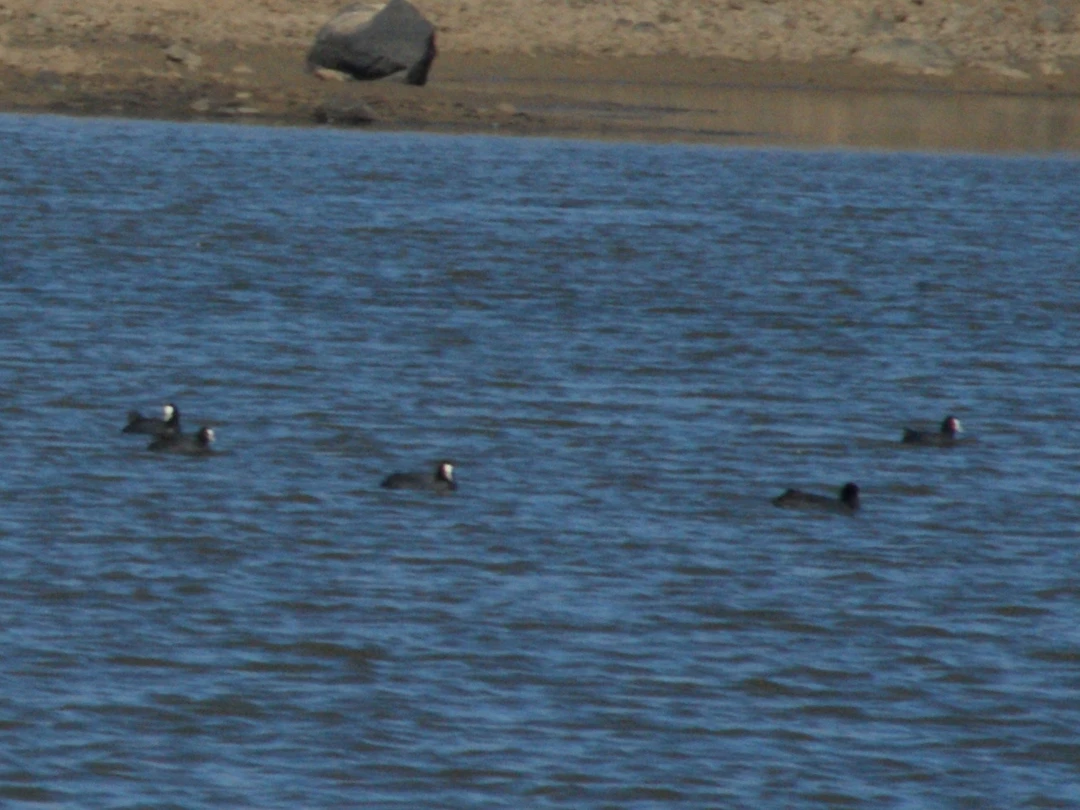
Compare plumage, posture, and field context across this image set.
About the Eurasian Coot
The Eurasian Coot (Fulica atra) is a distinctive waterbird known for its dark plumage and prominent white frontal shield. It plays a vital role in wetland ecosystems, primarily as a consumer of aquatic plants and invertebrates, influencing vegetation structure and nutrient cycling. While not particularly celebrated in culture, it's a familiar and easily recognizable species across its broad range, offering a common point of connection with nature for many people in Europe, Asia, Africa, and Australasia.
Also known as: Common Coot, Coot, European Coot, Black Coot.
Scientific classification
Phylum: Chordata
Clazz: Aves
Order: Gruiformes
Family: Rallidae
Genus: Fulica
Species: Fulica atra
Habitat and distribution
Adaptations: Eurasian Coots have lobed toes, which provide excellent propulsion in water and allow them to walk on soft mud and floating vegetation. They are also well-adapted to diving for food.
Variations: Several subspecies are recognized, differing slightly in size and plumage details. For example, *Fulica atra australis* is found in Australia and New Zealand.
Distribution: The Eurasian Coot has a vast distribution, found across Europe, Asia, Africa, and Australasia. It breeds in temperate and subtropical regions, with many populations migrating south for the winter. Its altitudinal range extends from sea level to high-altitude lakes in some areas.
Habitat Types: Freshwater lakes, Ponds, Reservoirs, Slow-flowing rivers, Marshes, Brackish lagoons
Climate Zones: Temperate, Subtropical, Tropical (in parts of its range)
Diet and feeding
Primary foods: Aquatic plants (e.g., algae, pondweeds), Invertebrates (e.g., insects, mollusks, crustaceans), Seeds, Small fish (occasionally)
Foraging behavior: Eurasian Coots are versatile feeders. They dabble at the surface, dive underwater, and graze on land near the water's edge. They often upend like ducks to reach submerged vegetation.
Seasonal diet variations: Diet can shift depending on food availability. In winter, they may consume more seeds and invertebrates when aquatic plant growth is reduced.
Specializations: Their lobed toes are a key adaptation for both swimming and walking on unstable substrates. Their bill is well-suited for grasping and tearing vegetation.
Reproduction and lifecycle
Breeding season: Typically spring and summer (March-July in the Northern Hemisphere), but can vary depending on location and climate.
Regional variations: Breeding may occur year-round in some tropical regions with consistent food availability.
Courtship rituals: Courtship involves chasing, calling, and displaying the frontal shield. Pairs often engage in mutual preening.
Nest Type: A bulky platform nest made of aquatic vegetation, often built among reeds or other emergent plants.
Nesting Materials: Reeds, Rushes, Sedges, Other aquatic plant stems
Parental care: Both parents share incubation duties (lasting around 21-24 days) and care for the chicks. Chicks are precocial, meaning they can swim and feed themselves shortly after hatching, but they still rely on their parents for protection and guidance.
Fledging period: Approximately 55-60 days until the young birds are fully independent.
Clutch Size: Typically 6-10 eggs, but can range from 4-15.
Physical characteristics
Sex-Based Plumage Differences: Minimal
Length: 36-42 cm
Wingspan: 70-80 cm
Weight: 585-1100 g
Lifespan: Typically 5-10 years in the wild, but can live longer in captivity.
Breeding Plumage: Plumage is largely consistent year-round.
Seasonal Feather Changes: Minor changes in the brightness of the frontal shield may occur.
Notable features: Prominent white frontal shield, Black plumage with a slight greyish tinge, Red eyes, Lobed toes (not webbed)
Interesting facts
Coots are known for their aggressive behavior.: They will fiercely defend their territories and chicks, even attacking larger birds or mammals.
Their chicks have brightly colored heads.: The chicks have red and blue skin on their heads, which fades as they mature.
They are surprisingly strong fliers.: Despite their somewhat clumsy appearance on land and water, they can migrate long distances.
They build decoy nests.: To confuse predators, they may build more nests than are actually used.
Frequently asked questions
Are Eurasian Coots related to ducks?
No, they are not ducks. They belong to the rail family (Rallidae), which also includes rails and crakes.
What is the white patch on their head?
That is called a frontal shield. Its exact function is not fully understood, but it may play a role in display and communication.
Can Eurasian Coots walk on land?
Yes, they can walk and run on land, although they are more agile in the water. Their lobed toes help them walk on soft mud and vegetation.
Do Eurasian Coots migrate?
Yes, many populations are migratory, traveling south for the winter. However, some populations are resident year-round.
Are Eurasian Coots endangered?
No, the Eurasian Coot is classified as Least Concern by the IUCN. They have a large population and a wide distribution.
Compare the image, sound, habitat, and physical characteristics together when reviewing a sighting.