
The Eurasian Collared-Dove (Streptopelia decaocto) is a member of the dove and pigeon family, known for its distinctive black collar marking on the nape of its neck. Originally native to warmer temperate regions of Eurasia, this species has demonstrated a remarkable capacity for range expansion, particularly across Europe and North America, during the 20th and 21st centuries. This expansion is often attributed to its adaptability to human-modified landscapes, including agricultural areas and urban environments. Ecologically, it plays a role in seed dispersal and serves as prey for various raptors. While not typically considered a bird of significant cultural importance, its rapid spread has made it a familiar sight to many.
Photos of Eurasian Collared-Dove
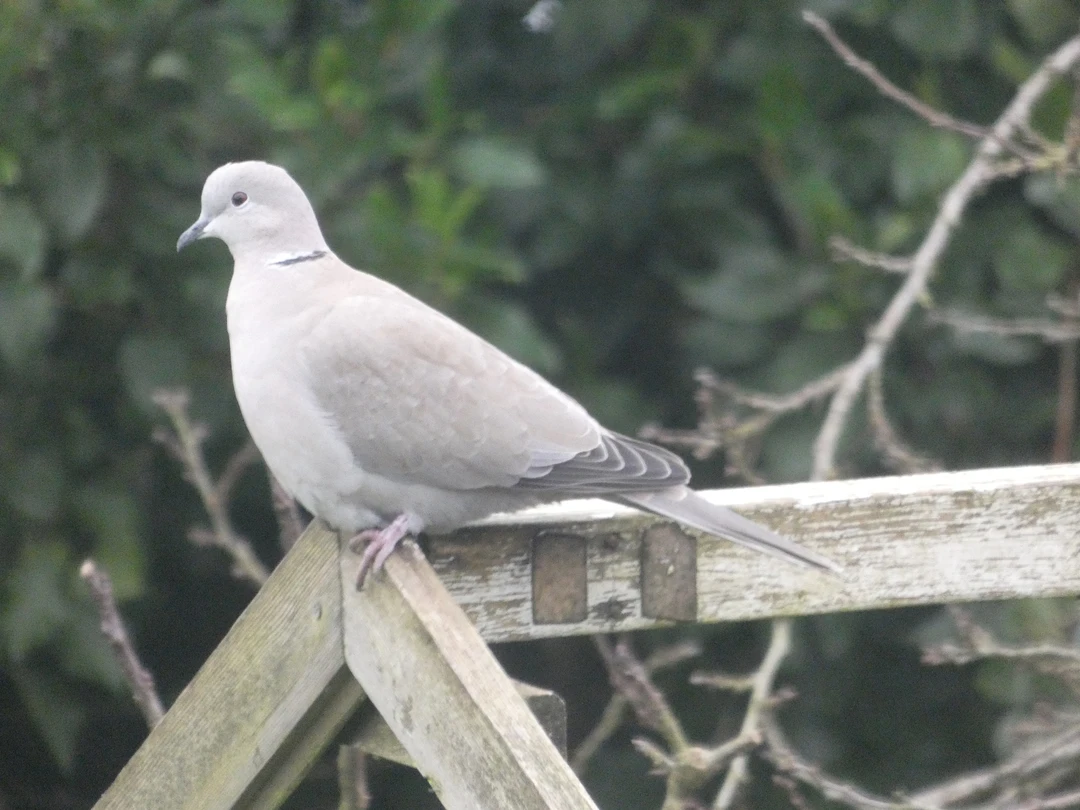
Compare plumage, posture, and field context across this image set.
Eurasian Collared-Dove sounds
Listen to a small selection of reference recordings.
About the Eurasian Collared-Dove
The Eurasian Collared-Dove (Streptopelia decaocto) is a member of the dove and pigeon family, known for its distinctive black collar marking on the nape of its neck. Originally native to warmer temperate regions of Eurasia, this species has demonstrated a remarkable capacity for range expansion, particularly across Europe and North America, during the 20th and 21st centuries. This expansion is often attributed to its adaptability to human-modified landscapes, including agricultural areas and urban environments. Ecologically, it plays a role in seed dispersal and serves as prey for various raptors. While not typically considered a bird of significant cultural importance, its rapid spread has made it a familiar sight to many.
Also known as: Collared Dove, European Collared Dove.
Scientific classification
Phylum: Chordata
Clazz: Aves
Order: Columbiformes
Family: Columbidae
Genus: Streptopelia
Species: Streptopelia decaocto
Habitat and distribution
Adaptations: Highly adaptable to human-altered environments; thrives in close proximity to human settlements. Tolerant of a wide range of temperatures and habitat conditions, provided there is a reliable food source (primarily seeds) and suitable nesting sites.
Variations: Several subspecies have been described, but differences are often subtle, relating to slight variations in plumage color and size. The most widespread is *S. d. decaocto*.
Distribution: Native to Asia, from Turkey east to southern China and south through India to Sri Lanka. It has expanded dramatically, now found throughout Europe, North America (introduced in the Bahamas in the 1970s and spread to the US), and parts of North Africa. It is generally non-migratory, though some populations may make short-distance movements in response to food availability.
Habitat Types: Urban areas, Suburban areas, Agricultural lands, Open woodlands, Villages
Climate Zones: Temperate, Subtropical, Arid
Diet and feeding
Primary foods: Seeds, Grains, Cereals, Small fruits, Occasionally insects
Foraging behavior: Forages primarily on the ground, often in open areas. Will also visit bird feeders. Typically feeds in small flocks, especially outside of the breeding season.
Seasonal diet variations: Diet may shift slightly depending on local availability. For example, they might consume more spilled grain after harvests.
Specializations: No highly specialized feeding adaptations. Its generalist diet contributes to its ability to thrive in diverse environments.
Reproduction and lifecycle
Breeding season: Breeding season can be prolonged, often extending from spring through summer, and sometimes even into autumn or winter in warmer climates.
Regional variations: Breeding season length is influenced by climate; longer in warmer regions with more consistent food availability.
Courtship rituals: Males perform a bowing display, accompanied by a cooing vocalization, to attract females.
Nest Type: A flimsy platform nest.
Nesting Materials: Twigs, Stems, Roots, Sometimes lined with finer materials
Parental care: Both parents incubate the eggs (for about 14-18 days) and feed the chicks crop milk, a secretion from the lining of the crop.
Fledging period: Approximately 15-19 days until fledging.
Clutch Size: Typically 2 white eggs.
Physical characteristics
Sex-Based Plumage Differences: Minimal
Length: 30-33 cm
Wingspan: 47-55 cm
Weight: 150-250 g
Lifespan: Typical lifespan in the wild is 3-5 years, but can be longer in captivity.
Breeding Plumage: Plumage is generally consistent year-round.
Seasonal Feather Changes: No significant seasonal variations.
Notable features: Black half-collar on the nape, edged with white., Pale grayish-buff overall plumage., Reddish eyes., Dark gray/black primary feathers.
Interesting facts
Rapid range expansion: One of the most successful avian colonists, expanding its range dramatically in the 20th century.
Name origin: The scientific name 'decaocto' is derived from a Greek myth about a servant girl who was turned into a dove.
Multiple broods: Can raise multiple broods per year, contributing to their rapid population growth.
Frequently asked questions
Are Eurasian Collared-Doves invasive?
While they are not native to many regions they now inhabit, the term "invasive" is complex. Their impact on native species is generally considered to be low, though more research is needed. They are often described as a non-native, introduced species.
What do Eurasian Collared-Doves eat?
They primarily eat seeds and grains, often foraging on the ground or at bird feeders.
How can I tell a Eurasian Collared-Dove from a Mourning Dove?
Eurasian Collared-Doves have a distinctive black collar on the back of their neck, which Mourning Doves lack. Mourning Doves also have pointed tails, while Eurasian Collared-Doves have squared-off tails.
Do Eurasian Collared-Doves mate for life?
They are generally monogamous during a breeding season and may remain paired for multiple seasons, but long-term pair bonds are not definitively proven.
Compare the image, sound, habitat, and physical characteristics together when reviewing a sighting.