
The Eurasian Blackcap (*Sylvia atricapilla*) is a widespread and adaptable warbler known for its melodious song and, in males, distinctive black cap. It plays a significant role in seed dispersal and insect control within its varied habitats. While not globally threatened, localized populations face challenges from habitat loss and climate change. The Blackcap has some cultural significance, often appearing in European folklore and literature, usually symbolizing spring and renewal due to its return from migration.
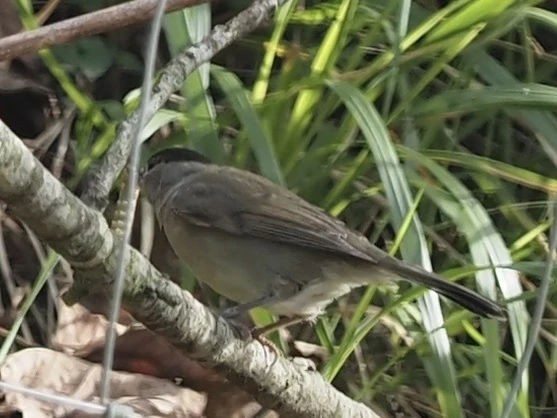
Photos of Eurasian Blackcap
Compare plumage, posture, and field context across this image set.
About the Eurasian Blackcap
The Eurasian Blackcap (*Sylvia atricapilla*) is a widespread and adaptable warbler known for its melodious song and, in males, distinctive black cap. It plays a significant role in seed dispersal and insect control within its varied habitats. While not globally threatened, localized populations face challenges from habitat loss and climate change. The Blackcap has some cultural significance, often appearing in European folklore and literature, usually symbolizing spring and renewal due to its return from migration.
Also known as: Blackcap.
Scientific classification
Phylum: Chordata
Clazz: Aves
Order: Passeriformes
Family: Sylviidae
Genus: Sylvia
Species: Sylvia atricapilla
Habitat and distribution
Adaptations: The Blackcap's relatively broad diet and tolerance of a range of habitats contribute to its wide distribution. Its slender bill is well-suited for gleaning insects from foliage and consuming small fruits.
Variations: Several subspecies are recognized, differing slightly in plumage coloration and size. For example, *S. a. heineken* found in Iberia and North Africa tends to have darker plumage.
Distribution: The Eurasian Blackcap breeds across most of Europe, extending into western Asia and parts of North Africa. It is a migratory species, with most populations wintering in southern Europe, North Africa, and sub-Saharan Africa. Some populations are resident year-round, particularly in milder western European regions. Altitudinal range varies from sea level to montane forests.
Habitat Types: Woodlands, Forest edges, Hedgerows, Gardens, Scrubland, Parks
Climate Zones: Temperate, Mediterranean, Boreal
Diet and feeding
Primary foods: Insects, Spiders, Berries, Small fruits
Foraging behavior: The Blackcap actively forages in trees and shrubs, gleaning insects from leaves and branches. It also hovers briefly to pick berries and fruits.
Seasonal diet variations: During the breeding season, the diet is primarily insects, providing protein for growing chicks. In autumn and winter, the diet shifts to berries and fruits, providing energy for migration and survival.
Specializations: Its slender bill is adapted for both insect capture and fruit consumption. It can switch between these food sources depending on availability.
Reproduction and lifecycle
Breeding season: Typically April-July in Europe.
Regional variations: Breeding may start earlier in southern regions and later in northern areas.
Courtship rituals: Males sing a rich, fluting song from prominent perches to attract females. Courtship displays include bowing, wing-flicking, and chasing.
Nest Type: Cup-shaped nest built in dense vegetation, often in shrubs or low trees.
Nesting Materials: Twigs, Grass, Moss, Spider silk, Plant down
Parental care: Both parents incubate the eggs for 11-12 days. Both parents also feed the chicks, which fledge after 10-14 days.
Fledging period: 10-14 days.
Clutch Size: Typically 4-6 eggs.
Physical characteristics
Sex-Based Plumage Differences: Minimal
Length: 13-15 cm
Wingspan: 20-23 cm
Weight: 14-20 g
Lifespan: Typically 2-5 years in the wild, but can reach up to 10 years.
Breeding Plumage: Males have a distinctive black cap during the breeding season, while females and juveniles have a reddish-brown cap. The overall plumage is gray-brown above and paler below.
Seasonal Feather Changes: Plumage is generally brighter during the breeding season and slightly duller in the non-breeding season.
Notable features: Black or reddish-brown cap (depending on sex), Slender, pointed bill, Gray-brown upperparts, Pale underparts
Interesting facts
Blackcaps are known for their ability to mimic other birds' songs.: This mimicry is thought to be part of their complex vocal repertoire, used in territorial defense and mate attraction.
Some Blackcaps have changed their migratory routes in recent decades.: This shift is linked to climate change and the availability of food in gardens in western Europe.
They can rapidly digest fruit, passing seeds within an hour.: This makes them important seed dispersers for many plant species.
Frequently asked questions
What is the difference between a male and female Blackcap?
Males have a black cap, while females have a reddish-brown cap.
Where do Blackcaps migrate to?
Most populations migrate to southern Europe, North Africa, and sub-Saharan Africa for the winter.
What do Blackcaps eat?
They eat insects, spiders, berries, and small fruits.
Are Blackcaps endangered?
No, they are classified as Least Concern by the IUCN.
Compare the image, sound, habitat, and physical characteristics together when reviewing a sighting.