
The Eastern Screech-owl (*Megascops asio*) is a small, nocturnal owl common in eastern North America, from Mexico to Canada. Known for its haunting, whinnying calls, it plays a crucial role in controlling rodent and insect populations. These adaptable birds thrive in various habitats, including woodlands, suburban areas, and parks. Despite their name, their call is more of a tremulous whistle than a screech. They are culturally significant in some Native American traditions, often associated with omens or spirits.
Photos of Eastern Screech-Owl
Compare plumage, posture, and field context across this image set.
Eastern Screech-Owl sounds
Listen to a small selection of reference recordings.
About the Eastern Screech-Owl
The Eastern Screech-owl (*Megascops asio*) is a small, nocturnal owl common in eastern North America, from Mexico to Canada. Known for its haunting, whinnying calls, it plays a crucial role in controlling rodent and insect populations. These adaptable birds thrive in various habitats, including woodlands, suburban areas, and parks. Despite their name, their call is more of a tremulous whistle than a screech. They are culturally significant in some Native American traditions, often associated with omens or spirits.
Also known as: Eastern Screech Owl.
Scientific classification
Phylum: Chordata
Clazz: Aves
Order: Strigiformes
Family: Strigidae
Genus: Megascops
Species: Megascops asio
Habitat and distribution
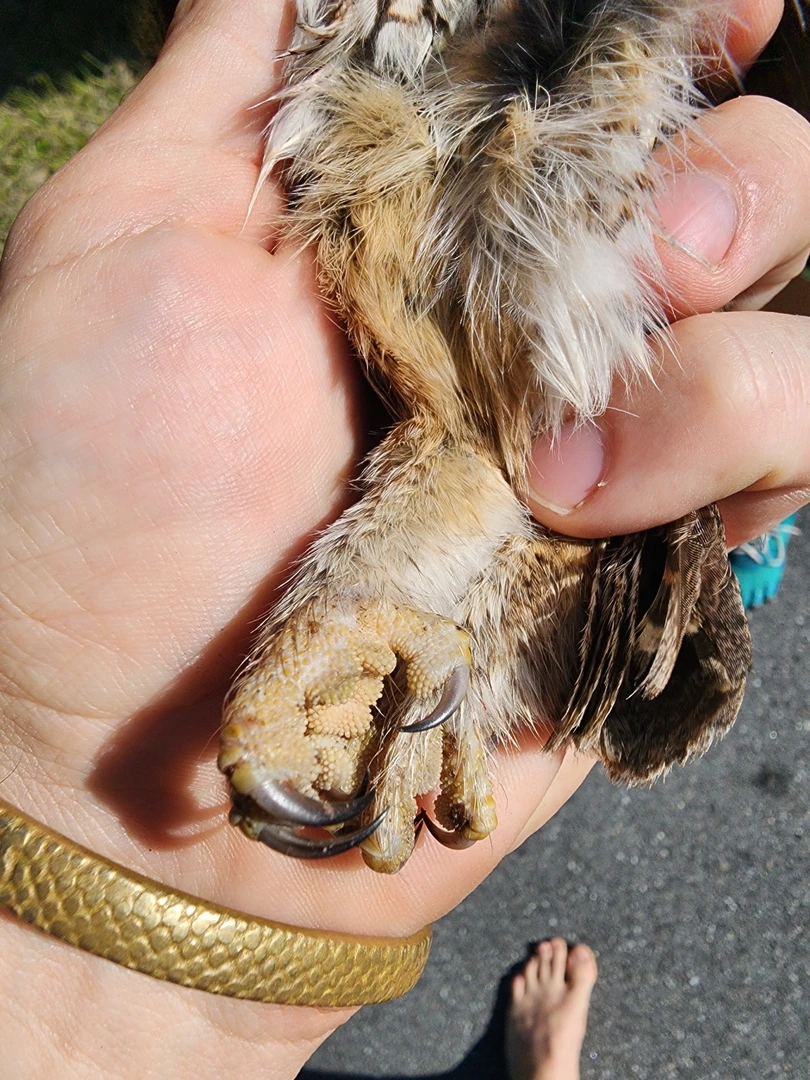
Adaptations: Excellent camouflage provided by their mottled plumage helps them blend seamlessly with tree bark. Their feathered feet provide insulation in colder climates.
Variations: Several subspecies are recognized, differing slightly in coloration and size. For example, *M. a. maxwelliae* in the northern Great Plains is paler, while *M. a. floridanus* in Florida is smaller and darker.
Distribution: Eastern North America, ranging from southern Canada (eastern provinces) south through the eastern United States to northeastern Mexico. They are generally non-migratory, though some northern populations may move slightly south in winter.
Habitat Types: Deciduous woodlands, Mixed forests, Suburban parks, Orchards, Rural areas with trees
Climate Zones: Temperate, Subtropical
Diet and feeding
Primary foods: Insects (e.g., beetles, moths, crickets), Small mammals (e.g., mice, voles), Small birds, Earthworms, Amphibians, Reptiles
Foraging behavior: Primarily hunts at night from a perch, swooping down to capture prey. Also occasionally forages on the ground or in foliage.
Seasonal diet variations: Diet shifts seasonally based on prey availability. Insects are more common in summer, while small mammals may be more important in winter.
Specializations: Asymmetrical ear openings allow for precise location of prey by sound. Sharp talons and a strong beak are adapted for capturing and consuming a variety of prey.
Reproduction and lifecycle
Breeding season: Late winter to early spring (February-May), depending on location.
Regional variations: Breeding starts earlier in the southern part of their range.
Courtship rituals: Males call to attract females and may present food offerings. Courtship also involves mutual preening and bowing.
Nest Type: Cavity nester, using natural tree cavities or abandoned woodpecker holes. Will also use nest boxes.
Nesting Materials: No additional material added to the cavity, but may use existing debris.
Parental care: Females incubate the eggs for about 26-34 days. Both parents feed the young, which fledge after about 26-35 days.
Fledging period: Approximately 4 weeks.
Clutch Size: Typically 2-6 eggs.
Physical characteristics
Sex-Based Plumage Differences: Females are generally slightly larger than males.
Length: 16-25 cm
Wingspan: 46-61 cm
Weight: 121-244 g
Lifespan: Up to 13 years in the wild; longer in captivity.
Breeding Plumage: Plumage remains similar year-round.
Seasonal Feather Changes: No significant seasonal variations.
Notable features: Prominent ear tufts (not actually ears, but feathers), Large, yellow eyes, Two color morphs: reddish-brown (rufous) and gray, Cryptic plumage providing excellent camouflage
Interesting facts
Eastern Screech-Owls have two distinct color morphs.: They can be either reddish-brown (rufous) or gray, with intermediate variations. The color morph does not depend on sex or age, and both morphs can occur in the same brood.
They are highly adaptable to different habitats.: They can live in dense forests, open woodlands, and even suburban areas with sufficient tree cover.
Can catch prey in complete darkness: Using its excellent hearing and asymmetrical ear.
Frequently asked questions
What do Eastern Screech-Owls sound like?
They have two main calls: a descending whinny and a monotonous purring trill. These are often mistaken for other animals or even ghostly sounds.
Are Eastern Screech-Owls dangerous to humans?
No, they are small owls and pose no threat to humans. They are generally shy and avoid human contact.
Can I attract Eastern Screech-Owls to my yard?
You can improve your chances by providing suitable habitat, such as mature trees and a source of water. Installing a nest box designed for screech-owls can also be effective.
Do Eastern Screech-Owls mate for life?
Some pairs may stay together for multiple years, but this is not always the case. Pair bonds can be broken, and new pairings can form.
Compare the image, sound, habitat, and physical characteristics together when reviewing a sighting.