
The Eastern Buzzard (*Buteo japonicus*) is a medium-sized raptor found across a wide range of habitats in East and South Asia. It plays a crucial role in its ecosystem as a predator of small mammals, birds, and reptiles, helping to regulate prey populations. While not globally threatened, it faces regional pressures from habitat loss and human disturbance. This species is sometimes considered a subspecies of the Common Buzzard (*Buteo buteo*), but recent taxonomic treatments often recognize it as a distinct species. It holds no particular widespread cultural significance, though it is a familiar sight in many rural landscapes.
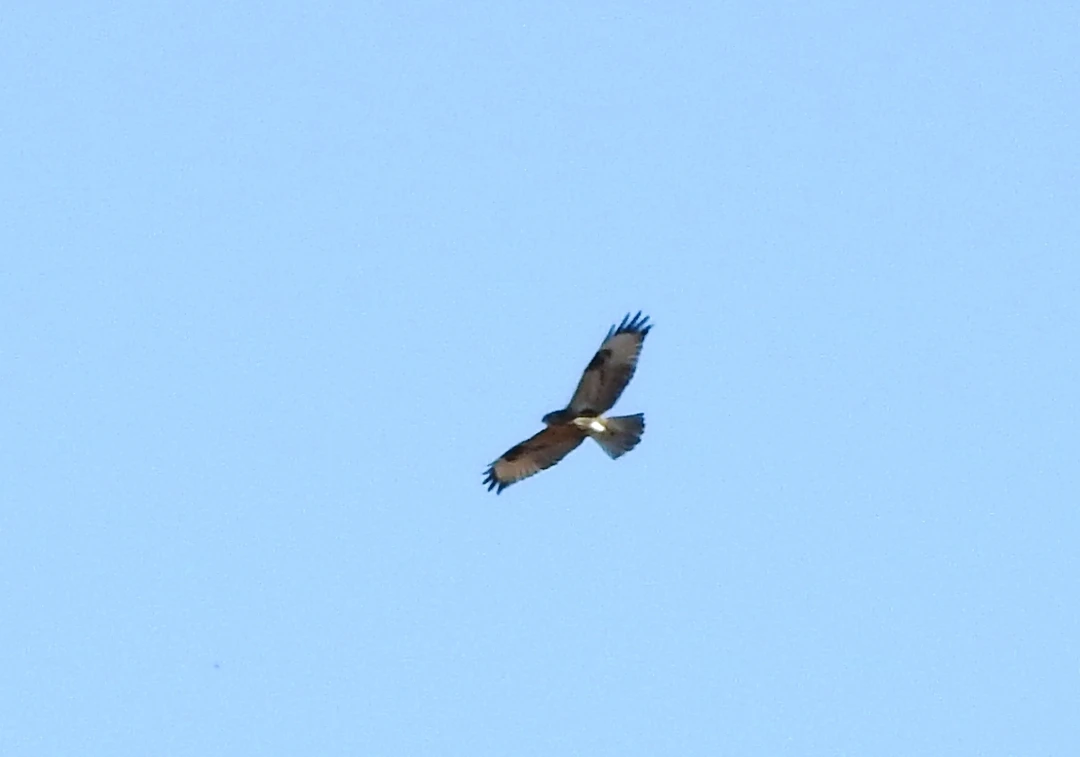
Photos of Eastern Buzzard
Compare plumage, posture, and field context across this image set.
About the Eastern Buzzard
The Eastern Buzzard (*Buteo japonicus*) is a medium-sized raptor found across a wide range of habitats in East and South Asia. It plays a crucial role in its ecosystem as a predator of small mammals, birds, and reptiles, helping to regulate prey populations. While not globally threatened, it faces regional pressures from habitat loss and human disturbance. This species is sometimes considered a subspecies of the Common Buzzard (*Buteo buteo*), but recent taxonomic treatments often recognize it as a distinct species. It holds no particular widespread cultural significance, though it is a familiar sight in many rural landscapes.
Also known as: Japanese Buzzard.
Scientific classification
Phylum: Chordata
Clazz: Aves
Order: Accipitriformes
Family: Accipitridae
Genus: Buteo
Species: Buteo japonicus
Habitat and distribution
Adaptations: Eastern Buzzards are adaptable to various habitats, showing a preference for areas with a mix of open ground for hunting and trees for nesting and roosting. Their broad wings are well-suited for soaring flight, allowing them to cover large areas while searching for prey.
Variations: Several subspecies have been proposed, with variations in plumage and size across their extensive range. For instance, birds in the northern part of the range tend to be larger and paler than those in the south.
Distribution: The Eastern Buzzard's range spans across East and South Asia, including parts of Russia, Mongolia, China, Japan, Korea, and Southeast Asia. Some populations are migratory, breeding in northern areas and wintering further south. Altitudinal range extends from sea level to mountainous regions.
Habitat Types: Open woodlands, Forest edges, Grasslands, Agricultural areas, Mountains
Climate Zones: Temperate, Boreal, Subtropical
Diet and feeding
Primary foods: Small mammals (rodents, voles), Birds, Reptiles (lizards, snakes), Insects (occasionally)
Foraging behavior: Eastern Buzzards primarily hunt by soaring and scanning the ground for prey. They also perch on vantage points like trees or posts and wait for prey to appear. Once prey is spotted, they swoop down to capture it with their talons.
Seasonal diet variations: Diet can vary seasonally depending on prey availability. For example, they might take more insects during the summer when they are abundant, and rely more on rodents during the winter.
Specializations: Their sharp talons and strong beak are well-adapted for capturing and consuming a variety of prey. They have excellent eyesight for spotting prey from a distance.
Reproduction and lifecycle
Breeding season: The breeding season typically occurs from March to May in temperate regions, but may vary depending on latitude and local climate.
Regional variations: Breeding may occur earlier in the southern parts of their range and later in the northern parts.
Courtship rituals: Courtship displays include aerial displays such as soaring, diving, and calling. Pairs may also engage in mutual circling and talon-grappling.
Nest Type: A large platform nest built on tree branches or sometimes on cliffs.
Nesting Materials: Sticks, Twigs, Leaves, Moss
Parental care: Both parents participate in incubation, which lasts for about 30-35 days. After hatching, both parents feed the chicks. The female primarily broods the young, while the male provides most of the food.
Fledging period: The fledging period is approximately 40-50 days.
Clutch Size: Typically 2-4 eggs.
Physical characteristics
Sex-Based Plumage Differences: Females are generally slightly larger than males.
Length: 40-58 cm
Wingspan: 100-140 cm
Weight: 500-1300 g
Lifespan: The lifespan in the wild is not well-documented but is estimated to be around 8-12 years. Captive individuals may live longer.
Breeding Plumage: Plumage variations are more related to individual and regional differences than to breeding season. There can be significant individual variation in plumage color, ranging from dark brown to pale morphs.
Seasonal Feather Changes: No significant seasonal variation in plumage.
Notable features: Broad, rounded wings, Short, fanned tail, Variable plumage coloration, Sharp talons
Interesting facts
They have excellent eyesight: Like many raptors, Eastern Buzzards have exceptional vision, allowing them to spot prey from great heights.
They are adaptable to a variety of habitats: This adaptability has allowed them to thrive across a wide range of environments.
Plumage coloration can vary significantly: This makes identification sometimes challenging, and there is ongoing research into the genetic basis of these variations.
Frequently asked questions
What is the difference between the Eastern Buzzard and the Common Buzzard?
The Eastern Buzzard was formerly considered a subspecies of the Common Buzzard. While closely related, genetic and morphological differences support their treatment as separate species. The Eastern Buzzard generally has a more easterly distribution.
What do Eastern Buzzards eat?
They primarily eat small mammals like rodents, voles, and mice. They also eat birds, reptiles, and occasionally insects.
Are Eastern Buzzards endangered?
No, the Eastern Buzzard is classified as Least Concern by the IUCN. However, they can face regional threats like habitat loss.
Compare the image, sound, habitat, and physical characteristics together when reviewing a sighting.