
The Downy Woodpecker (*Dryobates pubescens*) is the smallest woodpecker species in North America. Known for its diminutive size and bold black-and-white plumage, it's a common sight at backyard feeders and in woodlands across the continent. This adaptable bird plays a vital ecological role by controlling insect populations, particularly wood-boring beetles and other forest pests. It is not generally considered to be of significant cultural importance, but its widespread presence and familiarity make it a well-loved species among birdwatchers.
Photos of Downy Woodpecker
Compare plumage, posture, and field context across this image set.
Downy Woodpecker sounds
Listen to a small selection of reference recordings.
About the Downy Woodpecker
The Downy Woodpecker (*Dryobates pubescens*) is the smallest woodpecker species in North America. Known for its diminutive size and bold black-and-white plumage, it's a common sight at backyard feeders and in woodlands across the continent. This adaptable bird plays a vital ecological role by controlling insect populations, particularly wood-boring beetles and other forest pests. It is not generally considered to be of significant cultural importance, but its widespread presence and familiarity make it a well-loved species among birdwatchers.
Scientific classification
Phylum: Chordata
Clazz: Aves
Order: Piciformes
Family: Picidae
Genus: Picoides
Species: Dryobates pubescens
Habitat and distribution
Adaptations: Downy Woodpeckers possess strong, chisel-like bills for excavating wood and extracting insects. They also have stiff tail feathers that act as a prop when climbing tree trunks, and a long, barbed tongue for reaching insects deep within crevices.
Variations: Several subspecies are recognized, differing slightly in size and plumage, particularly in the amount of white spotting on the wings and back. These variations are often clinal, meaning they change gradually over a geographic area.
Distribution: The Downy Woodpecker is widely distributed across North America, ranging from Alaska and Canada south to the southern United States, excluding some of the most arid regions of the Southwest. It does not undertake long-distance migrations, though some northern populations may move slightly south in winter.
Habitat Types: Deciduous forests, Mixed woodlands, Orchards, Parks, Suburban gardens
Climate Zones: Temperate, Boreal, Subtropical
Diet and feeding
Primary foods: Insects, Larvae, Beetles, Ants, Caterpillars, Seeds, Berries, Nuts
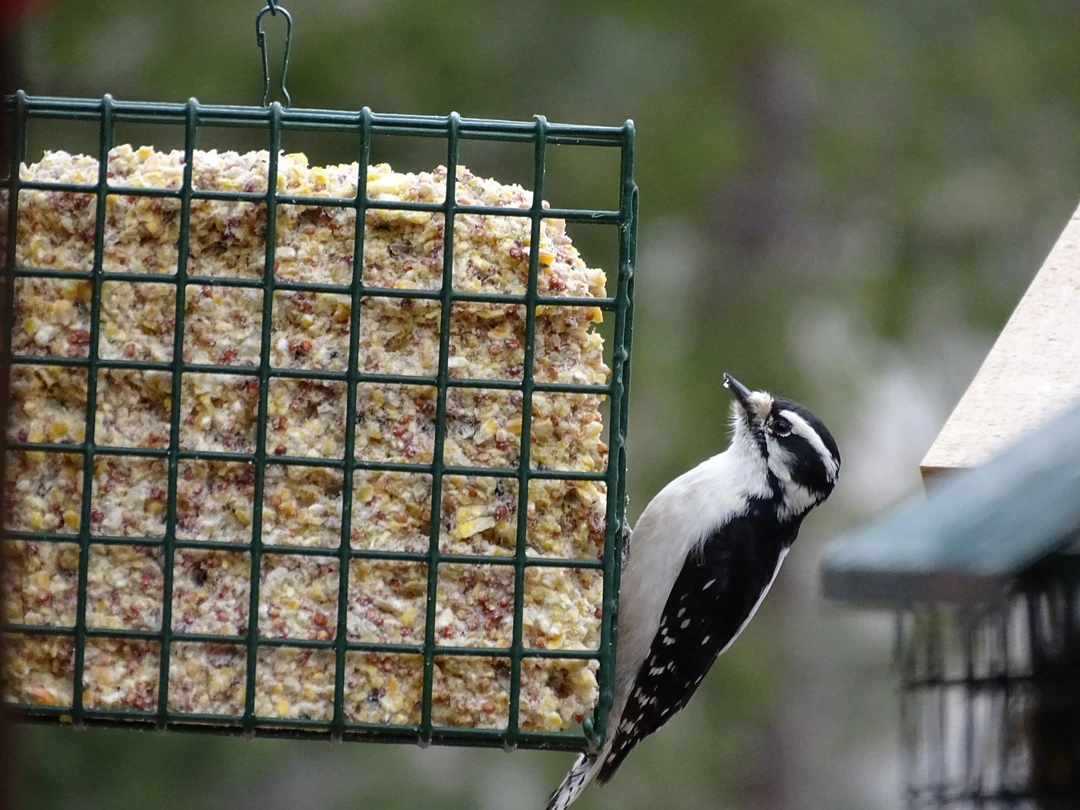
Foraging behavior: Downy Woodpeckers primarily forage on tree trunks and branches, using their bills to peck and probe for insects. They also glean insects from leaves and occasionally feed on the ground. They are frequent visitors to suet feeders.
Seasonal diet variations: In winter, when insects are less abundant, Downy Woodpeckers consume more seeds, berries, and nuts. They will readily take suet from bird feeders.
Specializations: Their strong, chisel-like bill and long, barbed tongue are adaptations for extracting insects from wood. They also have specialized skull and neck musculature to absorb the shock of repeated pecking.
Reproduction and lifecycle
Breeding season: Breeding season typically occurs from late winter to early summer (February-June), depending on the region.
Regional variations: Southern populations may breed earlier than northern populations.
Courtship rituals: Courtship involves drumming, chasing, and vocalizations. Males may also display their red nape patch.
Nest Type: Cavity nest excavated in a dead tree or limb.
Nesting Materials: Wood chips
Parental care: Both parents share incubation duties, which last about 12 days. Both parents also feed the chicks, which fledge after approximately 18-21 days.
Fledging period: 18-21 days
Clutch Size: Typically 3-8 eggs, with 4-5 being most common.
Physical characteristics
Sex-Based Plumage Differences: Males are slightly larger on average.
Length: 14-18 cm
Wingspan: 25-30 cm
Weight: 20-33 g
Lifespan: Average lifespan in the wild is 1-2 years, though some individuals can live up to 10-11 years.
Breeding Plumage: Plumage remains relatively consistent throughout the year.
Seasonal Feather Changes: Minor wear and fading may occur, but there are no distinct seasonal changes in plumage.
Notable features: Black and white checkered back, White underparts, Black wings with white spotting, Small size compared to other woodpeckers
Interesting facts
They can drum on trees at a rate of up to 16 beats per second.: Drumming is used for communication, attracting mates, and establishing territory.
Downy Woodpeckers sometimes follow Pileated Woodpeckers to feed on insects exposed by the larger woodpecker's excavations.: This is an example of commensalism, where one species benefits from the actions of another without harming it.
They have been known to excavate nest cavities in wooden fence posts and even utility poles.: This demonstrates their adaptability to human-altered landscapes.
Frequently asked questions
How can I attract Downy Woodpeckers to my yard?
Provide suet feeders, sunflower seeds, and peanuts. Planting native trees and shrubs can also provide natural food sources and nesting sites.
What is the difference between a Downy Woodpecker and a Hairy Woodpecker?
Hairy Woodpeckers are larger than Downy Woodpeckers and have a longer bill relative to their head size. Hairy Woodpeckers also lack the black spots on their outer tail feathers, which are present in Downy Woodpeckers.
Do Downy Woodpeckers damage trees?
Downy Woodpeckers primarily target dead or dying trees, and their foraging helps control insect populations that can damage trees. They rarely cause significant harm to healthy trees.
What should I do if I find an injured Downy Woodpecker?
Contact a local wildlife rehabilitator or veterinarian. It is illegal to possess or care for wild birds without the proper permits. Consult a professional for medical or expert advice.
Compare the image, sound, habitat, and physical characteristics together when reviewing a sighting.