
The Common Wood Pigeon (Columba palumbus) is a large, widespread pigeon species found throughout Europe and parts of Asia and North Africa. It plays a significant role in seed dispersal within its varied habitats, from woodlands and forests to agricultural fields and urban parks. While not typically considered a bird of significant cultural importance, it is a familiar sight and sound in many regions, often recognized by its distinctive cooing call and the white patches on its neck and wings. It is an adaptable species, thriving in diverse environments.
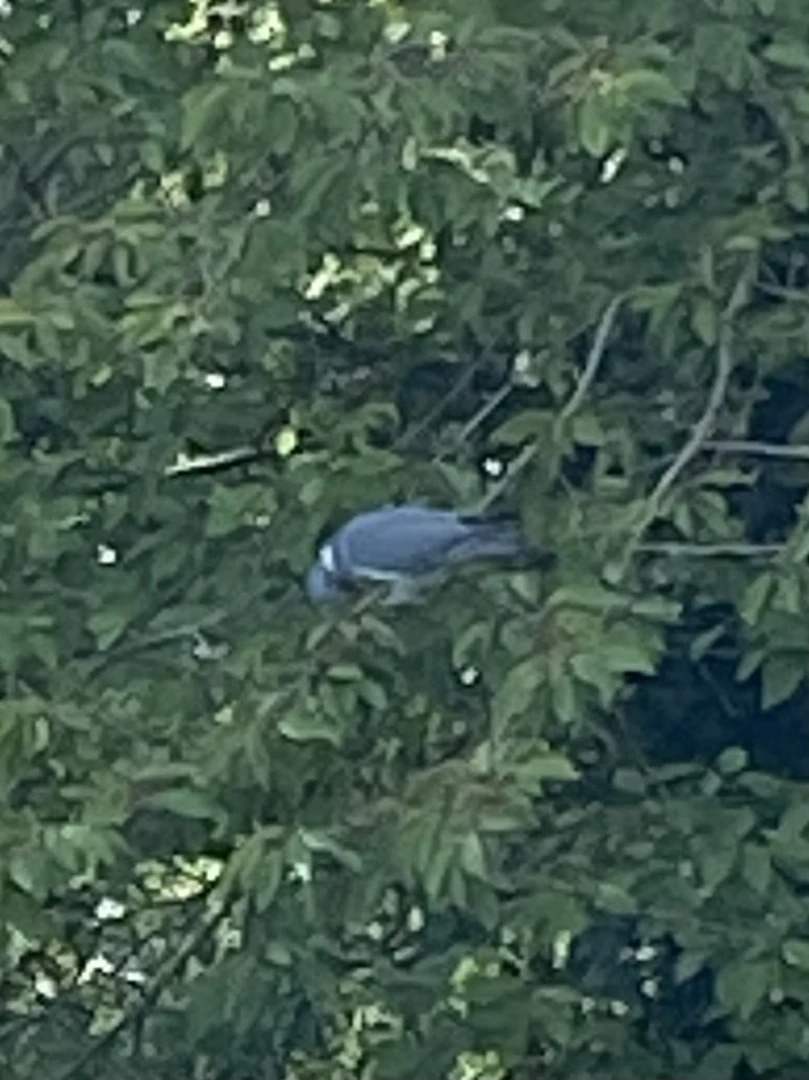
Photos of Common Wood-Pigeon
Compare plumage, posture, and field context across this image set.
Common Wood-Pigeon sounds
Listen to a small selection of reference recordings.
About the Common Wood-Pigeon
The Common Wood Pigeon (Columba palumbus) is a large, widespread pigeon species found throughout Europe and parts of Asia and North Africa. It plays a significant role in seed dispersal within its varied habitats, from woodlands and forests to agricultural fields and urban parks. While not typically considered a bird of significant cultural importance, it is a familiar sight and sound in many regions, often recognized by its distinctive cooing call and the white patches on its neck and wings. It is an adaptable species, thriving in diverse environments.
Also known as: Common Woodpigeon, Common Wood Pigeon, Woodpigeon, Wood Pigeon, Eurasian Wood-Pigeon.
Scientific classification
Phylum: Chordata
Clazz: Aves
Order: Columbiformes
Family: Columbidae
Genus: Columba
Species: Columba palumbus
Habitat and distribution
Adaptations: The Common Wood Pigeon's adaptability to various habitats stems from its generalist diet and ability to nest in diverse locations. Its strong flight allows it to cover large distances in search of food and suitable nesting sites. It can tolerate human presence, allowing it to thrive in urban and suburban environments.
Variations: Several subspecies are recognized, differing slightly in plumage and size. For example, *Columba palumbus azorica* is found in the Azores, and *Columba palumbus casiotis* is found in parts of the Middle East.
Distribution: The Common Wood Pigeon is native to Europe, western Asia, and North Africa. Its range extends from the British Isles and Scandinavia eastward to western Siberia, and south to the Mediterranean region, including parts of Morocco, Algeria, and Tunisia. It has also been introduced to other areas, though not always successfully. Migratory patterns vary; northern and eastern populations tend to be migratory, while western and southern populations are often resident.
Habitat Types: Woodlands, Forests, Agricultural fields, Urban parks, Gardens, Hedgerows
Climate Zones: Temperate, Boreal, Mediterranean
Diet and feeding
Primary foods: Seeds, Grains, Berries, Green plant material, Invertebrates (occasionally)
Foraging behavior: The Common Wood Pigeon primarily forages on the ground, pecking at seeds and other food items. It can also be seen feeding in trees and shrubs, particularly on berries and buds. They are known to form large flocks, especially during the non-breeding season, when foraging in agricultural fields.
Seasonal diet variations: Diet varies seasonally depending on food availability. In spring and summer, they may consume more green plant material and invertebrates. In autumn and winter, seeds and grains become more important, especially in agricultural areas.
Specializations: They have a crop, a specialized pouch in the esophagus, which allows them to store large quantities of food before digesting it. This is particularly useful for quickly gathering food in exposed areas.
Reproduction and lifecycle
Breeding season: The breeding season is typically from March to September, but can extend longer in milder climates.
Regional variations: Breeding may occur year-round in some regions with favorable conditions.
Courtship rituals: Courtship involves bowing displays, cooing calls, and short display flights by the male. The male will puff up his neck feathers and bob his head while cooing to attract the female.
Nest Type: A flimsy platform nest made of twigs.
Nesting Materials: Twigs, Roots, Sometimes lined with softer materials
Parental care: Both parents share incubation duties, which last for 17-19 days. They also both feed the chicks with 'crop milk,' a secretion from the lining of the crop. Chicks are altricial, meaning they are born helpless and require extensive parental care.
Fledging period: The chicks fledge after approximately 20-35 days, although this can vary depending on food availability and environmental conditions.
Clutch Size: Typically 2 eggs.
Physical characteristics
Sex-Based Plumage Differences: Minimal
Length: 38-44.5 cm
Wingspan: 68-80 cm
Weight: 300-615 g
Lifespan: The average lifespan in the wild is 3-5 years, but individuals can live up to 16 years.
Breeding Plumage: Plumage is generally consistent year-round, with subtle differences.
Seasonal Feather Changes: Adults experience a partial post-breeding molt.
Notable features: White neck patches (adults), White wing bars visible in flight, Pinkish-grey breast, Grey head and back
Interesting facts
They are strong fliers: They can reach speeds of up to 60 kilometers per hour.
They can drink without lifting their heads: Unlike most birds, they can suck up water continuously.
They produce 'crop milk': A nutritious secretion from the crop lining, fed to young chicks.
Frequently asked questions
What is the difference between a wood pigeon and a feral pigeon?
Wood pigeons are larger, have white neck patches and wing bars, and are generally found in more rural or wooded areas. Feral pigeons are descended from domesticated rock doves and are typically found in urban environments, lacking the distinctive white markings.
Are wood pigeons pests?
In some agricultural areas, large flocks of wood pigeons can cause damage to crops, leading to them being considered pests. However, they also play a role in seed dispersal.
What should I do if I find a baby wood pigeon?
If the chick is uninjured and appears healthy, it is best to leave it alone, as the parents are likely nearby. If it is injured or in immediate danger, contact a local wildlife rehabilitation center. *Consult a professional for expert advice.*
Compare the image, sound, habitat, and physical characteristics together when reviewing a sighting.