
The Common Grackle (Quiscalus quiscula) is a large, iridescent blackbird native to North America. Often found in large, noisy flocks, they are highly adaptable birds, thriving in both rural and urban environments. They play a significant ecological role as both seed dispersers and consumers of insects, although their large numbers can sometimes lead to conflict with agricultural interests. While not typically considered a bird of significant cultural importance, their ubiquity and bold behavior have made them a familiar sight to many.
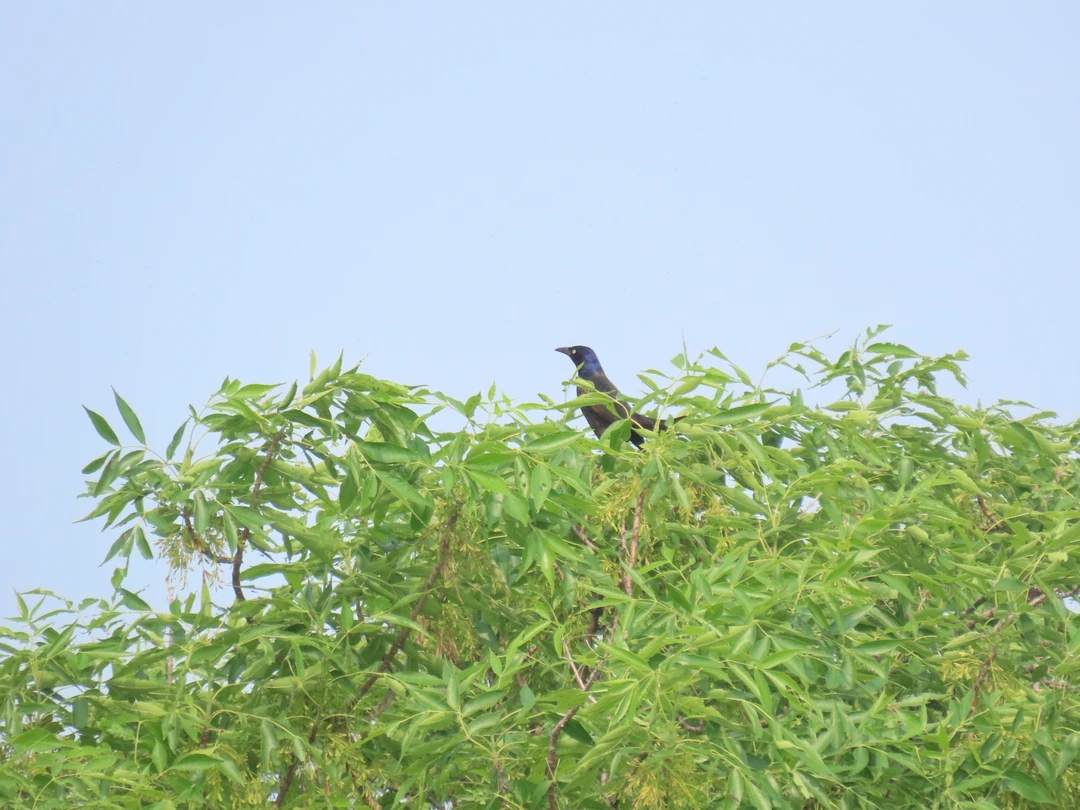
Photos of Common Grackle
Compare plumage, posture, and field context across this image set.
Common Grackle sounds
Listen to a small selection of reference recordings.
About the Common Grackle
The Common Grackle (Quiscalus quiscula) is a large, iridescent blackbird native to North America. Often found in large, noisy flocks, they are highly adaptable birds, thriving in both rural and urban environments. They play a significant ecological role as both seed dispersers and consumers of insects, although their large numbers can sometimes lead to conflict with agricultural interests. While not typically considered a bird of significant cultural importance, their ubiquity and bold behavior have made them a familiar sight to many.
Also known as: Purple Grackle, Crow Blackbird.
Scientific classification
Phylum: Chordata
Clazz: Aves
Order: Passeriformes
Family: Icteridae
Genus: Quiscalus
Species: Quiscalus quiscula
Habitat and distribution
Adaptations: Common Grackles are highly adaptable to a variety of habitats. Their broad diet allows them to thrive in different environments. Their strong legs and feet are well-suited for walking and foraging on the ground.
Variations: Three subspecies are generally recognized: the Purple Grackle (Q. q. quiscula) in the southeast, the Bronzed Grackle (Q. q. versicolor) in the interior, and the Florida Grackle (Q. q. stonei) in Florida. These differ primarily in the color of their iridescence.
Distribution: Common Grackles are found throughout North America, east of the Rocky Mountains. Their range extends from southern Canada down to Florida and the Gulf Coast, and westward to the Great Plains. Some populations are migratory, with northern birds moving south for the winter, while others are resident year-round.
Habitat Types: Agricultural fields, Open woodlands, Marshes, Urban parks, Suburban areas
Climate Zones: Temperate, Subtropical
Diet and feeding
Primary foods: Seeds, Grains, Insects, Small invertebrates, Occasionally small vertebrates (e.g., frogs, fish)
Foraging behavior: Common Grackles forage primarily on the ground, walking or hopping while searching for food. They also glean insects from vegetation and sometimes wade in shallow water. They are known to follow plows to catch exposed insects and grubs.
Seasonal diet variations: Their diet shifts with the seasons. Insects are more prevalent in the diet during the breeding season, while seeds and grains are more important in the fall and winter.
Specializations: Their strong bill allows them to crack open seeds and nuts. They also have a specialized tongue that helps them extract kernels from corn.
Reproduction and lifecycle
Breeding season: Generally from March to July, with some regional variation.
Regional variations: Breeding may start earlier in the southern parts of their range.
Courtship rituals: Males display by puffing up their feathers, spreading their wings and tail, and making a loud, rasping call.
Nest Type: A bulky cup nest, often built in colonies.
Nesting Materials: Twigs, Grass, Mud, Other plant material
Parental care: Females primarily incubate the eggs, but both parents feed the chicks. Incubation lasts about 12-14 days.
Fledging period: Chicks fledge (leave the nest) about 16-20 days after hatching.
Clutch Size: Typically 4-5 eggs.
Physical characteristics
Sex-Based Plumage Differences: Males are generally larger than females.
Length: 28-34 cm
Wingspan: 36-46 cm
Weight: 74-142 g
Lifespan: Up to 22 years in the wild (based on banding records), but most live much shorter lives.
Breeding Plumage: Adult plumage is largely consistent year-round, but may appear duller in the non-breeding season.
Seasonal Feather Changes: The intensity and color of iridescence can vary slightly with wear and molt.
Notable features: Long, keel-shaped tail, Glossy, iridescent black plumage, Bright yellow eyes, Long, pointed bill
Interesting facts
Grackles sometimes practice 'anting': They rub ants on their feathers, possibly to soothe skin irritation or remove parasites. The formic acid from the ants may act as an insecticide or fungicide.
They can mimic the calls of other birds: Although not as skilled as mockingbirds, they have been observed imitating other species.
Grackles are known to dip hard food items in water.: This behavior, called 'dunking,' softens the food and makes it easier to digest. This is common with dog food, bread and other dry items.
Their eyes change color as they mature.: Juvenile Common Grackles have dark brown eyes, which transition to the bright yellow of adults.
Frequently asked questions
Why are there so many grackles in my yard?
Grackles are attracted to readily available food sources, such as bird feeders, spilled grain, and insects in lawns. Their large flocks can make them seem especially numerous.
Are grackles harmful to other birds?
While they can sometimes outcompete other birds at feeders, grackles are not typically considered major threats to other bird populations. They may occasionally prey on the eggs or nestlings of other birds, but this is not a primary food source.
Do grackles damage crops?
Grackles can damage crops, particularly corn, rice, and sunflowers. However, the extent of their damage is often debated, and they also consume large numbers of insects that are considered agricultural pests.
What should I do if a grackle is nesting near my house?
It is best to leave the nest alone. Common Grackles, their nests, and eggs are protected under the Migratory Bird Treaty Act, making it illegal to harm or disturb them without a permit. If you need to deter them, focus on removing food sources and using deterrents like visual scare devices *before* nesting begins.
Compare the image, sound, habitat, and physical characteristics together when reviewing a sighting.