
The Common Chiffchaff (*Phylloscopus collybita*) is a small, active leaf warbler widespread across Europe and Asia. It plays a crucial role in controlling insect populations, particularly in woodland and scrub habitats. This seemingly unremarkable bird is best known for its distinctive, repetitive 'chiff-chaff' song, which gives it its common name. While not culturally significant in the same way as some larger or more colorful birds, the Chiffchaff's arrival is often considered a harbinger of spring in many parts of Europe.
Photos of Common Chiffchaff
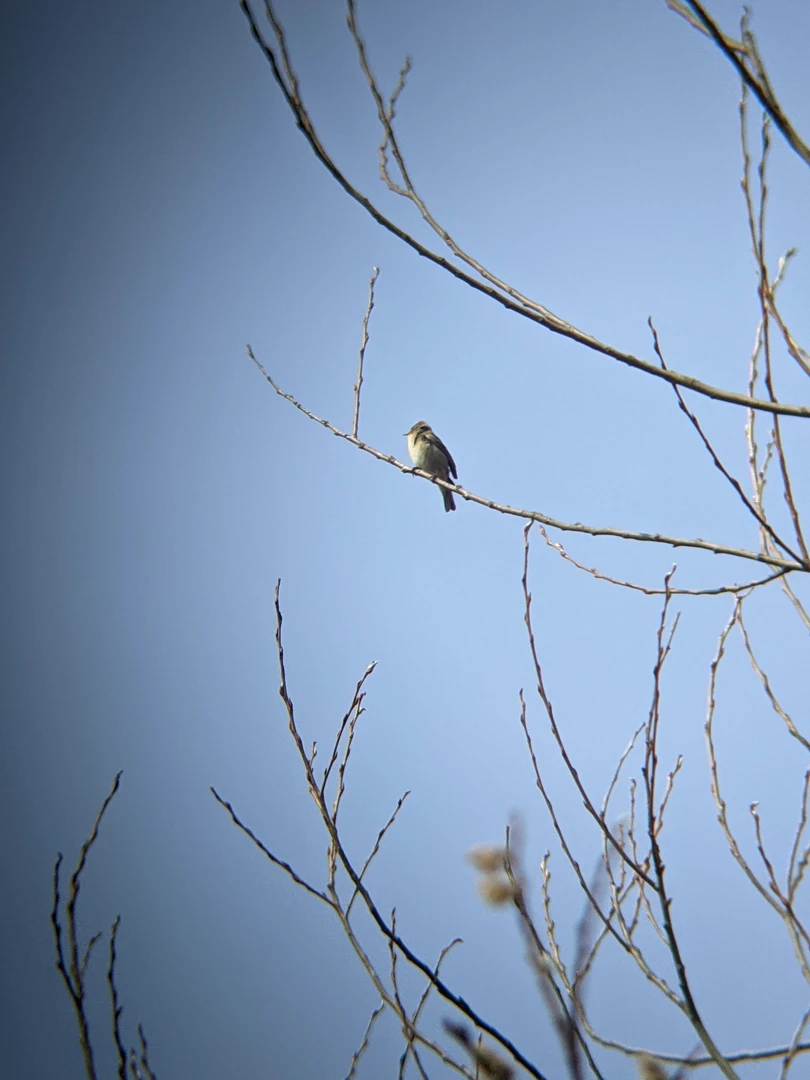
Compare plumage, posture, and field context across this image set.
About the Common Chiffchaff
The Common Chiffchaff (*Phylloscopus collybita*) is a small, active leaf warbler widespread across Europe and Asia. It plays a crucial role in controlling insect populations, particularly in woodland and scrub habitats. This seemingly unremarkable bird is best known for its distinctive, repetitive 'chiff-chaff' song, which gives it its common name. While not culturally significant in the same way as some larger or more colorful birds, the Chiffchaff's arrival is often considered a harbinger of spring in many parts of Europe.
Also known as: Woodland Chiffchaff.
Scientific classification
Phylum: Chordata
Clazz: Aves
Order: Passeriformes
Family: Phylloscopidae
Genus: Phylloscopus
Species: Phylloscopus collybita
Habitat and distribution
Adaptations: Generally prefers habitats with a mix of trees and undergrowth, providing cover for foraging and nesting. Their small size and agility allow them to maneuver through dense vegetation.
Variations: Several subspecies are recognized, differing slightly in plumage coloration and song. For example, *P. c. tristis* (Siberian Chiffchaff) is generally greyer and has a different song.
Distribution: Breeds across Europe and temperate Asia, extending east to eastern Siberia. Winters in southern and western Europe, the Mediterranean region, and parts of Africa and the Middle East. Migratory, with northern populations undertaking long-distance migrations.
Habitat Types: Open woodlands, Scrubland, Parks and gardens, Hedgerows, Forest edges
Climate Zones: Temperate, Boreal
Diet and feeding
Primary foods: Small insects, Spiders, Larvae, Small invertebrates
Foraging behavior: Actively gleans insects from leaves and branches, often hovering briefly to pick off prey. Will also flycatch, taking insects in mid-air.
Seasonal diet variations: May consume some berries and fruits in autumn and winter when insect availability is lower.
Specializations: No specific physical specializations, but their agility and small size are well-suited to foraging in dense vegetation.
Reproduction and lifecycle
Breeding season: Typically April-July in Europe.
Regional variations: May start earlier in southern parts of the range.
Courtship rituals: Males sing persistently to attract females and establish territories. Courtship displays may involve chasing and wing-flicking.
Nest Type: Domed nest built close to or on the ground.
Nesting Materials: Leaves, Grass, Moss, Feathers
Parental care: Primarily the female incubates the eggs, but both parents feed the chicks.
Fledging period: 12-15 days until first flight.
Clutch Size: 4-7 eggs
Physical characteristics
Sex-Based Plumage Differences: Minimal
Length: 10-12 cm
Wingspan: 15-21 cm
Weight: 6-10 g
Lifespan: Typically 2-3 years in the wild, but can live longer.
Breeding Plumage: Generally similar throughout the year.
Seasonal Feather Changes: Fresh plumage after molting in late summer can appear brighter, with slightly more yellowish tones.
Notable features: Olive-brown upperparts, Pale yellowish-white underparts, Short, pale supercilium (eyebrow stripe), Dark legs (distinguishing it from the Willow Warbler)
Interesting facts
The Chiffchaff's song is one of the earliest bird songs heard in spring in many parts of Europe.: This makes it a welcome sign of the changing seasons.
They are often confused with Willow Warblers, which are very similar in appearance.: However, Chiffchaffs typically have darker legs and a distinctly different song.
Chiffchaff can raise two broods in a single breeding season.: If conditions are favorable.
Frequently asked questions
What is the difference between a Chiffchaff and a Willow Warbler?
The easiest way to tell them apart is by their song. Chiffchaffs have a repetitive 'chiff-chaff' song, while Willow Warblers have a more melodic, descending song. Chiffchaffs also tend to have darker legs.
Where do Chiffchaffs migrate to?
Northern populations migrate to southern Europe, the Mediterranean region, and parts of Africa and the Middle East for the winter.
What do Chiffchaffs eat?
They primarily eat small insects and spiders, but may also consume some berries and fruits in autumn and winter.
Compare the image, sound, habitat, and physical characteristics together when reviewing a sighting.