
The Eurasian Blackbird (Turdus merula) is a familiar sight and sound in gardens, woodlands, and parks across Europe and parts of Asia and North Africa. It has also been introduced to Australia and New Zealand. Known for its melodious song, particularly the male's rich, fluting calls delivered from rooftops or high perches, the blackbird plays an important ecological role as a seed disperser and controller of invertebrate populations. While not generally considered of significant cultural importance, its song has been featured in poetry and music, reflecting its close association with human-inhabited landscapes.
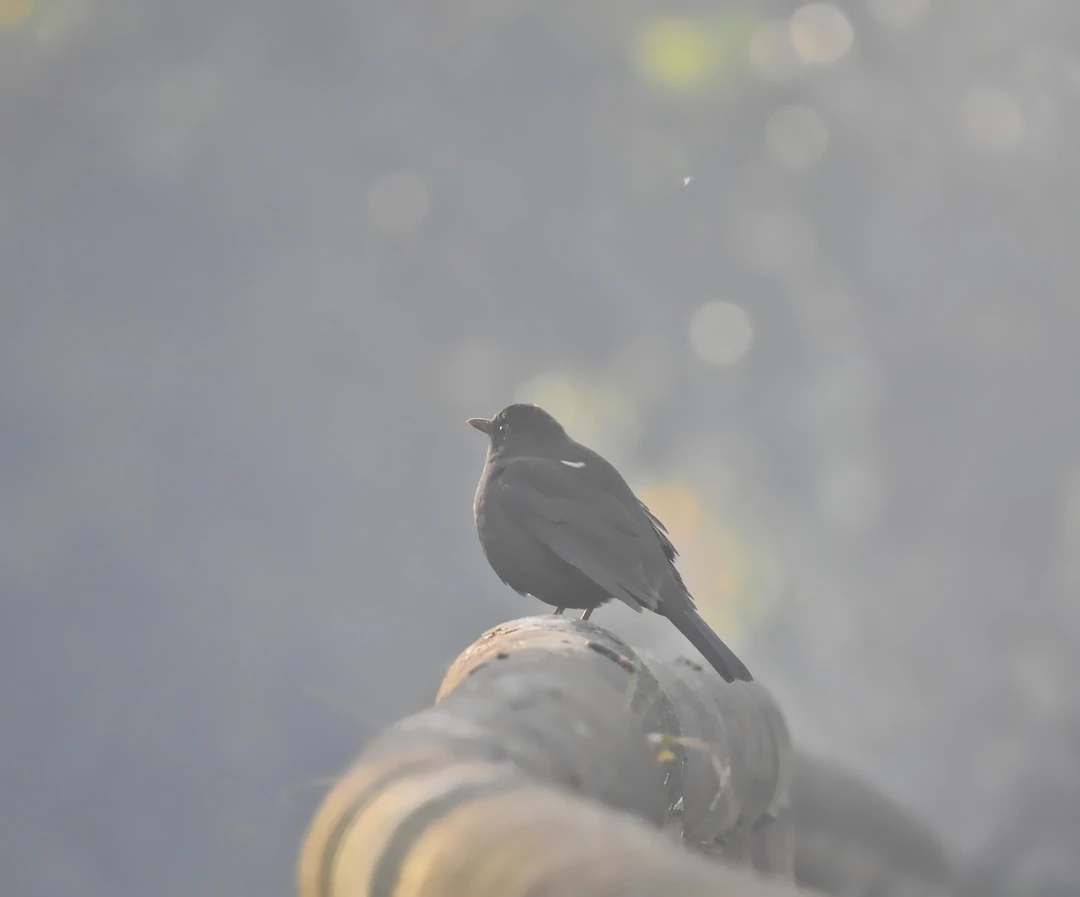
Photos of Common Blackbird
Compare plumage, posture, and field context across this image set.
About the Common Blackbird
The Eurasian Blackbird (Turdus merula) is a familiar sight and sound in gardens, woodlands, and parks across Europe and parts of Asia and North Africa. It has also been introduced to Australia and New Zealand. Known for its melodious song, particularly the male's rich, fluting calls delivered from rooftops or high perches, the blackbird plays an important ecological role as a seed disperser and controller of invertebrate populations. While not generally considered of significant cultural importance, its song has been featured in poetry and music, reflecting its close association with human-inhabited landscapes.
Also known as: Eurasian Blackbird, European Blackbird, Blackbird, Colly Bird, Colley Bird.
Scientific classification
Phylum: Chordata
Clazz: Aves
Order: Passeriformes
Family: Turdidae
Genus: Turdus
Species: Turdus merula
Habitat and distribution
Adaptations: Highly adaptable to a wide range of habitats, from dense forests to urban environments. Their ability to utilize various food sources and nesting sites contributes to their success.
Variations: Several subspecies are recognized, differing slightly in size, plumage coloration, and vocalizations. For example, some island populations may exhibit darker plumage or larger body sizes.
Distribution: Native to Europe, North Africa, and parts of Asia (including the Middle East, India, and China). Introduced populations exist in Australia and New Zealand. Generally non-migratory in milder western and southern Europe, but northern and eastern populations migrate south for the winter. Altitudinal range varies from sea level to higher elevations in mountainous regions, depending on food availability.
Habitat Types: Woodlands, Gardens, Parks, Farmland, Hedgerows, Coastal dunes
Climate Zones: Temperate, Mediterranean, Subtropical
Diet and feeding
Primary foods: Invertebrates (earthworms, insects, snails), Berries, Fruits, Seeds
Foraging behavior: Primarily forages on the ground, hopping and running, often turning over leaves and probing the soil with its bill. Also takes fruit from trees and bushes.
Seasonal diet variations: Diet shifts seasonally depending on food availability. Invertebrates are more important during the breeding season, while fruits and berries become a major food source in autumn and winter.
Specializations: No highly specialized feeding adaptations, but their strong bill and legs are well-suited for their diverse diet.
Reproduction and lifecycle
Breeding season: Typically March to July in temperate regions, but can vary depending on location and climate.
Regional variations: Breeding may start earlier in warmer southern regions and later in colder northern areas.
Courtship rituals: Males sing to establish territories and attract females. Courtship displays include chasing, bowing, and offering food.
Nest Type: Cup-shaped nest built in a tree, shrub, or on a building.
Nesting Materials: Twigs, Grass, Moss, Mud, Leaves
Parental care: Both parents incubate the eggs (primarily the female) for about 12-14 days. Both parents feed the chicks, which fledge after approximately 13-14 days.
Fledging period: 13-14 days until first flight.
Clutch Size: Typically 3-5 eggs.
Physical characteristics
Sex-Based Plumage Differences: Males are generally slightly larger than females.
Length: 23.5-29 cm
Wingspan: 34-38.5 cm
Weight: 80-125 g
Lifespan: Typical lifespan in the wild is around 3-4 years, although some individuals have been recorded living over 20 years.
Breeding Plumage: Adult males have glossy black plumage year-round. Females and juveniles have dark brown plumage, often with a mottled breast.
Seasonal Feather Changes: Minimal seasonal variation, although plumage may appear slightly duller after molting.
Notable features: Bright yellow-orange eye-ring (adult male), Yellow-orange bill (adult male), Strong legs and feet adapted for ground foraging
Interesting facts
The Eurasian Blackbird's song is highly variable.: Individual males have their own unique repertoire of phrases, and regional dialects can exist.
They are known to 'worm-charm'.: Blackbirds sometimes tap the ground with their feet, possibly mimicking raindrops to encourage earthworms to come to the surface.
Introduced populations in Australia and New Zealand have diverged slightly.: These populations show some differences in morphology and behavior compared to their European counterparts.
Frequently asked questions
What do I do if I find a baby blackbird?
If the bird is feathered and hopping, it is likely a fledgling and its parents are probably nearby. It's best to leave it alone unless it is in immediate danger. If it is unfeathered or injured, contact a local wildlife rehabilitator. *Consult a professional for expert advice.*
Why are blackbirds so common in gardens?
Blackbirds have adapted well to human-modified environments, finding food and nesting sites in gardens and parks.
How can I attract blackbirds to my garden?
Provide a source of fresh water, plant berry-producing shrubs, and avoid using pesticides.
Are Eurasian Blackbirds aggressive?
Males can be territorial during breeding, chasing away other males. Otherwise, they are not typically agressive towards humans.
Compare the image, sound, habitat, and physical characteristics together when reviewing a sighting.