
The Chipping Sparrow (*Spizella passerina*) is a common and widespread North American songbird, known for its distinctive, rapid trill. This small, slender sparrow plays a vital role in seed dispersal and insect control within its diverse habitats. While not particularly flashy in appearance, its persistent song and adaptability have made it a familiar sight in backyards, parks, and open woodlands across the continent. It holds no specific major cultural significance but is appreciated by birdwatchers for its subtle beauty and cheerful presence.
Photos of Chipping Sparrow
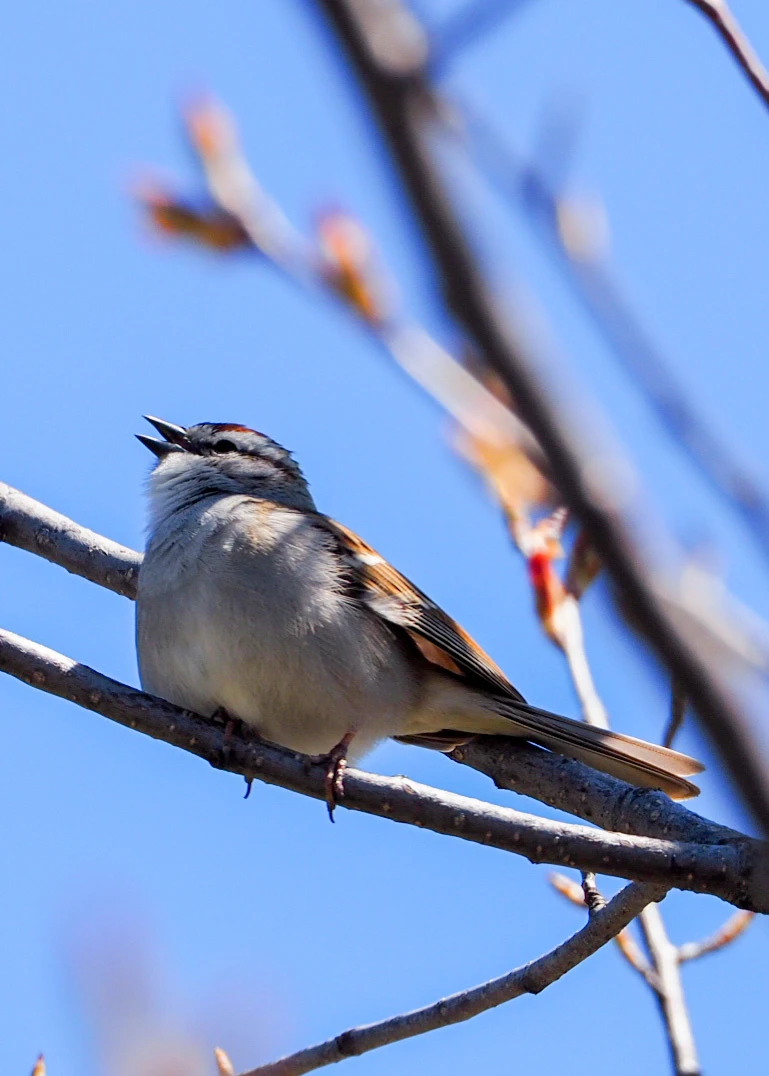
Compare plumage, posture, and field context across this image set.
Chipping Sparrow sounds
Listen to a small selection of reference recordings.
About the Chipping Sparrow
The Chipping Sparrow (*Spizella passerina*) is a common and widespread North American songbird, known for its distinctive, rapid trill. This small, slender sparrow plays a vital role in seed dispersal and insect control within its diverse habitats. While not particularly flashy in appearance, its persistent song and adaptability have made it a familiar sight in backyards, parks, and open woodlands across the continent. It holds no specific major cultural significance but is appreciated by birdwatchers for its subtle beauty and cheerful presence.
Scientific classification
Phylum: Chordata
Clazz: Aves
Order: Passeriformes
Family: Emberizidae
Genus: Spizella
Species: Spizella passerina
Habitat and distribution
Adaptations: Their relatively small size and agility allow them to forage in dense vegetation and on the ground. They are adaptable to a wide range of temperatures and food sources.
Variations: Several subspecies are recognized, differing slightly in plumage and size, particularly between eastern and western populations.
Distribution: Breeds across North America, from Alaska and Canada south to Mexico and parts of Central America. Migratory, with northern populations wintering in the southern United States and Mexico. Altitudinal range extends from sea level to high-elevation forests.
Habitat Types: Open woodlands, Forest edges, Parks, Gardens, Grasslands with scattered trees, Savannas
Climate Zones: Temperate, Subtropical, Boreal
Diet and feeding
Primary foods: Seeds, Insects, Small fruits
Foraging behavior: Forages primarily on the ground, hopping and scratching to find seeds and insects. May also glean insects from foliage.
Seasonal diet variations: Diet shifts with the seasons. Primarily insects during the breeding season, switching to mostly seeds in the fall and winter.
Specializations: No highly specialized feeding adaptations; generalist diet contributes to its adaptability.
Reproduction and lifecycle
Breeding season: Generally April to August, depending on location.
Regional variations: Earlier breeding in southern parts of the range, later in the north.
Courtship rituals: Males sing from exposed perches to attract females. Courtship displays include chasing and wing-fluttering.
Nest Type: Cup nest, often placed low in trees or shrubs, sometimes on the ground.
Nesting Materials: Grass, Twigs, Rootlets, Animal hair
Parental care: Both parents incubate the eggs and feed the young. Incubation lasts about 11-14 days.
Fledging period: Young leave the nest approximately 8-12 days after hatching.
Clutch Size: Typically 3-5 eggs.
Physical characteristics
Sex-Based Plumage Differences: Minimal
Length: 12-15 cm
Wingspan: 20-23 cm
Weight: 11-15 g
Lifespan: Up to 9 years in the wild, though average lifespan is likely shorter.
Breeding Plumage: Breeding adults have a bright rufous cap, a black line through the eye, and a white supercilium. Non-breeding plumage is duller, with a streaked brown crown.
Seasonal Feather Changes: Significant differences between breeding and non-breeding plumage, as described above.
Notable features: Rufous cap (breeding plumage), Black eyeline, White supercilium (eyebrow stripe), Grayish-white underparts
Interesting facts
Chipping Sparrows often reuse the same nesting territory year after year.: This indicates site fidelity and the importance of suitable breeding habitat.
They are known to be parasitized by Brown-headed Cowbirds.: Cowbirds lay their eggs in the nests of other birds, leaving the Chipping Sparrows to raise their young.
The Chipping sparrows are ground foragers.: Chipping Sparrows spend a lot of time foraging on the ground.
Frequently asked questions
What is the Chipping Sparrow's song like?
It's a rapid, dry trill, often described as a series of 'chip' notes strung together.
Where can I find a Chipping Sparrow?
Look for them in open woodlands, parks, gardens, and areas with scattered trees and shrubs.
Are Chipping Sparrows aggressive?
Males can be territorial during the breeding season, but they are generally not aggressive towards humans.
Do Chipping Sparrows Mate for Life?
Chipping Sparrows are presumed to be primarily monogamous, but extra-pair copulations are not uncommon.
Compare the image, sound, habitat, and physical characteristics together when reviewing a sighting.