
The Brown Thrasher (Toxostoma rufum) is a large, striking songbird of eastern North America, known for its rich, rufous plumage and impressive vocal repertoire. It plays a significant role in its ecosystem as both a seed disperser and a consumer of insects, helping to maintain a balance in the populations of various plants and invertebrates. While not currently considered globally threatened, its populations are sensitive to habitat loss and fragmentation. The Brown Thrasher is the state bird of Georgia, reflecting its cultural significance in the southeastern United States.
Photos of Brown Thrasher
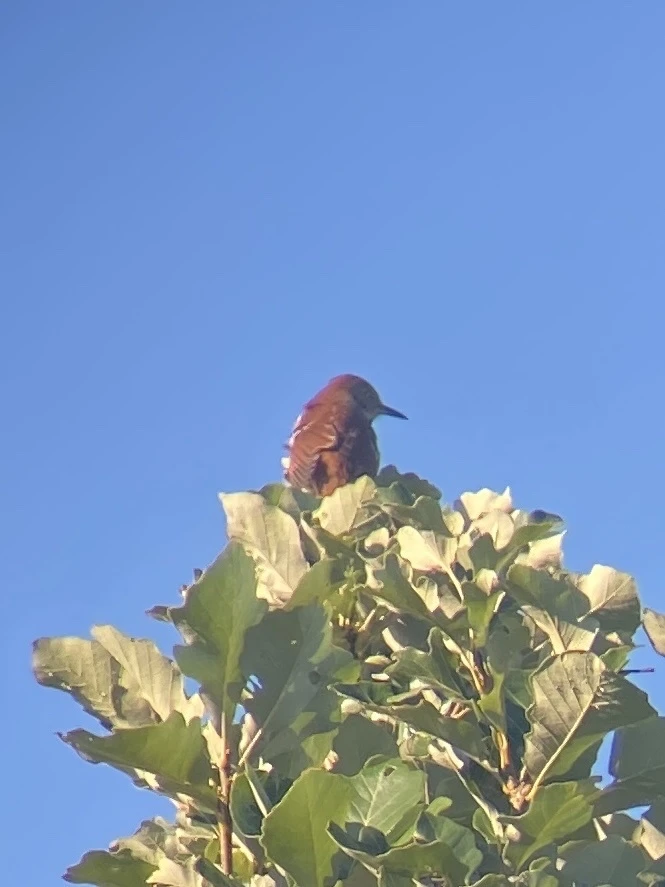
Compare plumage, posture, and field context across this image set.
Brown Thrasher sounds
Listen to a small selection of reference recordings.
About the Brown Thrasher
The Brown Thrasher (Toxostoma rufum) is a large, striking songbird of eastern North America, known for its rich, rufous plumage and impressive vocal repertoire. It plays a significant role in its ecosystem as both a seed disperser and a consumer of insects, helping to maintain a balance in the populations of various plants and invertebrates. While not currently considered globally threatened, its populations are sensitive to habitat loss and fragmentation. The Brown Thrasher is the state bird of Georgia, reflecting its cultural significance in the southeastern United States.
Also known as: Brown Thrush, Ferruginous Thrush, Fox-colored Thrush, Fox-coloured Thrush.
Scientific classification
Phylum: Chordata
Clazz: Aves
Order: Passeriformes
Family: Mimidae
Genus: Toxostoma
Species: Toxostoma rufum
Habitat and distribution
Adaptations: Its strong legs and slightly decurved bill are well-suited for foraging on the ground and digging through leaf litter. Dense habitats provide crucial protection from predators.
Variations: Two subspecies are generally recognized: *Toxostoma rufum rufum* (eastern) and *Toxostoma rufum longicauda* (western), with the western subspecies having a slightly longer tail and paler plumage.
Distribution: The Brown Thrasher is primarily found in the eastern and central United States and southeastern Canada. Its breeding range extends from southern Alberta, Saskatchewan, and Manitoba, east to Quebec and Maine, and south to Florida and the Gulf Coast. It migrates south for the winter, with some birds reaching as far as eastern Mexico.
Habitat Types: Dense thickets, Shrublands, Forest edges, Hedgerows, Suburban gardens with ample cover
Climate Zones: Temperate, Subtropical
Diet and feeding
Primary foods: Insects, Spiders, Berries, Fruits, Nuts, Seeds
Foraging behavior: The Brown Thrasher primarily forages on the ground, using its bill to vigorously sweep aside leaf litter and soil in search of prey. It also gleans insects from vegetation and occasionally hawks insects in the air.
Seasonal diet variations: The diet shifts seasonally. Insects and other invertebrates are predominant during the breeding season, while fruits, berries, and seeds become more important in the fall and winter.
Specializations: Its strong bill and neck muscles are adapted for digging and turning over debris. It can also crack open hard-shelled nuts.
Reproduction and lifecycle
Breeding season: Generally from April to August, with variations depending on latitude.
Regional variations: Birds in the southern part of the range may start breeding earlier than those in the north.
Courtship rituals: Males sing loudly from prominent perches to attract females. Courtship displays include chasing, wing-fluttering, and offering nesting material to the female.
Nest Type: A bulky, cup-shaped nest, usually placed low in a dense shrub or small tree.
Nesting Materials: Twigs, Leaves, Grass, Rootlets, Bark strips, Sometimes lined with fine grass or hair
Parental care: Both parents incubate the eggs (for about 12-14 days) and feed the nestlings. The young are altricial (helpless at hatching).
Fledging period: Approximately 9-13 days after hatching.
Clutch Size: Typically 3-5 eggs.
Physical characteristics
Sex-Based Plumage Differences: Minimal
Length: 23.5-30.5 cm
Wingspan: 29-33 cm
Weight: 61-89 g
Lifespan: Up to 12 years in the wild, but typically shorter.
Breeding Plumage: Plumage is similar year-round.
Seasonal Feather Changes: No significant seasonal variation.
Notable features: Bright rufous-brown upperparts, Heavily streaked, whitish underparts, Long, rufous tail, Yellow eyes, Slightly downcurved bill
Interesting facts
The Brown Thrasher has one of the largest song repertoires of any North American bird.: This allows for complex communication and individual recognition.
They are known for their aggressive defense of their nests.: They will attack potential predators, including humans, that approach too closely.
Brown Thrashers sometimes use a behavior called "anting.": They rub ants on their feathers, possibly to remove parasites or soothe irritated skin.
Frequently asked questions
What is the difference between a Brown Thrasher and a Wood Thrush?
Brown Thrashers are larger, have longer tails, yellow eyes, and streaked breasts. Wood Thrushes have spotted breasts, brown eyes, and a more upright posture.
Do Brown Thrashers visit bird feeders?
They are less common at feeders than some other species, but they may be attracted to suet, mealworms, or scattered seeds on the ground.
How can I attract Brown Thrashers to my yard?
Provide dense, shrubby vegetation for cover and nesting, offer a variety of food sources, and avoid using pesticides.
What should I do if a baby bird falls out of the nest?
Consult a professional for expert advice. If the bird is uninjured and the nest is accessible, the best course of action is often to return it to the nest. If this isn't possible, contact a local wildlife rehabilitator.
Compare the image, sound, habitat, and physical characteristics together when reviewing a sighting.